



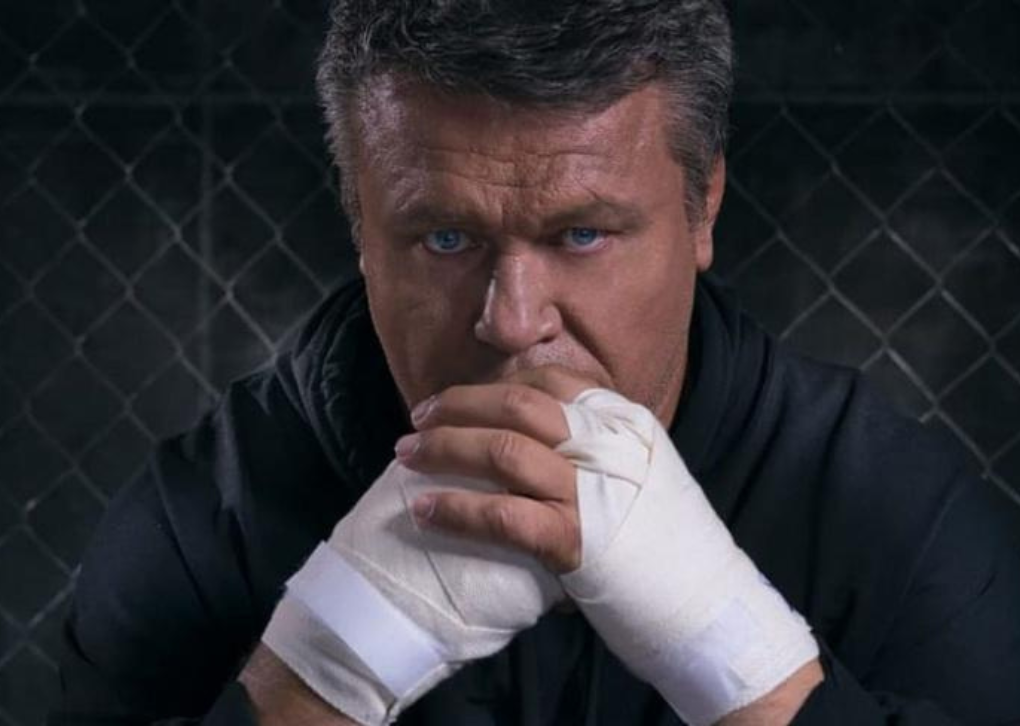
The phrase Lance Whitaker vs Oleg Taktarov sounds like the title of a forgotten heavyweight crossover fight. It is not. No sanctioned bout between American heavyweight boxer Lance Whitaker and Russian MMA pioneer Oleg Taktarov appears in their documented fight histories, and published coverage of the matchup likewise identifies it as hypothetical.
That does not make the comparison uninteresting. In fact, Lance Whitaker vs Oleg Taktarov is a useful case study in how dramatically a ruleset changes a combat-sports matchup: Whitaker brought heavyweight boxing experience, exceptional size and long-range punching, while Taktarov built his reputation around sambo, submissions, clinch work and survival in the early UFC.
Quick Answer: Did Lance Whitaker and Oleg Taktarov Actually Fight?
No official fight between the two appears in their documented boxing and MMA histories. Contemporary records instead show Whitaker fighting heavyweight boxer Oleg Maskaev on March 10, 2001, at Caesars Palace in Las Vegas, with Whitaker winning by knockout at 1:03 of the second round.
That name overlap matters. One plausible reason people search Lance Whitaker vs Oleg Taktarov is that Whitaker really did fight a prominent heavyweight named Oleg—but it was Maskaev, not Taktarov.
The Verified Whitaker–Maskaev Result
The Nevada boxing commission’s official results list Lance L. Whitaker at 256 pounds and Oleg Maskaev at 236 pounds, with Whitaker winning by second-round KO. A Washington Post report from the card describes Whitaker hurting Maskaev with a right hand, pursuing him across the ring and finishing him with a combination that left Maskaev unable to beat referee Jay Nady’s count.
That victory was important in Whitaker’s career. The Los Angeles Times described Whitaker as the WBC’s No. 9 heavyweight entering the contest and Maskaev as a top-10 contender with the IBF and WBA, giving the bout real relevance in the heavyweight title picture.
Lance Whitaker vs Oleg Taktarov at a Glance
| Category | Lance Whitaker | Oleg Taktarov |
|---|---|---|
| Primary sport | Professional boxing | Mixed martial arts |
| Core style | Orthodox heavyweight boxing | Sambo, judo, submission grappling |
| Listed height | 6’8″ / 203 cm | 6’0″ / 183 cm |
| Listed reach | 84 in / 213 cm | Not consistently documented |
| Signature advantage | Size, jab, straight punching, boxing power | Grappling, submissions, clinch adaptability |
| Landmark achievement | Ranked heavyweight contender; notable wins over Monte Barrett and Oleg Maskaev | UFC 6 tournament champion |
| Best ruleset for matchup | Boxing | MMA / open-rules environment |
The physical contrast is immediately striking. BoxRec lists Whitaker at 203 cm with a 213 cm reach, while major MMA records list Taktarov at roughly 183 cm and around 210 pounds during his fighting career.
Yet size alone does not answer Lance Whitaker vs Oleg Taktarov. Combat sports are constrained skill systems: a 6-foot-8 boxer is extremely dangerous when an opponent must box him, but height and reach become harder to exploit once takedowns, clinches, trips and submissions are legal.
Who Was Lance Whitaker?
Lance “Mount” Whitaker was a super-heavyweight amateur standout before becoming a professional heavyweight. BoxRec credits him with National Golden Gloves and U.S. national amateur super-heavyweight championships, while Los Angeles Times reporting from the 1990s documented his enormous frame and development as a boxer.
Whitaker also earned a silver medal at the 1994 Goodwill Games and bronze at the 1995 Pan American Games before his professional career. Contemporary reporting described him as a talented but still-developing giant whose jab, strength and athletic background gave trainers plenty to work with.
His professional career included meaningful victories rather than only early developmental opposition. Whitaker handed Monte Barrett his first professional defeat, stopped undefeated Robert Davis and produced the second-round knockout of Maskaev that pushed him further into heavyweight-title conversations.
Whitaker’s dimensions were his most obvious weapon, but his game was not simply “be tall.” A long jab, straight right hand and ability to make shorter heavyweights cross substantial distance created conventional boxing geometry that would be central to any Lance Whitaker vs Oleg Taktarov hypothetical.
What Made Whitaker Dangerous?
At his best, Whitaker could establish range before an opponent had a chance to work. The longer a contest remained a clean boxing match at jab distance, the more his height and reach could determine where exchanges occurred.
His biggest advantages included:
- A huge heavyweight frame: At 6’8″, Whitaker was unusually tall even in the heavyweight division.
- An 84-inch reach: That creates a substantial entry problem for a significantly shorter opponent.
- Legitimate knockout power: The Maskaev finish demonstrated that Whitaker could stop credible heavyweight opposition.
- High-level boxing experience: Years of amateur and professional rounds gave him timing that an MMA-first fighter could not simply reproduce.
- A natural jab-and-right-hand framework: Exactly the sort of linear offense capable of punishing reckless attempts to close distance.
Whitaker also had vulnerabilities. Shorter opponents who successfully crowded him could reduce the usefulness of his reach, and later fights demonstrated that exceptional dimensions did not automatically protect him from pressure, counters or attritional boxing.
Who Was Oleg Taktarov?
Oleg Taktarov was one of the defining submission specialists of the UFC’s early tournament era. The UFC records that he debuted at UFC 5 and then won the UFC 6 tournament, defeating Dave Beneteau, Anthony Macias and Tank Abbott during the event.
His career finishing profile tells the story. UFC historical material gives Taktarov a 17-5-2 MMA record, while major fight databases credit him with 14 submission victories—an overwhelming majority of his wins.
That makes Lance Whitaker vs Oleg Taktarov much more than a “big boxer versus smaller fighter” thought experiment. Taktarov’s specialty directly attacks the area in which a pure boxer is least protected: transitions from standing clinches to the ground, positional control and submission defense.
Why Taktarov Was So Effective in Early MMA
Taktarov did not need to win every second of a contest. He could remain patient through awkward positions and wait for submission openings, an approach well suited to the long and comparatively unstructured contests of early UFC competition.
At UFC 6, Taktarov submitted Tank Abbott at 17:45 in the tournament final after already competing earlier on the card. He later fought Ken Shamrock to a 33-minute draw at UFC 7, highlighting his willingness to operate through prolonged grappling-heavy battles.
His key tools included:
- Sambo-based submissions and leg attacks
- Judo-influenced clinch awareness
- Comfort fighting outside conventional boxing positions
- Experience dealing with physically powerful opponents
- Patience while hunting for a finishing opportunity
That last point is crucial. Taktarov’s route to victory would not require him to out-jab Whitaker; it would require surviving the dangerous entry phase long enough to turn a boxing exchange into a grappling contest.
Lance Whitaker vs Oleg Taktarov Under Boxing Rules
Under conventional professional boxing rules, Whitaker would be the clear favorite. He would own an enormous height advantage, a longer documented reach and vastly more specialized experience in punching exchanges, defensive positioning, ring craft and boxing-specific pacing.
The tactical plan would be straightforward: jab to the head and chest, make Taktarov reset outside, punish forward movement with straight right hands or uppercuts, and avoid unnecessary close-range exchanges. In Lance Whitaker vs Oleg Taktarov as a boxing match, most of Taktarov’s highest-level offensive tools would simply be illegal.
Could Taktarov make the contest awkward? Certainly. Durability, physical strength and unusual rhythm can inconvenience better pure boxers, but surviving exchanges is different from possessing the footwork, punch defense and combination craft required to consistently win rounds against a genuine heavyweight contender.
Boxing Prediction
The most probable result would be a Whitaker victory by stoppage or a convincing decision. A very short exhibition would introduce more variance, but over normal professional boxing rounds Whitaker’s specialized advantages should compound.
Prediction: Lance Whitaker by KO/TKO or clear decision.
Lance Whitaker vs Oleg Taktarov Under MMA Rules
Switch to MMA rules and the matchup changes dramatically. Whitaker remains extremely dangerous during the opening phase because Taktarov has to move through a long punching corridor, but the boxer now has to account for clinches, trips, body locks, takedowns and submissions.
This is where Taktarov’s experience becomes disproportionately valuable. In Lance Whitaker vs Oleg Taktarov under MMA rules, he does not necessarily need a textbook blast double-leg; he needs contact, off-balancing leverage and enough positional control to prevent Whitaker from separating.
A very tall athlete can be difficult to control, but height also means long limbs are available for attacks. Without evidence of high-level competitive takedown defense or submission grappling in Whitaker’s documented career, it would be speculative to assume his size alone could neutralize a UFC tournament-winning submission specialist.
MMA Prediction
Taktarov’s highest-percentage route would be to crowd the jab, establish a clinch, create a trip or scramble and then attack a choke or limb once the fight reached the floor. Whitaker’s route is narrower but very dangerous: keep the fight standing and do damage before sustained grappling begins.
Prediction: Oleg Taktarov by submission, most likely during the first half of the fight.
What If the Fight Used Early UFC Rules?
This is arguably the most intriguing version of Lance Whitaker vs Oleg Taktarov because the early UFC was specifically associated with style-versus-style contests. Competitors arrived with far fewer standardized cross-training assumptions than modern MMA fighters, making specialist-versus-specialist matchups particularly revealing.
That environment favors Taktarov because he actually competed successfully in it. He understood the pace, prolonged grappling exchanges and strategic patience demanded by the tournament structure that defined the UFC in 1995.
Whitaker would still possess perhaps the most immediately destructive individual weapon: heavyweight boxing power delivered from long range. But if Taktarov survived the opening exchanges and secured Whitaker’s hips, torso or legs, the contest would move into a technical domain for which Whitaker had no comparable documented professional specialization.
The Overlooked Tactical Question: Can Taktarov Safely Get Inside?
Many fantasy analyses jump directly from “grappler versus boxer” to “the grappler gets a takedown.” That ignores the most dangerous moment in Lance Whitaker vs Oleg Taktarov: actually crossing the distance.
Whitaker’s 84-inch reach means Taktarov would have to enter while potentially exposing his head to a jab, straight right or uppercut. A badly timed takedown attempt launched from too far outside could conceivably end the hypothetical fight before Taktarov’s grappling became relevant.
Taktarov’s smarter option would therefore be an indirect entry. He could use guarded forward pressure, make Whitaker retreat toward a boundary and transition from striking range into chest-to-chest contact, where sambo and judo mechanics matter far more than arm length.
That distinction materially changes the analysis. Saying “Taktarov can grapple” is not enough; the real question is whether he can survive the transition from Whitaker’s preferred range to his own.
Why the Oleg Maskaev Confusion Changes the Search Intent
For anyone researching Lance Whitaker vs Oleg Taktarov, the Maskaev bout is not a minor footnote—it is the factual fork in the road. Whitaker fought Oleg Maskaev, a heavyweight boxer who later became WBC heavyweight champion, not Oleg Taktarov, the UFC 6 tournament winner.
The names are similar enough to create an easy memory error, particularly for readers browsing heavyweight combat-sports history decades later. Once inaccurate or speculative pages begin using the Taktarov pairing, repetition can make a hypothetical contest appear more historically grounded than it really is.
The distinction is simple:
- Lance Whitaker vs Oleg Maskaev: Real professional boxing match, March 10, 2001; Whitaker won by KO in round two.
- Lance Whitaker vs Oleg Taktarov: No documented sanctioned fight; this is a hypothetical cross-discipline comparison.
- Oleg Taktarov vs Tank Abbott: Real UFC 6 tournament final; Taktarov won by submission at 17:45.
- Oleg Taktarov vs Ken Shamrock: Real UFC 7 Superfight; the contest ended in a 33-minute draw.
If historical accuracy is the goal, this separation should be the starting point. It prevents a fantasy matchup from being accidentally presented as a forgotten boxing, MMA or crossover event.
Comparing Their Legacies Without Inventing a Fight
Whitaker’s legacy belongs primarily to the late-1990s and 2000s heavyweight boxing landscape. He was an unusually large contender with significant amateur credentials and notable professional victories, while the Maskaev knockout remains one of the clearest examples of his ability to hurt credible heavyweight opposition.
Taktarov’s legacy is fundamentally different. He helped demonstrate the effectiveness of submission grappling during the UFC’s formative period, won UFC 6, battled Shamrock through a marathon draw and later remained active in combat sports beyond his initial UFC run.
That is why Lance Whitaker vs Oleg Taktarov works best as a ruleset experiment rather than a statement about history. Each athlete was optimized for a different competitive environment, and changing which techniques are permitted dramatically alters the probability of victory.
Records and Statistics: Why Careful Sourcing Matters
Combat-sports databases do not always agree on older records, dates or bout classifications. Whitaker is a good example: Tapology currently displays 35-7-1 while acknowledging that its boxing history is incomplete, whereas another current database calculates his record as 36-7-1.
A BoxRec report of Whitaker’s 2010 loss to Franklin Lawrence said the defeat moved Whitaker to 35-7-1, illustrating why researchers should avoid mixing database totals without checking how individual bouts are being classified.
The core facts relevant to Lance Whitaker vs Oleg Taktarov are much more stable: Whitaker was a 6’8″ heavyweight boxer with an 84-inch reach; Taktarov was a 6’0″ UFC tournament winner and prolific submission fighter; Whitaker knocked out Maskaev in 2001; and Whitaker–Taktarov does not appear as a sanctioned bout in the documented histories reviewed here.
That sourcing discipline separates useful combat-sports history from search-engine folklore. When a matchup sounds plausible but unfamiliar, verify the opponent lists and event records before building a narrative around it.
FAQ About Lance Whitaker vs Oleg Taktarov
Did Lance Whitaker Ever Fight Oleg Taktarov?
No documented professional boxing or MMA record shows a sanctioned Lance Whitaker vs Oleg Taktarov bout. The likely point of confusion is Whitaker’s real 2001 boxing match against Oleg Maskaev, which Whitaker won by second-round knockout.
Who Would Win Lance Whitaker vs Oleg Taktarov in Boxing?
Whitaker would be strongly favored under boxing rules because he was the specialist, stood 6’8″, had an 84-inch reach and spent his career competing against professional heavyweights. Taktarov was exceptionally experienced in combat, but boxing rules would remove the grappling and submission techniques that formed the strongest part of his competitive skill set.
Who Would Win Under MMA Rules?
Taktarov would possess the more complete ruleset-specific toolkit because he could clinch, trip, take the contest to the ground and attack submissions. Whitaker would retain a serious early knockout opportunity, but prolonged grappling exchanges would logically favor the UFC 6 champion.
Did Lance Whitaker Fight an Opponent Named Oleg?
Yes. Whitaker fought Oleg Maskaev at Caesars Palace in Las Vegas on March 10, 2001, and won by knockout at 1:03 of round two. That verified result should not be confused with Lance Whitaker vs Oleg Taktarov, which remains hypothetical.
What Was Oleg Taktarov Best Known For?
Taktarov is best known in combat sports for winning the UFC 6 tournament in 1995. He defeated Dave Beneteau, Anthony Macias and Tank Abbott during the event, then later fought Ken Shamrock to a 33-minute draw at UFC 7.
Conclusion: How to Interpret the Matchup Correctly
The most important takeaway from Lance Whitaker vs Oleg Taktarov is factual: there was no official fight between them in the documented records reviewed. Treat the pairing as a fantasy cross-discipline comparison—not as a missing result from boxing or UFC history.
If you want to research the real fights behind the confusion, start with Lance Whitaker vs Oleg Maskaev from March 2001 and Oleg Taktarov vs Tank Abbott from UFC 6. For the hypothetical matchup itself, the evidence-based verdict is rules-dependent: Whitaker is favored in boxing; Taktarov is favored in MMA or an early-UFC-style environment.
That is the most accurate way to understand Lance Whitaker vs Oleg Taktarov without turning an intriguing combat-sports “what if” into fictional history.