



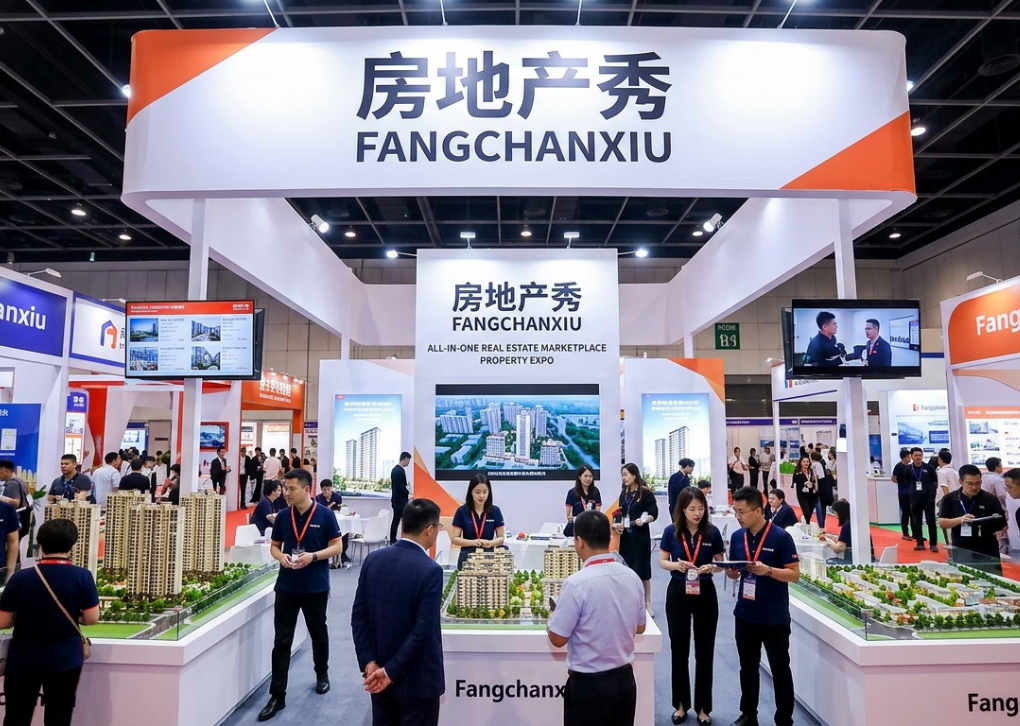
Fangchanxiu.com is a real estate and home-improvement content website built around three broad themes: property, renovation, and practical homeowner guidance. That sounds straightforward, but search results around the domain are unusually confusing. Some third-party pages describe it as a Chinese property marketplace with listings, AI search, virtual tours, contractor matching, or transaction tools, while the live website itself currently behaves much more like an editorial blog.
That distinction matters. If you arrive expecting Zillow-style property search, an agent marketplace, or an integrated renovation platform, the actual experience may not match those expectations. If you approach the site as an informational resource—one that can surface ideas, checklists, remodeling considerations, and general property topics—it makes considerably more sense.
This guide focuses on what can be verified from the live site as of August 31, 2026, where the strongest content appears to be, which trust signals deserve attention, and how readers can use the information without confusing editorial advice with professional real-estate, legal, financial, or construction guidance.
What Is Fangchanxiu.com?
At its core, Fangchanxiu.com presents itself as a resource for real estate trends, home renovation tips, and property insights. Its homepage explicitly targets homeowners, investors, and renovators, while its About page says the mission is to help readers make more informed property decisions.
The site is organized primarily around editorial categories rather than transactional tools. The most visible sections include:
- Real Estate — neighborhood considerations, property-buying issues, sales, investing, and market-oriented guidance.
- Home Renovation — materials, contractors, doors, kitchens, entertainment rooms, noise control, and remodeling decisions.
- Property Insights — renter preparation, development, storage buildings, local marketing, display homes, and related property topics.
- Trending or editorial content — a broader collection that can extend beyond the site’s tightest real-estate focus.
The homepage itself prominently separates Real Estate, Home Renovation, and Property Insights, while its recent content includes subjects ranging from neighborhood quality and renovation bids to display homes and commercial storage.
That navigation is the first important reality check. The visible user journey centers on reading articles, not filtering an inventory of homes, creating a buyer profile, scheduling property tours, or completing a transaction.
Is Fangchanxiu.com a Property Listings Platform?
Based on the live site reviewed for this article, Fangchanxiu.com should not be treated as a verified property-listings marketplace. The main navigation and homepage emphasize articles and topic categories, and the site’s own Terms and Conditions explicitly state that its content is provided for informational purposes.
This is important because several third-party pages make much bigger claims. You may encounter descriptions involving real-time listings, AI-driven property matching, agent profiles, map search, verified contractors, 360-degree tours, price-history tools, or buyer-to-seller transactions. One third-party site, for example, describes an integrated platform spanning listings, renovation services, AI-driven search, market analytics, and contractor services. Another describes a Chinese app for finding homes and repair workers.
Those claims should be independently verified before relying on them.
A useful SEO lesson also emerges here: search-engine repetition is not verification. Multiple pages can repeat essentially the same description of an entity even when that description does not match the functionality a user can observe on the current website.
Why Do Search Results Describe It So Differently?
There appears to be a significant entity-consistency problem around the brand. Different websites—and even some content associated with the domain—describe the website in materially different ways.
One description frames it as an editorial real-estate publication. Another presents it as a sophisticated Chinese proptech ecosystem. Still another may talk about listings, agents, apps, smart-home technology, or renovation marketplaces.
The unusual part is that the inconsistency exists on the domain itself. One Fangchanxiu article describes a property portal with listings, agent profiles, map views, price histories, verification badges, transaction records, alerts, and analytics—features that are not prominent in the site’s main navigation reviewed for this article.
For readers, the safest approach is simple: separate claims from observable features. If a feature cannot be found on the live website, do not assume it exists merely because another article mentions it.
What Content Does Fangchanxiu.com Publish?
The most defensible value proposition is its breadth of homeowner and property content. Recent pages cover topics such as neighborhood desirability, renovation bids, roof contractors, stone countertops, doors, acoustic comfort, display-home visits, rentals, and technology in property sales.
That breadth can be useful when you are in the research stage. A homeowner comparing renovation choices may discover questions they had not considered, while a renter or buyer may pick up a practical checklist for evaluating a property or neighborhood.
Real Estate Guidance
The real-estate section mixes broad education with situational advice. Topics include neighborhood quality, buying risks, property marketing, investment strategy, rental searches, and selling technology.
One recent article, for example, looks beyond bedroom counts and floor plans to factors such as community, walkability, amenities, common spaces, outdoor areas, property maintenance, and long-term neighborhood appeal.
The strongest use case is ideation. A neighborhood article can remind buyers to evaluate walkability, community spaces, maintenance standards, amenities, and long-term livability instead of focusing only on bedrooms and finishes.
However, market advice should be localized before action. Taxes, zoning, disclosure rules, financing structures, title requirements, landlord obligations, and purchase procedures vary dramatically by jurisdiction.
Home Renovation and Improvement
The renovation library is arguably the clearest fit for the site’s stated mission. It publishes guides on contractor selection, roofing, doors, countertops, driveway work, acoustic upgrades, entertainment spaces, and remodeling planning.
Some of these topics are highly practical because they push readers toward better questions: Is the contractor insured? What is included in the quote? Does the product meet energy or fire requirements? Is a cheaper bid omitting risk, labor, or materials?
A recent article about renovation bids illustrates the point with a scenario in which an unusually low contractor bid later becomes costly when insurance coverage becomes an issue. Whether or not a reader’s circumstances match that example, the underlying due-diligence question—what exactly is included in the contractor’s price and risk protection?—is valuable.
That is useful pre-purchase education. It does not replace a building professional, licensed contractor, structural engineer, electrician, or local code authority when a project involves safety, permits, structural changes, asbestos, wiring, gas, or other regulated work.
Property Insights and Broader Topics
The Property Insights section expands into renting, commercial buildings, development, event-driven property effects, and even marketing-related material. This makes the site broader than a traditional home-improvement blog.
The trade-off is topical consistency.
Its broader Trending Posts archive has also included material about online casinos, poker, crypto casinos, and other topics outside the site’s core property positioning.
A broad editorial footprint can increase discovery, but readers should assess each article on its own merits rather than transferring trust from one well-researched piece to every other page on the domain.
Fangchanxiu.com Trust Signals: What Can Be Verified?
Evaluating an information site requires more than checking whether it loads over HTTPS. For E-E-A-T, the useful questions are: Who is responsible for the content? What expertise is demonstrated? Can claims be verified? Are editorial boundaries clear?
Several signals are visible.
The About page identifies Alan Parker as the founder and describes a mission centered on property and renovation education. Many current articles, meanwhile, are attributed to Anthony Wolf.
The Contact page provides the email address support@fangchanxiu.com and lists a postal-style address. Its Privacy Policy explains that the site may collect information supplied through contact forms as well as usage data such as IP address, browser type, and visited pages.
Public domain information also shows that the domain registration dates to September 13, 2024, uses GoDaddy as registrar, resolves through Cloudflare infrastructure, and supports HTTPS. Server geography shown by such lookup services should not be confused with the physical location of a site’s owner or business.
These are useful baseline signals. They are not the same thing as proof of professional credentials, editorial review, licensing, or factual accuracy.
What Is Missing From a Strong E-E-A-T Profile?
For high-stakes property content, stronger trust architecture would usually include clearly documented author biographies, professional qualifications, editorial review standards, correction policies, sourcing conventions, and jurisdiction-specific disclaimers.
The site does not consistently make all of those elements obvious on every article. That does not automatically make the content wrong. It means the reader should apply a higher level of verification when a claim affects money, legal rights, safety, taxes, financing, or construction.
The Terms and Conditions reinforce that approach because they say the site’s material is informational and that the website makes no warranty or representation regarding the accuracy or completeness of the content.
A good rule is to treat the site as a secondary research source, not the final authority.
Is Fangchanxiu.com Legit or a Scam?
There is not enough evidence from the live site alone to responsibly label Fangchanxiu.com a scam. It is an accessible website with HTTPS, published content, contact information, privacy terms, and an identifiable editorial structure.
A third-party reputation service, ScamAdviser, currently characterizes the domain as very likely safe and notes factors including a valid SSL certificate. Its page also warns that its scan was not recent and notes relatively low traffic ranking, which illustrates why such ratings should be interpreted carefully rather than treated as definitive endorsements.
At the same time, “legit” can mean several different things.
A functioning website can be legitimate as a publication without being a licensed brokerage, property marketplace, contractor-verification service, or professional advisory firm.
That distinction is critical. Security-oriented reputation services generally assess domain or technical risk signals. They do not validate every article, prove a business model, confirm an author’s professional credentials, or guarantee that property advice applies to your jurisdiction.
A Practical Framework for Evaluating Articles on Fangchanxiu.com
Instead of asking whether the entire domain is trustworthy in one binary yes-or-no judgment, evaluate the specific page you intend to use.
Use this five-part filter:
- Check the author. Look for a substantive biography, relevant expertise, professional experience, and a track record on the subject.
- Check the evidence. Strong claims should be supported by primary sources, official data, recognized standards, legislation, research, or clearly identified experts.
- Check the jurisdiction. Property law, taxes, construction codes, insurance, landlord rules, and licensing requirements are location-specific.
- Check the commercial context. If an article links to a product, contractor, service, casino, or other commercial site, consider whether the recommendation may have a promotional component.
- Cross-check high-impact decisions. Verify financial, legal, structural, and safety claims with authoritative sources before acting.
This framework is more useful than relying on a generic trust score.
It also works for almost any property, investment, or home-improvement publication. Trust should be claim-specific, especially when financial exposure or physical safety is involved.
Where Fangchanxiu.com Can Be Useful
For low-risk research, the site can serve as a discovery layer. It can help you generate questions, compare renovation considerations, identify common mistakes, or build a shortlist of factors to investigate elsewhere.
A buyer, for instance, could use a neighborhood article to create a viewing checklist. A homeowner could use a contractor article to structure interview questions. A renovator could use a materials guide to learn terminology before speaking with suppliers.
Its display-home guide is a good example of this research-first use case. It encourages prospective buyers to prepare questions, research a builder, know their budget or block, examine a display home beyond its styling, and review what they learned after visiting.
That is where the site adds the most value: helping readers become better prepared before they enter a consequential conversation.
Where You Should Verify Elsewhere
Do not rely on a single blog article for decisions involving:
- purchase contracts, title, escrow, disclosure, or conveyancing;
- mortgage qualification, investment returns, depreciation, or tax strategy;
- permits, zoning, planning approval, or building-code compliance;
- electrical, gas, structural, roofing, asbestos, or life-safety work;
- contractor licensing, insurance, warranties, or regulatory status;
- market prices, comparable sales, rental yields, or neighborhood statistics.
For those issues, move from general content to primary or credentialed sources: government agencies, licensed professionals, official registries, recognized standards bodies, lenders, insurers, and verified local market data.
That extra step matters because even seemingly straightforward property advice can become inaccurate when transferred from one country, state, province, or municipality to another.
Fangchanxiu.com vs. What Competitor Articles Claim
The biggest information gap in existing search results is not a missing feature list. It is the failure to distinguish between verified website behavior and repeated claims about the brand.
Competitor pages often describe sophisticated functions such as account creation, property search, AI recommendations, verified listings, contractor matching, apps, and real-time market analytics. Some even describe nationwide Chinese property coverage and tools for tracking rental yields, neighborhood data, historical sales, and price trends.
Yet the live website reviewed here is dominated by article archives and informational pages. Its own homepage describes the brand around real estate insights, renovation guidance, and property information, while its Terms characterize the site’s content as informational.
For searchers, that mismatch is more important than another generic “complete guide.”
It changes the intent of the visit.
If you want a real-estate reading resource, the domain may have relevant material. If you want an active marketplace to browse homes or hire contractors, verify that the required functionality actually exists before providing personal data, making payments, or relying on third-party descriptions.
How to Use Fangchanxiu.com More Effectively
Start with a specific problem, not the homepage. Search for a narrow topic such as “contractor insurance,” “display home checklist,” “door renovation,” or “rental home search,” then assess the resulting article using the evidence framework above.
Next, extract questions rather than conclusions.
If an article says a contractor should carry certain coverage, turn that into a question for your insurer, contractor, or licensing authority. If it suggests a property investment strategy, test that strategy against current local market data, lending conditions, regulations, taxes, and professional advice.
Look at dates too.
Property markets, mortgage conditions, building standards, planning rules, rental regulations, insurance practices, product specifications, and tax treatment can change. An article that was broadly sensible two years ago may still contain outdated details today.
Finally, save the sources that actually validate the decision. This creates a clean research trail and prevents an informative blog post from becoming an accidental substitute for due diligence.
FAQ About Fangchanxiu.com
1. What is Fangchanxiu.com used for?
Fangchanxiu.com is best understood as an informational website focused on real estate, home renovation, property ownership, renting, and related topics. Its current navigation emphasizes articles and category archives, making it more useful for research and idea generation than for completing property transactions.
Readers can use it to build checklists, learn terminology, discover renovation considerations, and identify questions to raise with professionals. For legal, financial, safety, or market-specific decisions, the information should be independently cross-checked.
2. Does Fangchanxiu.com have real estate listings?
The current live site does not present a prominent Zillow-style listing database, map search, listing filters, or transaction workflow in its main navigation. Its visible navigation instead centers on Real Estate, Home Renovation, Property Insights, About, and Contact content.
Although some third-party articles describe property-listing and marketplace features, those descriptions should not be treated as confirmation that the functionality exists today.
If you encounter a specific listing or tool associated with the brand, verify that you are on the correct domain and confirm the feature directly before submitting personal or financial information.
3. Is Fangchanxiu.com safe to visit?
The website uses HTTPS, and public domain-information services report standard domain and DNS infrastructure. A third-party reputation service also currently assesses the domain as likely safe, although its page cautions that its scan is not recent.
Those are useful technical signals, but they do not establish the accuracy of every article or validate every third-party link.
Use the same browsing hygiene you would apply to any content site: confirm the domain, avoid entering sensitive information into unfamiliar forms, review privacy terms, and independently verify external services before purchasing or registering.
4. Who owns or writes for Fangchanxiu.com?
The site’s About page names Alan Parker as its founder. Many current articles visible on the website are attributed to Anthony Wolf, which suggests a separation between the stated founder and active editorial authorship.
For E-E-A-T purposes, readers should still look for topic-specific credentials, sourcing, firsthand experience, transparent corrections, and editorial review on the individual article they are reading.
A byline alone is not proof of subject-matter expertise.
5. Should I trust Fangchanxiu.com for investment or renovation decisions?
Use it as a starting point, not as your sole decision-making source. The site can be helpful for general education, question-building, and discovering issues that deserve deeper research.
Its own Terms state that the material is informational and disclaim warranties regarding accuracy or completeness, which is another reason consequential claims should be independently verified.
Before committing money, signing a contract, beginning regulated construction, or making an investment decision, verify key claims with licensed local professionals, official records, building authorities, lenders, insurers, or credible market-data providers.
Final Verdict: How Readers Should Approach Fangchanxiu.com
Fangchanxiu.com is most useful when you treat it for what the live website currently demonstrates: a broad real estate and home-renovation content resource. Its articles can help readers frame problems, learn vocabulary, spot potential mistakes, and prepare smarter questions.
The biggest caution is the gap between the site itself and the more ambitious descriptions circulating elsewhere online. Do not assume it is a listings marketplace, AI property platform, contractor network, or transaction service unless you can verify those functions directly.
That is also the key takeaway for anyone researching an unfamiliar website through Google: judge the entity by observable evidence, not by the number of pages repeating the same claim.
Your next step is practical: find the article that matches your specific property or renovation question, extract the useful ideas, then validate any high-impact claim with a primary source or qualified professional. That approach lets you benefit from Fangchanxiu.com without outsourcing due diligence to a single website.