


Hearing difficulties can affect far more than someone’s ability to follow a conversation. They can disrupt relationships, reduce independence, and make everyday activities unnecessarily difficult. Tympahealth.com customer success stories show how community pharmacies, healthcare organisations, and independent practitioners are addressing these challenges through more accessible ear and hearing healthcare.
From NHS community pharmacy programmes to private clinics and residential care homes, TympaHealth’s published case studies describe improvements in patient access, service delivery, and clinical workflows. Some also report measurable results, including reduced specialist referrals, high patient satisfaction, and expanded healthcare services.
What makes these experiences particularly interesting is that success looks different depending on the provider. A pharmacy might measure appointment volumes and returning customers, while a hospital prioritises appropriate referrals and a care home focuses on residents’ communication and wellbeing.
This article examines the evidence behind Tympahealth.com customer success stories, explores the experiences of real healthcare providers, and explains what organisations should consider before introducing similar services.
What Is TympaHealth, and Why Are Its Customer Success Stories Important?
TympaHealth develops technology and clinical support services designed to make ear and hearing healthcare more accessible outside traditional specialist settings.
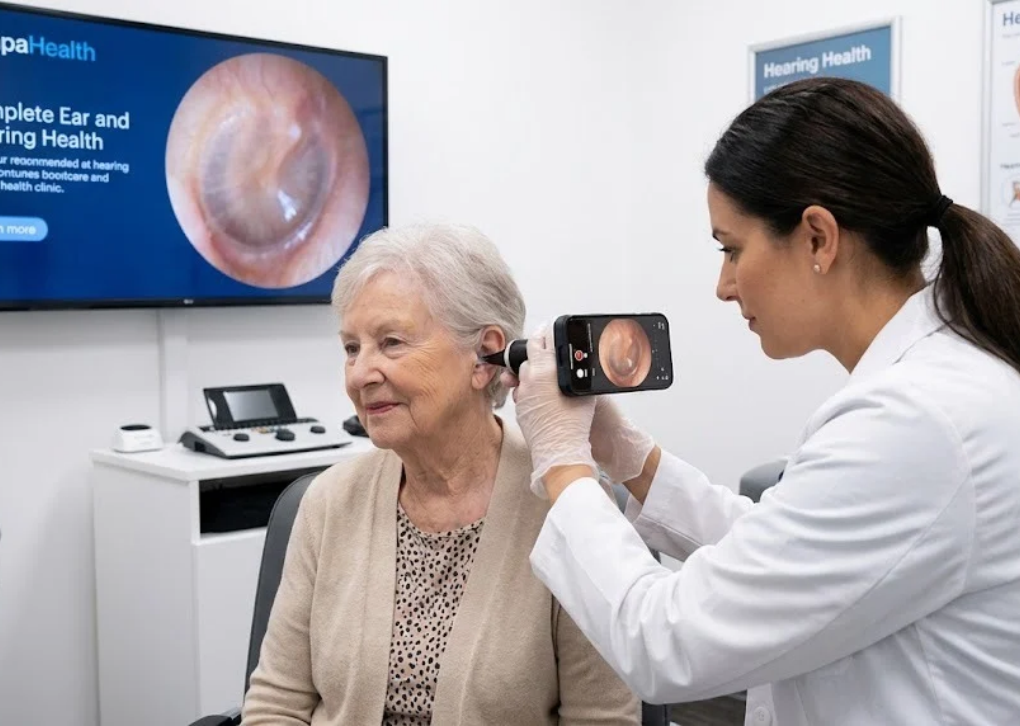
Its platform combines digital otoscopy, hearing checks, and microsuction earwax removal, supported by practitioner training and remote clinical review capabilities. Depending on professional qualifications, training, and local requirements, healthcare teams can deliver appropriate services closer to where patients live.
The significance of Tympahealth.com customer success stories becomes clearer when considering the problems they address. Patients with blocked ears or suspected hearing difficulties may otherwise face additional appointments, travel requirements, or delays in accessing treatment.
The UK’s National Institute for Health and Care Excellence (NICE) recommends offering earwax removal in appropriate primary or community care settings when wax causes symptoms or prevents examination. It also emphasises practitioner competence, suitable equipment, and awareness of contraindications.
How the TympaHealth Platform Supports Community Healthcare
The main capabilities described across provider experiences include:
-
High-definition digital otoscopy: Allows trained practitioners to examine the ear canal and capture images for clinical documentation.
-
Microsuction earwax removal: Provides a professional method for removing problematic earwax when clinically appropriate.
-
Hearing assessments: Helps identify patients who may require further audiology investigation.
-
Remote Review: Enables practitioners to seek additional clinical input on cases requiring specialist assessment.
-
Professional training: Supports staff competency through theoretical instruction, practical training, assessment, and ongoing development.
The technology is only one part of the service. Effective implementation also depends on clinical governance, referral pathways, patient communication, and appropriate aftercare.
Real Tympahealth.com Customer Success Stories: 8 Healthcare Examples
The strongest way to evaluate a healthcare platform is to examine what happens after implementation. Adoption figures matter, but so do clinical outcomes, patient experiences, operational challenges, and the sustainability of the service.
These eight Tympahealth.com customer success stories demonstrate different applications of the technology, from independent pharmacies to larger healthcare systems.
1. NHS South West London: Improving Community Hearing Healthcare
One of the most substantial examples comes from the NHS South West London Hearing Health Pathway Pilot. Introduced in September 2022, the programme enabled trained community pharmacy teams to provide ear examinations, wax removal, and hearing checks following referrals from general practices.
The January 2024 independent evaluation, conducted by NHS South, Central and West Commissioning Support Unit, examined activity, patient feedback, clinical safety, usability, and financial sustainability.
7,648
Patients referred
5,353
Patients completing treatment
99%
Patient satisfaction
98%
Would recommend the service
Reported outcomes from the NHS South West London pilot evaluation, January 2024.
The full evaluation recorded 21 participating pharmacy sites selected and trained, with 18 participating throughout the entire 12 months. It also found that 87% of patients were seen within four weeks, while only 3% of completed appointments resulted in a recommendation for secondary-care referral.
The financial findings deserve careful interpretation. The evaluation estimated £262,079 in potential non-cash-releasing savings compared with acute-care treatment, equivalent to £49.01 per relevant patient. This represented modelled cost avoidance rather than money necessarily returned to NHS budgets.
Among Tympahealth.com customer success stories, this example is especially valuable because it includes an independent evaluation rather than customer feedback alone. It demonstrates a promising community-based service model while also identifying areas requiring further monitoring, including referral efficiency, capacity utilisation, and health inequalities.
2. Florida Hospital System: Reducing Specialist Referrals
A US hospital programme provides another measurable example. In 2023, a large value-based hospital system in Florida piloted TympaHealth in three primary care clinics, initially reporting a 69% reduction in specialist referrals.
The hospital subsequently expanded the programme into 25 additional locations in 2024. Its reported electronic medical record analysis for January through June 2025 compared patients with ear-related diagnoses who used the Tympa pathway against those who did not.
The results showed a clear difference:
-
17% referral rate: Patients not seen through the Tympa pathway.
-
2% referral rate: Patients seen through the Tympa pathway.
-
88% relative reduction: The reported difference in specialist referral rates.
The initial pilot also reported 99% patient satisfaction and 10% fewer repeat appointments. These figures suggest that appropriately trained primary care teams may be able to address certain ear-related needs without automatically referring patients to specialists.
This is one of the most compelling Tympahealth.com customer success stories for healthcare administrators interested in referral management. However, the comparison comes from customer-supplied observational data, not a randomised clinical trial, so differences between patient groups may influence the results.
3. PharmaDerma: Treating More Than 1,000 Patients in One Year
Independent pharmacies often introduce new clinical services because customers already ask for help they cannot provide. That was the situation at PharmaDerma, a pharmacy in Okehampton, Devon.
Before introducing TympaHealth, PharmaDerma reported seeing as many as 60 patients each week with ear-related concerns. Staff could offer over-the-counter products but lacked a complete in-house pathway for examination, wax removal, and hearing checks.
After implementation, the pharmacy reported treating more than 1,000 patients in its first year. The service also became an important part of its clinical offering, with the business describing increased customer engagement and a sustainable private revenue opportunity.
What distinguishes this example from other Tympahealth.com customer success stories is the connection between existing demand and service expansion. The pharmacy did not need to invent an entirely new patient need; it developed a service around questions already arriving at the counter.
For pharmacy owners, the lesson is practical: assess how frequently patients request earwax removal or hearing checks before investing. Verified local demand provides a more reliable starting point than assuming the national market will translate directly into bookings.
4. Peak Pharmacy: Scaling Across More Than 46 Branches
Introducing a new clinical service in one location is challenging enough. Expanding it across a pharmacy network requires consistent training, appointment processes, equipment management, and patient communication.
Peak Pharmacy initially introduced TympaHealth as part of its wider clinical service offering. According to the company’s published case study, customer interest grew through word-of-mouth recommendations, pharmacy posters, and conversations with existing patients.
Following the initial rollout, Peak Pharmacy expanded TympaHealth services to more than 46 branches. Its experience illustrates how an individual service can become part of a larger pharmacy group’s operating model.
The most useful insight from these Tympahealth.com customer success stories is that expansion should follow evidence of demand and operational readiness. Branch count demonstrates adoption, but managers should also assess appointment utilisation, patient outcomes, staff competencies, and profitability at each location.
5. Care UK: Improving Communication and Resident Wellbeing
Hearing problems are particularly significant in residential care, where communication difficulties can affect independence, relationships, and participation in daily activities.
Care UK’s Hear Well project was developed to investigate whether training nurses to conduct ear examinations and provide appropriate earwax removal could improve residents’ experiences. It was supported by the Queen’s Nursing Institute’s Community Nursing Innovation Programme.
At Milner House, one trained nurse saw 47 residents over three months. The project reported improvements in hearing, communication, and social interaction among residents receiving relevant treatment, while six residents were referred for hearing aids after examinations identified hearing difficulties without obstructive wax.
The Hear Well project won a 2023 Nursing Times award in the social care category, providing additional recognition from outside TympaHealth.
These Tympahealth.com customer success stories highlight outcomes that cannot always be expressed through appointment totals or revenue. Being able to understand a family member or participate in a group activity can make a substantial difference to an older person’s daily experience.
Importantly, removing earwax does not treat every form of hearing loss or reverse dementia. The lesson is to identify potentially reversible hearing barriers while ensuring residents with other hearing conditions receive appropriate assessment.
6. G.M. Graham Pharmacies: Responding to a Local Healthcare Gap
G.M. Graham Pharmacies in Essex introduced ear and hearing healthcare in response to local demand, particularly where patients had difficulty accessing traditional NHS earwax removal services.
According to the pharmacy’s published account, staff valued the combination of practical training, examination technology, and access to remote clinical advice. They could assess appropriate cases locally and refer patients needing specialist attention.
One reported experience involved an older patient with significant compacted earwax and hearing difficulty. After removal, the patient experienced an immediate improvement and was given advice about future ear care.
Among Tympahealth.com customer success stories, this example illustrates why trust matters as much as technology. Patients need clear explanations, competent practitioners, realistic expectations, and an appropriate referral route when an examination reveals something beyond routine earwax.
7. The Clean Ears: Delivering Hearing Care Through Home Visits
Not everyone can comfortably travel to an audiology clinic or community pharmacy. Limited mobility, disability, and the challenges associated with residential care can make travel especially difficult.
Andrew Goodwin, founder of The Clean Ears, provides domiciliary ear and hearing healthcare in homes and care settings. TympaHealth’s portable solution supports his ability to conduct examinations, appropriate microsuction procedures, and hearing checks without requiring patients to attend a traditional clinic.
A particularly moving example in the company’s case study describes a 98-year-old woman whose ability to communicate improved after treatment. The practitioner also uses Remote Review to request additional clinical input when required.
The wider lesson from Tympahealth.com customer success stories is that accessibility includes where care is delivered, not simply how quickly an appointment can be arranged.
For domiciliary providers, portable equipment may reduce logistical barriers, but safeguarding, infection control, suitable treatment conditions, and emergency referral procedures remain essential.
8. Penwith Ear Care: Using Remote Review to Identify a Foreign Object
Some of the most instructive clinical examples concern cases where the safest decision is to stop treatment and seek specialist guidance.
At Penwith Ear Care in Cornwall, a practitioner examining a patient with significant earwax noticed an unexpected object after removing an initial layer of wax. Digital imaging suggested that it could be a hearing-aid dome, although the possibility of a battery raised additional concern.
The practitioner submitted images for TympaHealth Remote Review, where a clinician identified the object as a hearing-aid dome. The patient was then directed to an emergency care setting for appropriate removal.
This is a particularly important example among Tympahealth.com customer success stories because it concerns clinical escalation rather than routine treatment completion.
Good outcomes do not always mean completing a procedure during the first appointment. Recognising an abnormal finding, documenting it accurately, and arranging appropriate care are equally important indicators of a safe service.
What the Tympahealth.com Customer Success Stories Reveal About Patient Outcomes
Across these examples, several recurring benefits emerge. Patients may gain access to convenient examinations, faster assessment of routine problems, improved communication about their ear health, and referral when specialist treatment is needed.
However, patient satisfaction, improved hearing after wax removal, and reduced specialist referrals are different outcomes. They should not be treated as interchangeable measures of clinical effectiveness.
The evidence also varies considerably in quality. The NHS South West London pilot includes independent evaluation, the Florida example relies on a customer-supplied analysis, and several pharmacy and domiciliary reports are descriptive case studies.
| Provider | Reported outcome | Evidence type |
|---|---|---|
| NHS South West London | 99% satisfaction; potential cost avoidance | Independent programme evaluation |
| Florida hospital system | 88% relative reduction in referral rates | Customer-supplied observational analysis |
| PharmaDerma | Over 1,000 patients treated in first year | Company-published case study |
| Peak Pharmacy | Expansion to more than 46 branches | Company-published case study |
| Care UK | 47 residents seen in three months | Project report and external award recognition |
| Penwith Ear Care | Foreign object identified and referred | Individual clinical case report |
For healthcare buyers examining Tympahealth.com customer success stories, understanding these evidence differences is essential. A positive testimonial may explain the patient experience, but purchasing and commissioning decisions should also consider costs, clinical safety, long-term outcomes, and independent evidence.
How Healthcare Providers Can Turn These Success Stories Into Results
Successful ear and hearing health services require more than purchasing a device. Providers need a workable clinical pathway, staff confidence, reliable patient demand, and a clear definition of success.
Start With Measurable Local Demand
Review the number of patients requesting earwax removal, ear examinations, or hearing checks over a representative period. Separate casual enquiries from patients who would be eligible and willing to book an actual appointment.
Compare local services, waiting times, pricing, transport accessibility, and population needs. This helps determine whether there is enough demand to support a new service without making unrealistic revenue forecasts.
Build Training and Clinical Governance Into the Launch
Before treating patients, verify practitioner eligibility, training requirements, professional indemnity, infection-control procedures, and locally applicable clinical guidance. Create escalation pathways for abnormal examination findings, suspected infection, persistent hearing loss, and other red flags.
NICE guidance makes clear that earwax removal methods should be undertaken by practitioners with suitable training and awareness of contraindications. This is a safety requirement, not simply an operational preference.
Track Meaningful Performance Indicators
The most useful Tympahealth.com customer success stories provide starting points for designing a performance dashboard. Instead of monitoring appointment numbers alone, measure indicators that reveal both clinical quality and financial sustainability.
| Performance indicator | What to measure |
|---|---|
| Appointment utilisation | Completed bookings ÷ available slots |
| Treatment completion | Patients completing planned care ÷ eligible patients |
| Patient satisfaction | Consistent post-appointment feedback |
| Referral appropriateness | Documented reasons and outcomes of referrals |
| Repeat attendance | Clinically appropriate return visits |
| Revenue per appointment | Collected revenue ÷ completed appointments |
| Contribution margin | Revenue minus relevant variable costs |
| Service accessibility | Waiting time, travel burden, and appointment availability |
These measurements also help reveal problems early. A busy clinic may still be financially unsustainable if consumables, staffing, equipment, training, and administrative costs exceed the income generated.
Do Not Ignore Implementation Difficulties
The independent NHS evaluation identified practical challenges involving technology integration, referral processes, and variations in pharmacy utilisation. It also noted that the wider effects on secondary-care waiting lists and health inequalities had not yet been conclusively demonstrated.
This adds necessary balance to Tympahealth.com customer success stories. A platform can be clinically promising while still requiring improvements in administration, interoperability, staffing, or financial arrangements.
For prospective providers, a limited initial launch with defined review dates is often more informative than immediate expansion. Compare real performance against an agreed baseline before investing in additional locations or capacity.
Frequently Asked Questions About Tympahealth.com Customer Success Stories
1. Are Tympahealth.com customer success stories based on real healthcare experiences?
Yes. The published examples include identifiable pharmacies, care organisations, independent practitioners, and healthcare programmes that have used TympaHealth services.
Some Tympahealth.com customer success stories are supported by measurable performance figures, while others describe individual patient experiences or provider feedback. The South West London programme is particularly useful because its outcomes were assessed through an independent NHS evaluation.
Readers should still distinguish between independently evaluated results and company-published testimonials. Both can offer valuable information, but they provide different levels of evidence.
2. What types of healthcare businesses benefit most from TympaHealth?
The platform is designed for suitable healthcare professionals working across community pharmacies, primary care, audiology services, independent clinics, and residential care environments.
The Tympahealth.com customer success stories suggest that providers with existing ear-care demand and appropriate clinical infrastructure may be well placed to introduce the service. Pharmacies may benefit from expanding their clinical offerings, while care homes may prioritise resident accessibility and wellbeing.
The right fit depends on professional qualifications, local demand, funding arrangements, patient needs, and the ability to maintain safe clinical procedures.
3. Can TympaHealth replace traditional ENT or audiology appointments?
TympaHealth can support assessment and appropriate treatment of certain ear-related problems in community settings, but it does not replace specialist care when that care is clinically necessary.
Several Tympahealth.com customer success stories demonstrate how practitioners use digital imaging and remote clinical advice to decide whether treatment can proceed locally or whether further investigation is required.
Patients experiencing sudden hearing loss, significant pain, concerning discharge, or other warning symptoms may need urgent medical assessment. A community ear-care service must have clear referral arrangements rather than assuming every case can be managed through wax removal.
4. Is TympaHealth profitable for independent pharmacies?
Profitability depends on appointment demand, service pricing, staffing, training, equipment costs, consumables, and ongoing operating expenses.
Some Tympahealth.com customer success stories, including PharmaDerma and Peak Pharmacy, describe successful service growth. However, these reports do not establish a universal profit margin or guarantee financial returns for another business.
Before making an investment, request current commercial terms directly from TympaHealth and calculate the number of completed appointments needed to cover total service costs. Include realistic allowances for cancellations, unsuccessful procedures, and administrative work.
5. Where can I find verified TympaHealth customer reviews and case studies?
The official TympaHealth Insights section provides published case studies, healthcare stories, and other resources about the platform.
For a deeper evaluation of Tympahealth.com customer success stories, compare those accounts with relevant independent reports, such as the NHS South West London Hearing Health Pathway Pilot evaluation.
Prospective customers should also request current references from providers operating in similar environments. Ask about training, maintenance, clinical support, appointment demand, treatment outcomes, and any unexpected implementation difficulties.
Conclusion: What Tympahealth.com Customer Success Stories Teach Healthcare Providers
The evidence reviewed here demonstrates how ear and hearing healthcare can be delivered more conveniently through trained community practitioners, independent clinics, residential care providers, and primary care teams.
From strong patient satisfaction in the NHS South West London pilot to reduced specialist referral rates in a US hospital programme, Tympahealth.com customer success stories offer encouraging examples of what carefully implemented services may achieve.
The most important lesson is that successful technology adoption requires more than positive customer feedback. Clinical competence, patient safety, accessibility, sustainable costs, and measurable outcomes must work together.
If you are considering introducing ear and hearing healthcare, start by reviewing the published case studies, evaluating demand in your area, and speaking with TympaHealth about training and operational requirements. Then develop a realistic business case and test the service against clear clinical and financial performance indicators.
That approach turns inspiration from Tympahealth.com customer success stories into an informed, evidence-based decision for your healthcare organisation.