



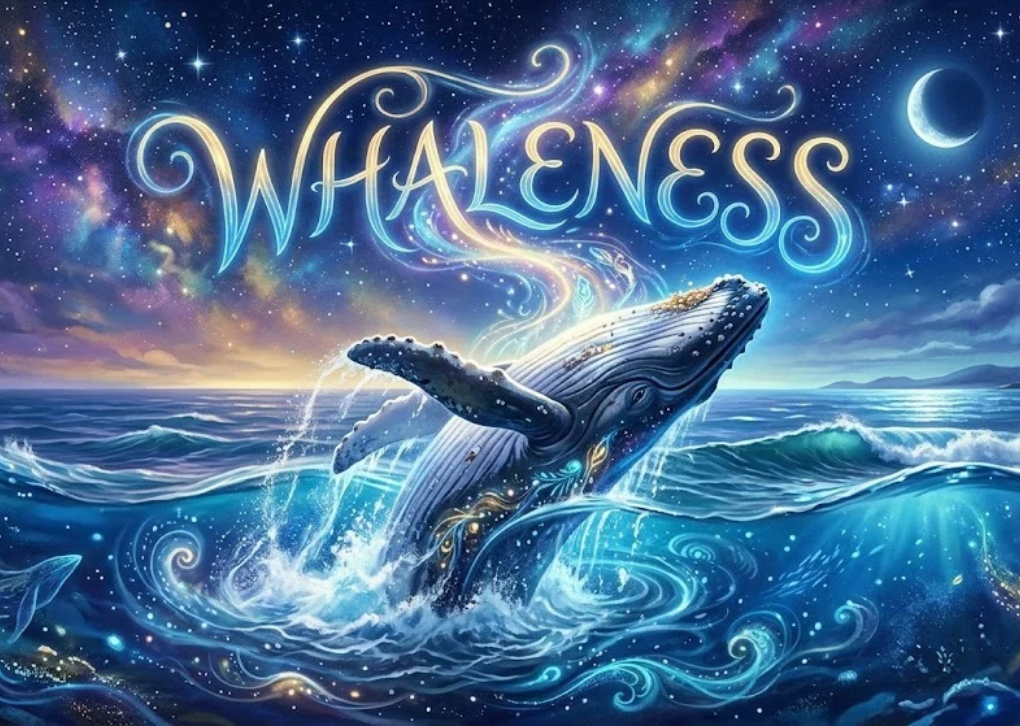
Whaleness is an emerging, whale-inspired approach to thinking about wellbeing—not just our own, but that of the oceans and the living systems that sustain us. The idea sounds poetic, yet it opens the door to surprisingly practical questions: What do whales actually do for marine ecosystems, what can people reasonably learn from them, and how can admiration translate into protection?
The useful answer lies between science and interpretation. Whales really do transport nutrients, influence food webs, communicate across underwater environments, and face serious human-created threats; claims that a particular whale experience can heal illness, however, require evidence that does not currently exist.
What Is Whaleness? A Clear Definition
In its most clearly documented movement-related use, Whaleness describes the wellbeing whales create for the planet and people. The organization we.are.tohorā presents it as a philosophy and movement bringing together whale conservation, nature connection, human reflection, science, and activism.
That description matters because the term is not a formally recognized medical diagnosis, psychological therapy, or scientific discipline. It is a way of framing relationships: the wellbeing of humans cannot be discussed entirely apart from the health of the natural world, and an encounter with wildlife can prompt both wonder and responsibility.
Where Did the Whaleness Idea Come From?
Julia Graeter, founder of we.are.tohorā and known publicly as the Whale Woman, identifies herself as the visionary behind the movement. Her organization describes an approach combining whale knowledge with creative work, public talks, gatherings, and advocacy for marine environments.
It would be misleading to claim that Graeter invented every use of the word. Other writers and organizations use similar language for different purposes; her contribution is a specific, publicly articulated whale-and-wellbeing framework, not an internationally standardized definition.
Why Whaleness Connects Personal Wellbeing With Ocean Health
Most wellness advice asks what an individual can change: sleep more, manage stress, exercise, or build better relationships. Whaleness invites a second question: what conditions allow other living beings—and the ecosystems we depend on—to thrive?
This is a useful distinction because environmental concern can otherwise become another lifestyle aesthetic. Watching a whale documentary might be meaningful, but the larger principle asks whether our actions also reduce disturbance, support evidence-based conservation, or improve understanding of marine life.
There are three separate layers worth keeping straight:
| Layer | What it means | Strength of evidence |
|---|---|---|
| Marine ecology | Whales contribute to nutrient movement and ocean food webs. | Supported by scientific research, with important uncertainties about scale. |
| Human experience | Whales and ocean settings can evoke awe, curiosity, and reflection. | Plausible and individually variable; not proof of a medical effect. |
| Ethical action | People can reduce disturbance and support conservation policies. | Practical choices can address documented risks to whales. |
Keeping these layers separate makes Whaleness more credible, not less inspiring. It helps readers appreciate the animals without turning ecological facts into exaggerated promises about human health.
The Science Behind Whaleness: What Whales Actually Do
The strongest scientific foundation for Whaleness comes from marine biology. Whales are mammals and members of the cetacean group, but their ecological influence goes well beyond their size or intelligence.
1. The Whale Pump: Moving Nutrients Toward Sunlight
Some whales feed at depth and return to the surface to breathe and release waste. That waste carries nutrients, including nitrogen and iron, into sunlit waters where microscopic algae called phytoplankton can use them to grow.
Researchers call this movement the whale pump. According to NOAA Fisheries, nutrient recycling by whales can support the marine food web and contribute indirectly to biological carbon cycling; the effect differs by species, location, and surrounding ocean conditions.
Think of a garden that needs nutrients in the upper soil. A whale does not create nutrients from nothing; it helps redistribute material already circulating through the ecosystem, sometimes moving it into places where it becomes more biologically useful.
2. Migration Creates Connections Between Distant Ecosystems
Many baleen whales travel between feeding and breeding habitats, sometimes crossing thousands of kilometres. Nutrients acquired in productive feeding areas can be released elsewhere along a migration route, linking places that might otherwise appear disconnected.
This long-distance transfer is sometimes called the great whale conveyor belt. It is one reason conservation planning cannot focus only on a single scenic bay: whales depend on feeding grounds, travel corridors, and breeding areas that may fall under different jurisdictions.
3. Living Whales Store Carbon; Whale Falls Support Deep-Sea Life
Carbon becomes part of a whale’s body as it eats and grows. When a whale dies and its carcass sinks, the resulting whale fall can nourish scavengers and specialized deep-sea communities, while some associated carbon may remain in deep sediments.
The mechanisms are real, but popular headlines often make them sound more certain or globally powerful than the evidence warrants. NOAA explicitly notes that the total amount of blue-carbon storage attributable to whales is difficult to quantify, so protecting whales should not be sold as a substitute for cutting greenhouse-gas emissions.
4. Whale Sounds Reveal a Complex Acoustic World
Humpbacks are famous for patterned songs; other cetaceans use clicks, calls, and other sounds for communication or sensing their surroundings. Underwater sound behaves differently from sound in air, making acoustic information important for many species’ movement and social behaviour.
There is also a conservation consequence. Ship traffic, construction, and other human activities can increase underwater noise, potentially interfering with whales’ ability to communicate, navigate, find food, or locate mates, as described by NOAA’s North Atlantic right whale research.
What the Carbon Story Does Not Prove
One frequently repeated claim says whales capture carbon equivalent to several enormous forests. Comparisons of that kind can blur a crucial distinction: the total carbon absorbed by all marine phytoplankton is not the same as the extra carbon uptake directly caused by whales.
A responsible explanation names the process, acknowledges uncertainties, and avoids converting suggestive ecological relationships into a precise global benefit without appropriate measurement. The urgent case for saving whales does not depend on a spectacular but shaky number.
Whaleness and Mental Wellbeing: Where Evidence Ends
Can looking at the ocean or listening to whale calls make someone feel calmer? Certainly, some people report that experience, and there are sensible reasons to explore it; personal relaxation and scientifically established treatment efficacy are different claims.
The World Health Organization’s review of green and blue spaces describes an overall positive relationship between access to natural environments and mental health, while acknowledging that the blue-space evidence has limitations. A 2026 systematic review and meta-analysis found only a very small association between urban blue-space exposure and fewer depression-related outcomes, with very low certainty of evidence.
Awe Is Meaningful Without Being Medicine
An enormous animal surfacing beside a distant headland can interrupt ordinary thought in the best possible way. People may respond with wonder, humility, sadness, delight, or a renewed desire to care about the ocean—and those responses can be worthwhile in their own right.
But no established clinical evidence shows that Whaleness itself treats anxiety, depression, trauma, or other conditions. Whale-song recordings, retreats, breathwork, and guided reflection should be treated as optional experiences, not replacements for qualified medical or psychological care.
A Ten-Minute Nature-Connection Exercise
You do not need a boat, a retreat, or even a coastline to begin. Find a quiet place, open a trustworthy recording or educational video from a marine research institution, and give your attention to the animal rather than to notifications or multitasking.
For two minutes, observe without interpreting; for three, learn one verified fact about the species; for another three, consider a threat the animal encounters; and for the final two, choose one useful action. This is a reflection exercise, not a therapy protocol, and it gives Whaleness a practical form by combining curiosity with informed intention.
Five Principles of Whaleness in Everyday Life
A practical interpretation can be organised around five commitments rather than mystical promises:
- Attention: Learn to notice ecological details instead of treating wildlife as scenery.
- Humility: Recognise that a whale’s behaviour is not always understandable through human emotions.
- Interdependence: Trace connections between marine mammals, plankton, fisheries, shipping, and people.
- Reciprocity: Give something back through responsible choices and conservation support.
- Evidence: Check compelling claims before sharing them, especially health or climate statistics.
The point is not to imitate whale behaviour or assume whales possess a universal philosophy for humans. It is to turn respect for another species into an informed way of paying attention and acting.
How to Practice Whaleness Without Seeing a Whale
Start with species literacy. Learn to distinguish baleen whales, which filter prey using baleen plates, from toothed whales, which include sperm whales and orcas. Choose one species, identify its habitat and diet, and check its current conservation status using a scientific or government source.
Listen with context. A whale recording becomes more interesting when you know what species produced it, where it was recorded, and whether scientists interpret the sound as song, contact calling, or echolocation. Skip videos that confidently translate every note into human emotions without research to support the claim.
Follow the threats, not just the beautiful footage. A single photograph rarely shows fishing-gear entanglement, ship-strike risk, underwater noise, or shifting food distributions. Understanding those pressures turns passive fascination into a clearer view of conservation priorities.
Make conservation specific. Instead of declaring that you care about the sea, support a credible project that explains its goals, methods, partners, outcomes, and finances. Donations, volunteering, citizen-science participation, and constructive policy engagement can all be useful when tied to a real need.
Bring someone along intellectually. Share one carefully sourced observation with a friend, child, class, or colleague, then discuss what remains uncertain. An honest question can teach more than a dramatic statistic, particularly when the aim is lasting environmental awareness.
Responsible Whale Watching: Admiration Without Disturbance
Seeing a whale in the wild can be extraordinary, but the animal’s welfare must take priority over a visitor’s photograph. The International Whaling Commission’s Whale Watching Handbook offers a research-informed starting point for both visitors and operators.
Ask These Questions Before Booking
- Does the operator follow current local approach distances, speed restrictions, and time limits?
- Will the captain avoid chasing, surrounding, cutting across, or separating whales and calves?
- Are guides trained to recognise disturbance and end an encounter when necessary?
- Does the company explain its conservation practices rather than guarantee close encounters?
- Are swimming, drone use, feeding, and touching prohibited where regulations require it?
Local rules differ by species and country, so a single global distance rule would be misleading. Responsible tours should explain the regulations applying to their own waters and be willing to prioritise a distant sighting—or no sighting—over stressing an animal. This is Whaleness practiced as restraint rather than consumption.
Land-Based Watching Can Be the Better Choice
Headlands, designated coastal lookouts, and authorised observation platforms often allow people to enjoy migrations without adding another vessel to the water. Use binoculars, remain within marked public areas, and never fly a drone toward animals unless expressly authorised under applicable regulations.
When whales approach a boat unexpectedly, the operator should respond according to local wildlife guidance rather than trying to prolong the encounter. Patience is part of the experience, not a disappointing substitute for getting closer.
Why Protecting Whales Is Urgent
Major threats differ among populations, but a recurring pattern is clear: vessel collisions, fishing-gear entanglement, human-made noise, habitat disruption, and climate-related changes can undermine survival and reproduction. NOAA Fisheries’ blue whale overview explains how ship strikes and entanglement threaten even the largest animals on Earth.
Protection also demands species-specific solutions. Slower shipping in vulnerable corridors, better detection and reporting, safer fishing equipment, protected habitat, and enforceable whale-watching rules address more than an individual’s consumption habits can achieve alone.
This is where Whaleness becomes a test of priorities. If a campaign celebrates whale sounds but ignores underwater noise, or sells close encounters without discussing animal disturbance, it has separated the appealing image from the responsibility the image should inspire.
Whaleness, Wholeness, and Other Uses of the Word
Search results can be confusing because Whaleness is not used consistently across the internet. Some articles treat it as inner completeness; others refer to whale-centred retreats or conservation philosophies, and some uses are entirely unrelated to marine-wellbeing ideas.
For example, Docker describes its quarterly “Whaleness Days” as company-wide time off, playing on the software firm’s whale imagery. Separately, Svetlana Seibel’s 2024 literary study uses “whaleness” to discuss the whale as a being in its own right rather than merely a human symbol; neither usage should be automatically attributed to the conservation movement.
Nor is the spelling interchangeable with wholeness, a standard English word meaning completeness or an undivided state. If a page uses the term to discuss self-acceptance alone, readers should check whether it is offering a personal metaphor or talking about the specific whale-inspired movement.
Common Myths Worth Challenging
Myth 1: Whale Songs Have Proven Healing Powers
Recordings may help some listeners relax, but there is no sound scientific basis for promising that whale calls cure disease or reliably regulate everyone’s nervous system. Treat therapeutic language as a claim to investigate, not an established benefit.
Myth 2: Every Whale Automatically Solves Climate Change
Whales influence nutrient cycling and store carbon, but the scale varies and is difficult to calculate. Ocean conservation complements emissions reduction; it cannot replace it, and no single charismatic species does the climate work of an entire ecosystem.
Myth 3: Getting Closer Means Connecting More Deeply
Proximity can distress an animal and may violate local laws, especially around mothers and calves. The more meaningful encounter is one that leaves the whale’s natural behaviour and habitat undisturbed.
A Seven-Day Whaleness Action Plan
- Day 1: Choose one whale species and read its official conservation profile.
- Day 2: Learn the difference between whale feeding, migration, and communication behaviours.
- Day 3: Watch or listen to a verified educational recording and write down one question.
- Day 4: Read about a local or international threat such as bycatch, ship strikes, or underwater noise.
- Day 5: Evaluate one conservation organisation for transparency, evidence, and impact.
- Day 6: Make one practical contribution: share a verified resource, volunteer, donate if appropriate, or support a relevant policy.
- Day 7: Review what changed in your understanding and choose one sustainable monthly habit.
This plan is deliberately modest. An informed action maintained for a year is more valuable than a weekend of enthusiasm followed by forgetfulness; that is the most durable expression of Whaleness.
Frequently Asked Questions About Whaleness
1. What does Whaleness mean in simple words?
It is a whale-inspired idea that connects personal wellbeing, appreciation of marine life, and care for ocean ecosystems. In the named movement developed through we.are.tohorā, it specifically emphasises the wellbeing whales bring to people and the planet, but the term can have different meanings in other contexts.
2. Is Whaleness scientifically proven?
The movement itself is not a scientific theory or a clinically validated wellness intervention. Some related ecological mechanisms, such as nutrient transfer by whales, are supported by research; proposed emotional or therapeutic benefits require separate evidence and should not be treated as established medical outcomes.
3. How is Whaleness different from regular wellness or wholeness?
Wellness generally refers to habits and conditions that support a person’s health, while wholeness describes completeness or integration. This whale-focused framework adds a specific ecological relationship: personal reflection is paired with knowledge of marine animals and responsibilities toward their habitats.
4. Can whale sounds help with stress or anxiety?
Some listeners find ocean and whale recordings soothing, but personal preference is not proof of treatment. If recordings help you unwind, use them as a low-stakes relaxation activity; persistent or serious symptoms deserve support from a qualified health professional.
5. How can I support whale conservation if I live far from the ocean?
You can learn from credible scientific sources, support transparent conservation organisations, participate in legitimate remote citizen-science projects, and advocate for measures addressing shipping, fishing gear, and marine pollution. Geography does not prevent useful involvement, but choose actions whose connection to measurable conservation outcomes is clear.
Conclusion: Turn Curiosity Into Ocean Stewardship
Whaleness is most useful when it does not ask readers to choose between wonder and evidence. Whales are remarkable enough without inflated climate arithmetic or unproven healing promises, and their real ecological roles give us substantial reasons to care.
Start today with one species, one reliable scientific source, and one practical conservation action. The deepest form of connection is not claiming that whales exist to improve our lives; it is learning how to help them continue living theirs.