


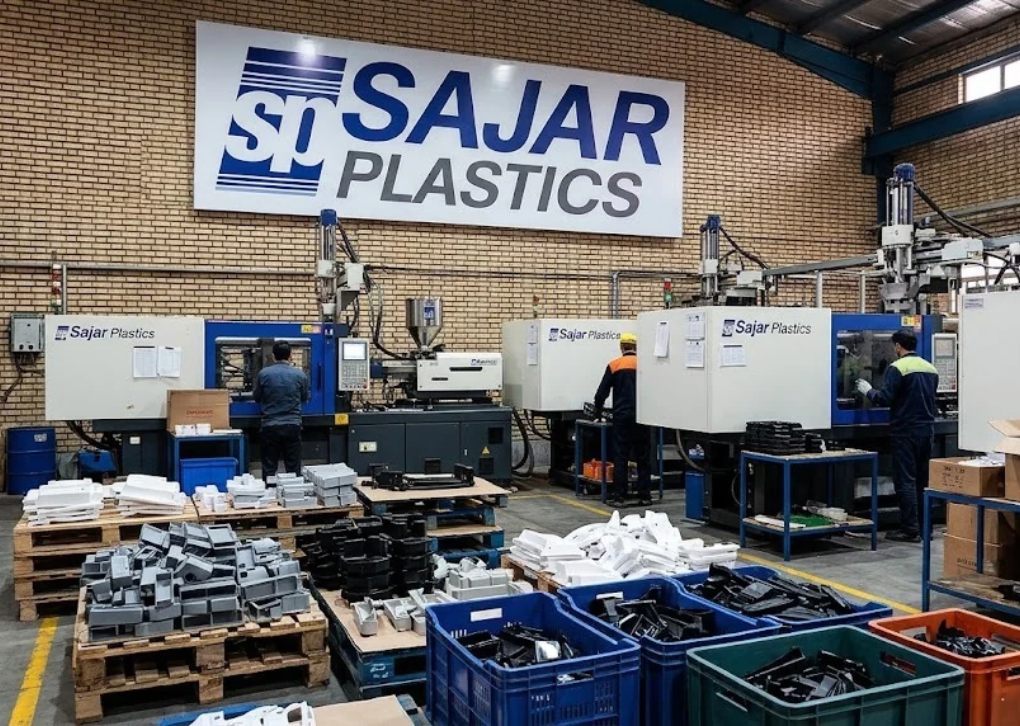
When researching Sajar Plastics, one name stands out in the history of specialized American plastics manufacturing. Founded in Middlefield, Ohio, in 1949, Sajar Plastics developed a reputation for producing large, complex, and appearance-sensitive plastic components. Its expertise in gas-assist injection molding helped establish its position in an industry where product design, dimensional stability, manufacturing efficiency, and surface quality are equally important.
Unlike manufacturers focused on everyday disposable plastic products, Sajar built its reputation around engineered plastic components for original equipment manufacturers (OEMs). Its manufacturing capabilities include gas-assist injection molding, structural foam molding, and conventional injection molding.
The company became part of Universal Plastics Group in 2017, expanding the group’s capabilities in large-part injection molding. In 2020, the group announced the integration of its manufacturing businesses under the Universal Plastics name. Understanding this history provides a useful perspective on Sajar’s industrial contribution, manufacturing technologies, and continuing relevance to modern plastics engineering.
Universal Plastics Group+2
What Is Sajar Plastics?
Sajar Plastics is an American custom plastics manufacturing operation historically associated with Middlefield, Ohio. It specializes in designing, developing, and manufacturing large plastic components that require carefully controlled structural and cosmetic properties.
Its work is primarily business-to-business (B2B). Rather than selling finished consumer products directly to households, the manufacturer supports OEMs that need custom-molded components for their equipment and products.
Its main manufacturing capabilities include:
-
Gas-assist injection molding: Producing large, hollow or partially hollow components with controlled material distribution.
-
Structural foam molding: Manufacturing lightweight components with a cellular internal structure.
-
Conventional injection molding: Producing precision plastic components using traditional injection molding techniques.
-
Design and engineering support: Helping customers develop practical plastic components from product concepts and engineering requirements.
-
Secondary operations: Supporting finishing, decoration, assembly, and other value-added manufacturing requirements.
Universal Plastics Group continues to identify the Sajar operation as a specialist in large, complex molded parts.
Universal Plastics Group+2
The History and Development of Sajar Plastics
How the Company Started in 1949
The history of Sajar Plastics dates back to 1949, when the business was established in Middlefield, Ohio. According to historical company information, its original operation started with three plastic injection molding machines producing conventional injection-molded components.
The name Sajar reportedly came from an acronym representing the surnames of its three founding owners. This naming detail reflects the company’s original ownership structure and its roots in the American manufacturing industry.
Middlefield, OH – Manta.com+1
As demand for engineered plastic products increased, the company expanded its production capabilities. It gradually developed a reputation for manufacturing larger components with complex geometries and demanding appearance requirements.
Growth Into Specialized Plastic Manufacturing
The company’s development was closely connected to advances in injection molding technology. Instead of limiting production to conventional plastic parts, Sajar invested in processes that offered manufacturers greater design flexibility.
Its involvement in gas-assist injection molding became a defining part of its industrial identity. The company was among the early manufacturers associated with developing and advancing gas-assisted molding applications.
A historical industry profile described its Middlefield facility as approximately 150,000 square feet, with more than 100 employees at the time of publication. These figures are historical rather than verified current operating statistics.
universalplastics.com+1
The 2017 Acquisition by Universal Plastics Group
An important milestone occurred in July 2017, when Universal Plastics acquired Sajar Plastics.
The acquisition strengthened Universal Plastics’ manufacturing capabilities by adding specialized large-part injection molding to its existing thermoforming expertise. It also created opportunities to support customers across different stages of product development and production.
The strategic advantages included:
-
Access to additional injection molding technologies.
-
Greater flexibility when selecting manufacturing processes.
-
Engineering support for complex plastic components.
-
Opportunities to serve customers from initial production through higher-volume manufacturing.
-
A broader range of manufacturing solutions for OEM customers.
Universal Plastics stated that the acquired operation would retain its facilities, employees, and procedures following the transaction.
BusinessWest+1
What Happened to the Sajar Plastics Name?
In January 2020, Universal Plastics announced that Universal Plastics, Mayfield Plastics, Premium Plastic Solutions, and Sajar Plastics had been integrated under the Universal Plastics name.
This distinction is important when researching the company today. Sajar is best understood as a historical manufacturing operation and specialist capability within the wider Universal Plastics organization, rather than automatically being treated as an independent company.
PRWeb+1
Understanding the Manufacturing Technology Behind Sajar Plastics
The manufacturing processes associated with Sajar Plastics are particularly relevant to industries that require large plastic components without compromising appearance, structural performance, or production efficiency.
Three processes are especially important.
1. Gas-Assist Injection Molding
Gas-assist injection molding is one of the technologies most closely associated with Sajar’s manufacturing history.
It is an advanced injection molding process in which pressurized gas, commonly nitrogen, is introduced into the molten plastic during the molding cycle. The gas creates hollow or partially hollow sections within selected areas of the component.
This technique can help manufacturers produce larger parts while reducing material consumption and addressing certain conventional molding challenges.
How the process works:
-
Molten thermoplastic material is injected into the mold.
-
Pressurized gas is introduced into selected regions of the molten material.
-
The gas pushes the material toward the mold walls and creates hollow internal sections.
-
The plastic cools and solidifies while maintaining the required geometry.
-
The finished component is removed for inspection and subsequent operations.
Key advantages include:
-
Reduced plastic material consumption in suitable designs.
-
Lower component weight.
-
Improved dimensional stability.
-
Reduced sink marks in appropriately designed parts.
-
Greater freedom when designing thick or large components.
-
Potential reduction in secondary assembly operations.
For example, an equipment manufacturer designing a large plastic cabinet may use gas-assist molding to create stronger hollow sections without filling the entire component with solid plastic.
However, results depend on resin selection, mold design, gas pressure, material thickness, and processing conditions. Gas-assist molding is not automatically suitable for every plastic component.
2. Structural Foam Injection Molding
Structural foam molding is another important manufacturing capability associated with Sajar Plastics.
This process uses a blowing agent to create a cellular structure within the molded plastic. The resulting component typically has a solid outer skin and a foam-like internal core.
Unlike conventional injection molding, structural foam molding can produce relatively thick, lightweight parts with useful stiffness.
Important benefits include:
-
Lower component weight compared with an equivalent solid design.
-
Potentially reduced material requirements.
-
Good stiffness-to-weight characteristics.
-
Suitability for large industrial components.
-
Greater flexibility in designing thicker sections.
Structural foam molding can be particularly useful when manufacturers need substantial plastic enclosures, housings, and equipment components.
One important consideration is surface appearance. The cellular core and molding process can influence surface characteristics, so the selected process must match the product’s cosmetic requirements.
3. Conventional Injection Molding
Conventional injection molding remains one of the most widely used manufacturing processes in the plastics industry.
It involves injecting molten thermoplastic material into a closed mold under controlled pressure. Once the material cools and solidifies, the mold opens and the finished component is ejected.
This technique is suitable for producing components with repeatable dimensions and detailed geometries.
Its major advantages include:
-
Consistent production quality.
-
Excellent repeatability.
-
Compatibility with numerous thermoplastic materials.
-
Ability to manufacture detailed geometries.
-
Potential for automated, high-volume production.
-
Flexibility in product design and component development.
For Sajar’s customers, conventional injection molding offers an additional manufacturing option when gas-assist or structural foam molding is unnecessary.
What Products Can Sajar Plastics Manufacture?
One of the defining characteristics of Sajar Plastics is its association with large, complex plastic components.
Its historical manufacturing capabilities have been used for products where conventional molding methods may present limitations related to component size, wall thickness, weight, or surface finish.
Examples of components associated with its manufacturing expertise include:
| Component | Typical industrial application |
|---|---|
| Equipment covers | Protecting machinery and internal components |
| Plastic cabinets | Housing electrical and industrial equipment |
| Large handles | Equipment access and operation |
| Doors and panels | Industrial and commercial equipment |
| Bezels | Enclosing and finishing control interfaces |
| Equipment skins | Exterior product surfaces |
| Protective housings | Medical and laboratory equipment |
These are examples of applications associated with the company’s historical manufacturing capabilities, not a verified current product catalogue.
universalplastics.com+1
The important distinction is that these components are often engineered around specific customer requirements rather than manufactured as standardized products for general retail distribution.
Industries Served by Sajar Plastics
The manufacturing capabilities associated with Sajar Plastics have applications across several industrial sectors.
Medical Equipment Manufacturing
Medical equipment manufacturers frequently require plastic enclosures that combine functional performance with attractive external finishes.
These components may need to accommodate internal electronics, control systems, ventilation, and other equipment features.
Large-part injection molding can help manufacturers consolidate multiple smaller components into fewer integrated parts, depending on the product design.
Importantly, producing a component for medical equipment does not automatically mean that the component or manufacturer has medical-device regulatory approval. Requirements depend on the intended application and applicable quality systems.
Laboratory and Diagnostic Equipment
Laboratories use equipment that often requires durable, carefully designed external housings and protective enclosures.
Plastic molding offers advantages such as design flexibility, corrosion resistance for suitable materials, and the ability to incorporate complex geometries.
Structural foam and gas-assist molding may be appropriate for larger equipment housings where weight and appearance matter.
Retail and Business Equipment
Retail equipment, dispensing machines, and business systems often contain large plastic covers and panels.
These components need to accommodate mechanical systems while providing a professional external appearance.
Gas-assist injection molding can be useful when designers want larger, visually attractive components with strategically hollow internal sections.
Industrial Manufacturing
Industrial equipment manufacturers also rely on engineered plastic parts for protective covers, cabinets, control panels, and machine enclosures.
The appropriate manufacturing method depends on the component’s operating environment, structural requirements, production volume, and cost targets.
Universal Plastics identifies medical, laboratory and diagnostic, manufacturing, and retail customers among the markets served by the Sajar operation.
Universal Plastics Group+1
Why Gas-Assist Molding Makes Sajar Plastics Different
Gas-assist molding is not simply another way to manufacture plastic products. It changes how engineers approach component geometry, material distribution, weight, and manufacturing efficiency.
The technology offers several advantages when used in the right applications.
Freedom in Product Design
Traditional injection molding can create limitations when a component includes thick sections, large dimensions, or complicated geometries.
Gas-assist technology gives engineers additional flexibility by allowing selected sections to become hollow. This can help designers develop larger components with fewer separate pieces.
Improved Surface Appearance
Sink marks and warpage are common design concerns in injection-molded products.
Gas-assisted molding can reduce these defects in appropriately engineered components by controlling material packing and reducing excessive material accumulation in thick sections.
It does not eliminate every surface defect. Mold design, material properties, cooling, and process control remain essential.
Opportunities for Weight Reduction
Reducing plastic consumption can lower component weight and potentially decrease material costs.
For equipment manufacturers, lighter components may also simplify handling, transportation, and assembly.
Component Consolidation
Another advantage is the possibility of combining several smaller components into one larger molded structure.
This can reduce the number of fasteners, assembly operations, and individual parts required in a finished product.
For OEM manufacturers, the benefits can extend beyond the molding stage to the entire production process.
How to Choose the Right Plastic Molding Process
Although Sajar Plastics is particularly associated with gas-assist injection molding, selecting a manufacturing process requires more than identifying the most advanced technology.
Engineers should evaluate the complete product and its intended application.
| Selection factor | What engineers should evaluate |
|---|---|
| Component dimensions | Overall size and geometric complexity |
| Material requirements | Strength, flexibility, heat resistance and chemical compatibility |
| Weight targets | Whether hollow or cellular structures are beneficial |
| Surface quality | Cosmetic appearance and finishing requirements |
| Production volume | Expected annual manufacturing quantities |
| Tooling budget | Mold complexity and initial investment |
| Assembly requirements | Whether multiple components can be consolidated |
For instance, a large laboratory equipment enclosure may benefit from gas-assist molding, while a smaller precision component may be better suited to conventional injection molding.
Structural foam molding may be preferable when a thick, lightweight component with good stiffness is required.
The best manufacturing decision comes from comparing total production costs, tooling investment, material consumption, quality requirements, and expected product life.
Sajar Plastics and the Future of Industrial Plastic Manufacturing
The plastics manufacturing industry continues to evolve through automation, improved materials, digital engineering, and more efficient production processes.
The manufacturing experience associated with Sajar Plastics provides a useful example of how specialized molding capabilities can help OEMs solve complex product-development challenges.
Several developments are particularly relevant to the future of large-part plastic manufacturing.
Advanced Manufacturing Automation
Automated material handling, robotic part removal, and process monitoring can improve production consistency and reduce manual handling.
These technologies also help manufacturers monitor production conditions and identify quality problems earlier.
Sustainable Material Selection
Manufacturers are increasingly evaluating recycled thermoplastics, material efficiency, and designs that reduce unnecessary material consumption.
Gas-assist and structural foam molding can support material-reduction objectives in suitable applications. However, their environmental benefits must be evaluated through actual material usage, product performance, recyclability, and lifecycle impacts.
Digital Product Development
Computer-aided design (CAD), mold-flow simulation, and digital prototyping help engineers identify potential manufacturing issues before committing to expensive tooling.
Simulation can provide insights into:
-
Material flow patterns.
-
Potential air traps.
-
Cooling behavior.
-
Wall thickness distribution.
-
Weld-line locations.
-
Expected shrinkage and warpage.
These engineering tools can improve communication between product designers, mold makers, and manufacturing specialists.
Lightweight Industrial Components
Many industries are interested in replacing heavier metal components with engineered plastics.
This process, often called metal-to-plastic conversion, can reduce weight and potentially simplify assembly.
However, successful conversion requires careful evaluation of mechanical loads, temperature exposure, chemical resistance, dimensional stability, and long-term durability.
How to Evaluate a Manufacturer With Capabilities Similar to Sajar Plastics
Businesses researching Sajar Plastics or comparable custom injection molding manufacturers should look beyond machinery and production capacity.
A reliable manufacturing partner should demonstrate engineering knowledge, process control, and an understanding of the customer’s finished product.
Consider these questions before selecting a supplier:
-
Does the manufacturer understand your product design? Engineering assistance should identify opportunities to improve manufacturability.
-
Which molding technologies are available? Compare conventional injection molding, gas-assist molding, and structural foam molding.
-
Can the supplier manufacture large components? Confirm machine capacity, mold dimensions, and handling capabilities.
-
What quality systems are maintained? Request relevant certifications and documentation rather than relying on unsupported marketing claims.
-
Are secondary operations available? Painting, printing, assembly, and finishing may influence the total project cost.
-
Can the manufacturer support future production growth? Consider tooling maintenance, repeatability, lead times, and production capacity.
The historical reputation of Sajar Plastics demonstrates why specialized engineering capabilities matter in custom plastic manufacturing. The right supplier is not necessarily the one with the largest machines; it is the one whose technology, engineering experience, and quality processes match the product’s actual requirements.
Frequently Asked Questions About Sajar Plastics
1. What is Sajar Plastics known for?
Sajar Plastics is historically known for custom injection molding, particularly gas-assist injection molding. The company developed expertise in producing large, complex plastic components with demanding structural and cosmetic requirements. Its other associated capabilities include structural foam and conventional injection molding.
2. Where was Sajar Plastics located?
The company was established in Middlefield, Ohio, United States. Its historical manufacturing address was 15285 South State Avenue, Middlefield, OH 44062. The Middlefield operation became part of Universal Plastics Group following the 2017 acquisition.
3. When was Sajar Plastics founded?
Sajar Plastics was founded in 1949. It initially operated with three conventional injection molding machines and subsequently expanded its manufacturing capabilities. Its long history includes involvement in the development and application of specialized injection molding technologies.
4. Who acquired Sajar Plastics?
Universal Plastics Group acquired Sajar Plastics in 2017. The acquisition expanded Universal Plastics’ capabilities in large-part injection molding. In January 2020, Universal Plastics announced that Sajar and its other manufacturing businesses had been integrated under the Universal Plastics name.
5. What is gas-assist injection molding, and why is it important?
Gas-assist injection molding is a manufacturing technique that introduces pressurized gas into selected areas of molten plastic during the molding process. It can create hollow internal sections, reduce material usage, improve certain dimensional characteristics, and provide greater flexibility when manufacturing large components.
Conclusion: Understanding the Industrial Significance of Sajar Plastics
The story of Sajar Plastics demonstrates how specialized manufacturing knowledge can create long-term value in the plastics industry. Since its establishment in 1949, the Middlefield, Ohio operation developed expertise in large-part injection molding, with particular recognition for gas-assist technology.
Its 2017 acquisition by Universal Plastics Group expanded the group’s manufacturing capabilities, while the 2020 integration brought its operations under the Universal Plastics name.
For engineers, OEM purchasing managers, product designers, and businesses researching custom plastic manufacturing, the most important takeaway is the value of selecting the right molding process for each application.
If you are developing a large or complex plastic component, start by evaluating its geometry, material requirements, weight targets, surface finish, production volume, and tooling budget. Then compare conventional injection molding, gas-assist molding, and structural foam molding to identify the most suitable manufacturing solution.