


Backfatter.com is an unusually named domain that can leave visitors with more questions than answers. Search for it, and you may find very little publicly indexed information. Try accessing the website through certain automated systems, and the server may refuse the request instead of displaying a normal homepage.
That combination naturally raises questions. What is the website used for? Is the domain still active? Is it safe to visit? And why is there so little information about it online?
The most important point is this: a limited search footprint or an access error does not automatically prove that a website is unsafe, abandoned, or illegitimate. It simply means more verification is needed before making assumptions.
This guide examines what can currently be established about the domain, explains its accessibility issues, and shows you how to evaluate unfamiliar websites safely.
What Is Backfatter.com?
At the time of research, Backfatter.com does not have a substantial publicly indexed footprint that clearly explains the site’s ownership, purpose, services, products, or organization.
Searches for the exact domain return little useful information about an operating business or established web platform. Direct automated access also encounters restrictions rather than a normally readable homepage.
That means it would be inaccurate to confidently describe the website as a particular type of service without stronger evidence.
For users trying to understand the domain, several possibilities remain open:
- It could be a private or restricted website.
- The website may be under development or temporarily unavailable.
- Automated crawlers may be blocked by the site’s security configuration.
- The domain may currently contain very little indexable public content.
- The owner may intentionally limit search-engine visibility.
- A firewall, CDN, bot-protection system, or access-control rule may restrict certain requests.
None of those possibilities can be confirmed solely from limited search visibility.
This distinction matters. Good web research separates what can be verified from what is merely possible.
Why Is Backfatter.com Difficult to Access?
One notable technical clue is that automated attempts to retrieve the website can receive a 403 Forbidden response.
A 403 response has a specific meaning in web technology. According to MDN’s HTTP documentation, it indicates that a server understood the request but refused to process or authorize it.
That is different from a typical 404 error.
A 404 Not Found generally indicates that the requested resource could not be found. A 403 Forbidden response means the server recognized the request but denied access.
Does a 403 Error Mean Backfatter.com Is Offline?
Not necessarily.
A website can be completely operational for ordinary visitors while blocking specific automated crawlers, IP ranges, geographic locations, browser configurations, or suspicious traffic patterns.
Security systems commonly evaluate factors such as:
- IP reputation
- request frequency
- browser headers
- geographic origin
- cookies
- JavaScript execution
- bot-detection signals
- firewall rules
- login or authorization status
That means a crawler receiving a 403 does not prove that regular visitors will see the same thing.
It also doesn’t prove anything inherently negative about Backfatter.com. Legitimate websites frequently use automated protection systems to reduce scraping, abuse, credential attacks, and unwanted bot traffic.
Why Backfatter.com Has Such a Small Search Footprint
Search engines need to access and process website content before they can reliably display it in search results.
Google’s technical requirements state that pages generally need to be accessible to Googlebot, return an HTTP 200 success response, and contain indexable content to qualify for normal indexing.
This provides one possible explanation for the limited visibility surrounding Backfatter.com.
If search crawlers consistently receive errors or are prevented from accessing the site’s content, Google may have little material available to index.
Google has also explained that most 4xx HTTP responses can eventually result in affected content being removed from search results.
Again, this is a technical explanation—not evidence of wrongdoing.
Other Reasons a Website May Not Appear in Google
Low visibility can also result from:
- a newly registered or recently relaunched domain
- limited backlinks
- intentional
noindexdirectives - password-protected pages
- crawler restrictions
- technical SEO errors
- thin or dynamically generated content
- an unfinished site
- domain parking
- temporary server configuration changes
Search visibility alone should therefore never be used as the sole test of whether a website is legitimate.
Is Backfatter.com Safe?
There currently isn’t enough publicly accessible evidence to make a categorical claim that Backfatter.com is either safe or unsafe.
That is the responsible answer.
A website’s security should be evaluated using several independent signals rather than relying on its name, appearance, age, or Google ranking.
If you encounter the site yourself, examine the following factors before entering information or downloading anything.
1. Check the HTTPS Connection
Look for an HTTPS connection in your browser.
HTTPS encrypts information transmitted between your browser and the web server. However, remember an important distinction: HTTPS confirms encryption, not trustworthiness.
Even malicious websites can obtain valid TLS certificates.
Treat HTTPS as a baseline security requirement rather than proof that a company or website is legitimate.
2. Look for Clear Ownership Information
A trustworthy commercial website will often provide identifiable information such as:
- business name
- physical or registered address
- support email
- customer-service channels
- company registration details
- terms of service
- privacy policy
- refund or cancellation rules
If Backfatter.com eventually displays commercial services but provides no meaningful ownership or contact information, users should investigate further before making payments.
3. Examine the Privacy Policy
Before creating an account, check what information the site collects.
A useful privacy policy should explain what happens to details such as your:
- name
- email address
- device information
- cookies
- IP address
- payment information
- account activity
Be especially careful if a site requests sensitive information without explaining why it is needed.
How to Verify Backfatter.com Before Using It
If you’re investigating an unfamiliar domain, a structured verification process is more reliable than searching for a single “scam or legit” verdict.
Here is a practical method.
Step 1: Check Domain Registration Data
ICANN provides a registration-data lookup service based on RDAP, the Registration Data Access Protocol.
RDAP became the primary standardized source for generic top-level domain registration information following the transition away from traditional WHOIS services.
A lookup may reveal information such as:
- registrar
- registration status
- creation or expiration data
- authoritative name servers
- technical domain information
Personal registrant details may be hidden for privacy reasons, so lack of a public owner’s name is not automatically suspicious.
Step 2: Check Google Safe Browsing
Google provides a Safe Browsing diagnostic service that can identify websites it has detected as potentially dangerous.
Google says Safe Browsing evaluates large numbers of URLs and displays warnings when malicious or deceptive activity is identified.
This can provide another useful signal when evaluating Backfatter.com, although no security database should be treated as perfect.
Step 3: Search the Exact Domain Name
Search using quotation marks:
“Backfatter.com”
Then look for independent references rather than simply pages that repeat the domain name.
Useful results may include:
- company profiles
- official social accounts
- forum discussions
- cybersecurity reports
- customer experiences
- archived website descriptions
- software directories
- business records
A complete absence of information doesn’t automatically mean danger, but it does mean you should rely more heavily on direct verification.
Step 4: Inspect Where Links Came From
Context matters.
If you found Backfatter.com through an unsolicited email, text message, pop-up, messaging-app link, or unexpected advertisement, be more cautious than if the address came from a known organization.
Phishing campaigns frequently rely on getting users to visit unfamiliar domains quickly.
Before clicking, ask:
Who sent the link, and why am I expected to visit it?
That simple question prevents many avoidable security mistakes.
Step 5: Avoid Downloads Until the Site Is Verified
Do not immediately download software, browser extensions, documents, executables, or mobile applications from an unfamiliar site.
If a download is genuinely required, verify its publisher and scan the file using reputable security software.
Files deserve more scrutiny than ordinary webpages because they can execute code or exploit vulnerabilities after leaving the browser.
What Does the Word “Backfatter” Actually Mean?
The unusual domain name creates another interesting search-intent question.
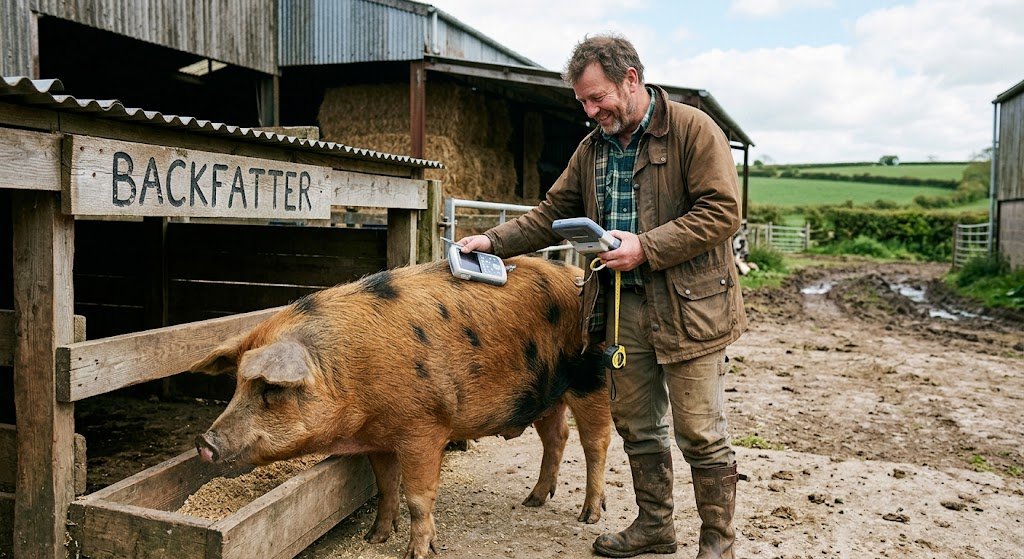
The word “backfatter” predates the website and has historically been associated with pig farming and livestock terminology.
Dictionary-based sources describe a backfatter as a pig carrying significant backfat.
Historical agricultural material provides additional context. A 1928 Queensland agricultural publication described “backfatter” as a term used by pig buyers for a heavy pig that had progressed beyond the preferred bacon-pig stage and carried much of its fat along its upper body.
Modern commodity material has also used the term for boars and sows removed from breeding herds and slaughtered as backfatters.
However, the meaning of the word should not be used to infer the purpose of Backfatter.com.
Domain names are frequently purchased because they are distinctive, memorable, available, or connected to a completely different brand concept.
Backfatter.com and Search Engine Visibility
The domain also presents an interesting case from an SEO perspective.
Google primarily discovers webpages by following links, processing submitted URLs, and crawling accessible resources. When pages cannot be retrieved successfully, search engines have less information to analyze and rank.
If the owner of Backfatter.com intends the site to attract organic traffic, crawler accessibility should therefore be investigated.
Important checks would include:
- Google Search Console URL Inspection
- server response codes
- robots.txt configuration
- firewall and CDN rules
- accidental bot blocking
- XML sitemap availability
- canonical tags
noindexdirectives- internal linking
- mobile rendering
- Core Web Vitals
- structured data
- crawl logs
A particularly important issue is accidental 403 responses.
Google specifically advises website operators not to use ordinary 4xx responses such as 403 for crawl-rate management.
If legitimate search crawlers are being blocked unintentionally, fixing server-level permissions could significantly improve discoverability.
What to Do If Backfatter.com Won’t Open
If Backfatter.com fails to load in your browser, don’t repeatedly refresh the page indefinitely.
Try a few basic diagnostic steps instead.
You can:
- confirm that the URL is spelled correctly
- switch between Wi-Fi and mobile data
- temporarily disable problematic browser extensions
- try another modern browser
- clear cached data for the site
- confirm your device’s date and time are correct
- check whether your DNS resolver is functioning normally
If the website specifically displays 403 Forbidden, repeatedly refreshing will usually not solve the underlying authorization rule. MDN notes that retrying an unchanged request typically produces the same result.
Avoid using random proxy services purely to bypass a site’s restrictions. Restrictions may exist for security, licensing, privacy, or regional reasons.
Trust Signals to Look for Before Creating an Account
If Backfatter.com becomes accessible and asks users to register, examine the website before handing over personal information.
Positive trust signals may include:
- consistent branding
- transparent ownership
- functioning support channels
- detailed legal policies
- secure login pages
- clear pricing
- understandable cancellation terms
- established independent references
Potential warning signs deserve additional investigation:
- pressure to act immediately
- cryptocurrency-only payments without explanation
- requests for passwords used on other services
- unverifiable company identities
- unexplained software downloads
- copied or contradictory legal pages
- unexpected requests for identity documents
- browser security warnings
No single factor proves fraud.
The goal is to look at the overall evidence.
Should You Enter Payment Information on Backfatter.com?
Only after verifying what company or individual operates the service and exactly what you are purchasing.
Before entering card details on Backfatter.com, confirm that the checkout page clearly displays the product or service, total charge, billing frequency, cancellation conditions, refund policy, and merchant identity.
For unfamiliar merchants, payment methods with established dispute protections are generally preferable to irreversible transfers.
Never send money simply because a webpage claims a payment is urgent.
FAQ About Backfatter.com
What is Backfatter.com used for?
There is currently insufficient publicly indexed information to confidently identify the domain’s primary purpose. Automated attempts to access the website can encounter access restrictions, while search results provide little reliable information describing an established service. Users should therefore avoid assuming what the website does until its own accessible content or verified ownership information provides a clear explanation.
Why can’t I access Backfatter.com?
The website may block certain requests, browsers, networks, crawlers, or geographic locations. A 403 Forbidden response means the server received the request but refused access. It does not necessarily mean the website has disappeared or is permanently offline.
Is Backfatter.com a legitimate website?
There currently isn’t enough verifiable public information to issue a definitive legitimacy assessment. If you plan to register, download files, provide personal details, or make a payment, check domain registration information, website ownership, legal policies, independent references, and security databases first.
Is Backfatter.com connected to pigs or agriculture?
The English word “backfatter” has historically been used in pig-farming terminology, including references to pigs carrying substantial backfat. That linguistic history does not, however, establish that the domain itself is related to farming, livestock, pork production, or agriculture.
How can I check Backfatter.com safely?
Start by searching the exact domain, reviewing its registration information through an RDAP lookup, checking Google Safe Browsing, and inspecting the site’s HTTPS connection and ownership details. Avoid entering credentials, financial information, or downloading software until you understand who operates the website and why the requested information is necessary.
Final Takeaway
Backfatter.com is currently a domain with a limited publicly searchable footprint and restricted automated accessibility. Those facts alone don’t establish whether the website is trustworthy, harmful, inactive, private, or simply configured to reject certain crawlers.
The smart approach is evidence-based.
If you’re visiting the domain, verify its ownership, security status, legal pages, reputation, and purpose before creating an account or providing sensitive information. If you’re the website owner and expect organic search traffic, investigate crawler accessibility, HTTP response codes, indexing directives, and firewall rules.
Until clearer public information becomes available, verification is more useful than speculation.