



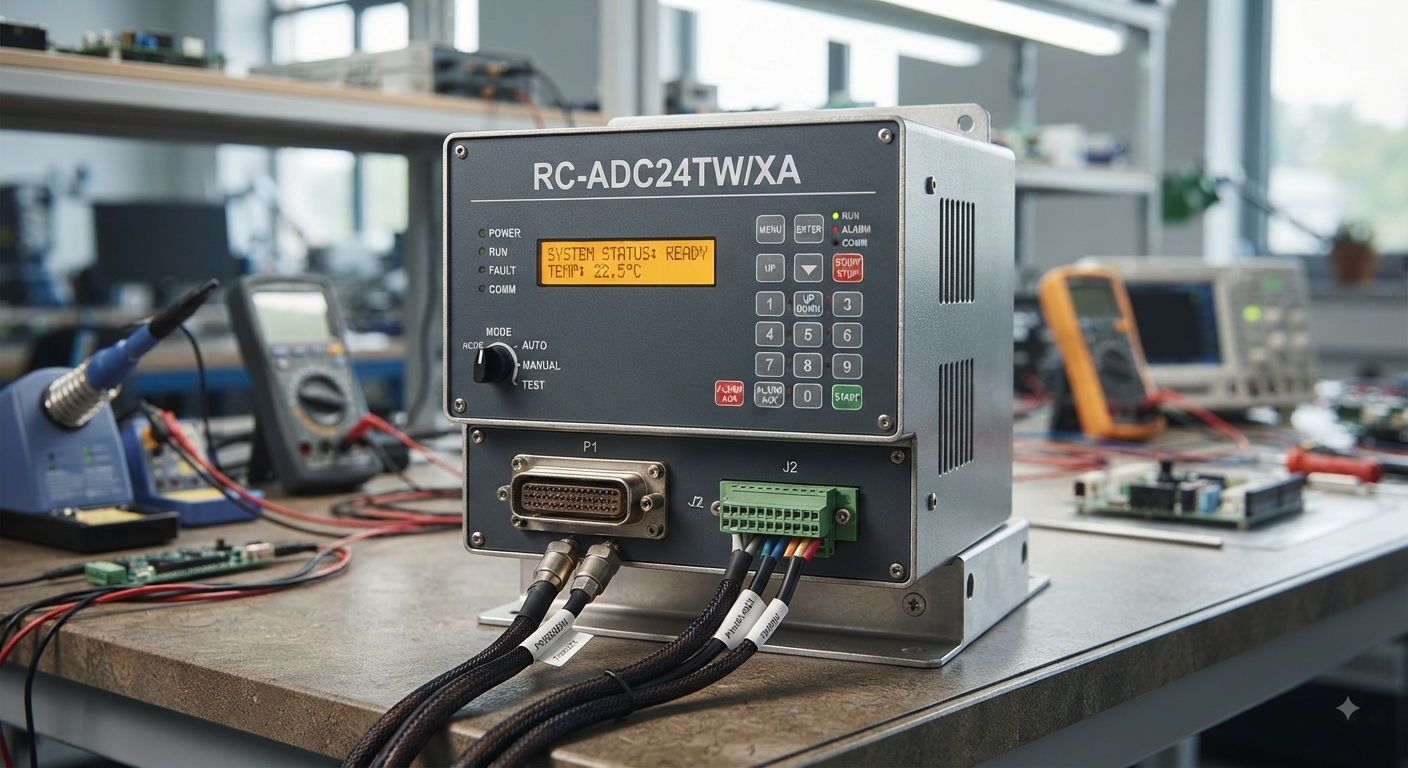
The RC-ADC24TW/XA is a 24,000 BTU ceiling-cassette solar air conditioner designed to combine photovoltaic DC power with conventional AC electricity. Manufactured under the Recreate brand, it targets homes, offices, schools, shops, telecom sites, and commercial spaces where daytime cooling demand overlaps with strong solar generation. Supplier documentation identifies it as an AC/DC hybrid solar air conditioner with ceiling mounting, cooling and heating capability, and a nominal application area of 30–45 m².
What makes the system interesting is not simply the word “solar.” Its architecture is intended to use available PV energy directly and supplement it with grid electricity when solar production drops. That can eliminate the battery bank, external solar inverter, and separate controller normally associated with a conventional off-grid solar HVAC installation.
There is, however, an important catch for buyers: online specifications for this model are not perfectly consistent. Recreate’s current website lists a closely related RC-ADC24TW-XD ceiling model with different physical dimensions, while supplier pages continue to identify the older or alternative RC-ADC24TW/XA designation. That makes model-number verification essential before ordering parts, planning ceiling openings, or designing a PV array.
What Is the RC-ADC24TW/XA?
The RC-ADC24TW/XA belongs to Recreate’s solar-powered HVAC family and is described by suppliers as a 24,000 BTU ceiling-mounted cassette air conditioner. At 24,000 BTU/h, it sits in the nominal 2-ton cooling class and is aimed at larger rooms and light-commercial environments rather than small bedrooms.
Unlike a conventional wall-mounted split AC, the indoor section is installed inside or above the ceiling, with the visible cassette panel distributing conditioned air into the occupied space. Supplier documentation lists an application area of approximately 30–45 m², although actual cooling-load requirements depend on insulation, glass area, solar exposure, ceiling height, occupancy, equipment heat load, climate, and ventilation.
That distinction matters. Buying an air conditioner simply because its advertised square-meter range matches your room can lead to poor performance.
The U.S. Department of Energy notes that oversized cooling equipment can cycle excessively, lower efficiency, increase operating costs, and reduce humidity control. Proper HVAC sizing should therefore be based on the building’s actual heat load rather than floor area alone.
RC-ADC24TW/XA Specifications at a Glance
Published supplier information provides the following model-specific data for the RC-ADC24TW/XA.
- Product type: Hybrid solar ceiling-cassette air conditioner
- Cooling capacity: 24,000 BTU/h class
- Power source: AC/DC hybrid
- Functions: Cooling and heating
- Recommended application area: Approximately 30–45 m²
- Mounting: Ceiling cassette
- Indoor unit dimensions: Approximately 940 × 940 × 330 mm
- Outdoor package/listed dimensions: Approximately 1005 × 450 × 820 mm
- Cassette panel dimensions: Approximately 1020 × 1020 × 90 mm
- Indoor unit net weight: About 9 kg
- Outdoor unit net weight: About 51 kg
- Panel net weight: About 3 kg
- Published refrigerant options: R32 or R410A
- Published efficiency figures: SEER 20 and EER 12.1 on supplier listings
- Power configuration: Solar DC plus conventional AC electricity
- Origin: China
- Trademark: Recreate / OEM
One supplier listing also advertises indoor-machine noise in the 24–35 dB range. Treat that figure cautiously until the exact operating mode and test methodology are confirmed in the datasheet shipped with the unit.
A warning about online specification tables
This is where careful product research pays off.
A supplier page headed as an RC-ADC24TW/XA cassette product later includes a detailed performance table naming the models RC-ADC12GW-XA, RC-ADC18GW-XA, and RC-ADC24GW-XA. Those are GW-series units rather than the TW model shown at the top of the page.
For that reason, figures such as 1.87 kW cooling input, 8 A rated current, 1210 CFM airflow, or specific refrigeration-pipe limits should not automatically be treated as verified TW/XA specifications.
Before engineering an installation, request the nameplate photo and exact technical datasheet for the unit being supplied.
How the RC-ADC24TW/XA Hybrid Solar System Works
The central selling point of the RC-ADC24TW/XA is direct use of photovoltaic electricity.
Recreate describes its hybrid architecture as using DC-powered electrical components together with variable-frequency control. Available solar DC power is prioritized, while mains AC electricity can supplement the system when PV output cannot meet the cooling load.
That creates three practical operating situations:
- Strong sunlight: Solar generation can provide a large portion, potentially all, of the instantaneous electrical demand.
- Partial sunlight: Solar energy supplies part of the load while grid electricity supplies the balance.
- Little or no solar production: Grid electricity operates the AC conventionally, assuming the installed configuration supports normal AC operation.
The attraction is obvious. You do not necessarily need to generate solar electricity, convert it through a conventional external inverter, store it in a large battery bank, and then convert it again before powering the compressor.
Recreate markets this concept as solar-direct-drive technology and states that its hybrid units can operate without a separate battery, inverter, or solar controller in their standard direct-PV configuration.
Does it still work when clouds pass overhead?
That is one of the strongest practical arguments for an AC/DC hybrid design.
Solar-panel output changes constantly with cloud cover, panel temperature, shading, sun angle, dirt, and time of day. A grid-assisted hybrid system does not have to shut down simply because photovoltaic output falls below the compressor’s instantaneous demand.
Instead, grid power can cover the deficit.
This means the RC-ADC24TW/XA is fundamentally different from a purely off-grid solar air conditioner whose operation may depend heavily on batteries or sufficient PV production.
How Much Solar Power Does the RC-ADC24TW/XA Need?
This question deserves more nuance than “install three or four panels.”
Supplier pages associated with Recreate’s hybrid technology describe direct solar input and advertise wide DC operating ranges on related products. Recreate’s current 24,000-BTU hybrid split model also states that conventional PV modules can be used and that multiple panels may be connected depending on the system design.
But the exact panel configuration should not be selected from generic web listings.
PV design depends on:
- Panel open-circuit voltage (Voc)
- Maximum-power voltage (Vmp)
- Array current
- Series versus parallel wiring
- Minimum and maximum DC input limits
- Local minimum temperature, which affects PV voltage
- Maximum solar charging/input current
- Cable length and voltage drop
- DC isolators and overcurrent protection
- Earthing requirements
- Local electrical regulations
For the RC-ADC24TW/XA, obtain the exact DC-input label from the outdoor unit before buying solar modules.
That one step can prevent an expensive mistake. Exceeding an HVAC unit’s maximum PV voltage is not the same as simply “giving it more solar.” It can damage power electronics.
RC-ADC24TW/XA Cooling Capacity and Room Size
At 24,000 BTU/h, this unit is designed for substantial cooling loads.
Supplier material suggests 30–45 m² as an application area. That figure may be perfectly reasonable for some buildings, but it should be treated as a planning estimate rather than a universal sizing rule.
Consider two 40 m² offices.
One has insulated walls, shaded double glazing, a low ceiling, and four occupants. The other has floor-to-ceiling west-facing glass, poor insulation, a 3.5-meter ceiling, twelve computers, and ten people.
Their cooling requirements can be dramatically different.
ENERGY STAR similarly advises adjusting cooling capacity for factors such as direct sunlight, occupancy, and unusually high internal heat loads.
For a commercial installation, use a proper heat-load calculation. For residential projects, at minimum account for:
- Room volume
- Window orientation
- Roof exposure
- Insulation
- Outdoor design temperature
- Humidity
- Occupancy
- Lighting
- Computers and appliances
- Air leakage
- Fresh-air requirements
More BTUs are not automatically better.
Energy Efficiency: What Do SEER and EER Claims Mean?
Supplier listings for the RC-ADC24TW/XA publish figures including SEER 20 and EER 12.1.
Those numbers appear attractive, but buyers comparing equipment internationally need to ask how the figures were measured. Seasonal-efficiency standards, test climates, voltage conditions, and certification schemes differ by market.
There is another complication: solar-assisted efficiency can be marketed in ways that are difficult to compare directly with conventional grid-only HVAC efficiency.
A unit drawing less electricity from the grid because photovoltaic panels are supplying part of its energy is certainly reducing purchased electricity. That does not necessarily mean its compressor suddenly becomes physically several times more efficient.
Separate these two questions:
HVAC efficiency: How much cooling does the equipment produce for the electrical energy it consumes?
Grid-energy reduction: How much of that consumed energy comes from solar instead of the utility?
That distinction makes energy-savings estimates much more credible.
Can It Really Cut Electricity Consumption by 90% or More?
Recreate and supplier pages promote very high daytime grid-energy savings, including claims of up to 97% under optimum solar conditions.
The phrase “under optimum conditions” is crucial.
Real savings depend on how well PV generation matches air-conditioning demand. A business operating the AC mainly from 10 a.m. to 4 p.m. in a sunny climate has a much stronger solar-load match than a household using most cooling after sunset.
Actual grid savings are influenced by:
- Installed PV wattage
- Solar irradiance
- Shading
- Panel orientation
- Seasonal weather
- Compressor load
- Indoor temperature setting
- Building insulation
- Operating hours
- Grid availability
Therefore, do not purchase the RC-ADC24TW/XA based solely on a percentage-saving headline. Ask the supplier or solar designer for an expected hourly PV-production and HVAC-consumption profile for your location.
R32 vs. R410A: Verify the Refrigerant Before Buying
Listings mention R32 / R410A, which suggests the precise refrigerant may depend on production batch, regional configuration, or requested specification.
Do not assume the two versions are interchangeable.
They require appropriately designed system components, refrigerant handling procedures, tools, charging practices, and technician expertise. The refrigerant specified on the unit’s nameplate is the one that matters.
There is also an environmental distinction. EPA documentation identifies R410A as a relatively high-global-warming-potential refrigerant, while lower-GWP alternatives have increasingly been introduced in air-conditioning systems.
If you are choosing between available production versions, ask specifically:
- Is this exact unit R32 or R410A?
- What is the factory refrigerant charge?
- Is the refrigerant approved locally?
- Can local technicians legally and safely service it?
- Are replacement parts readily available?
Installing the RC-ADC24TW/XA
Installation is more involved than hanging a conventional residential wall split.
Because the RC-ADC24TW/XA uses a ceiling cassette, the installer must consider the ceiling cavity, structural support, condensate drainage, refrigerant piping, electrical feeds, service accessibility, outdoor-unit positioning, and PV wiring.
Ceiling planning
Published XA listings show a cassette panel around 1020 × 1020 × 90 mm, with an indoor-unit envelope around 940 × 940 × 330 mm.
Do not cut the ceiling based on those internet dimensions alone.
Request the actual installation drawing first. The required opening can differ from the decorative panel dimensions, and adequate clearance must remain for drainage, piping, maintenance, filter removal, and electrical access.
Solar wiring
PV DC deserves professional treatment.
Solar strings can operate at hazardous DC voltages, and a standard household AC breaker is not automatically appropriate for DC isolation. Cable sizing, connectors, polarity, protection devices, earthing, surge protection, and PV string voltage must match both the HVAC equipment and local electrical code.
Use an installer experienced with both HVAC and photovoltaic systems, not someone who understands only one side of the installation.
RC-ADC24TW/XA vs. RC-ADC24TW-XD: Do Not Confuse the Two
This is perhaps the most important buying detail.
Current Recreate documentation identifies a ceiling solar model as RC-ADC24TW-XD, while multiple supplier listings identify RC-ADC24TW/XA.
The dimensions are not identical.
Recreate currently lists the XD version at approximately:
- Indoor unit: 917 × 917 × 308 mm
- Outdoor unit: 1020 × 430 × 755 mm
- Capacity: 24,000 BTU
- Application area: 30–45 m²
- Power: Solar + electricity
By comparison, supplier listings for the XA variant show approximately:
- Indoor unit: 940 × 940 × 330 mm
- Outdoor listed/package dimension: 1005 × 450 × 820 mm
- Panel: 1020 × 1020 × 90 mm
That is enough variation to matter during installation.
The safest approach is simple: treat XA and XD as different revisions unless Recreate confirms otherwise in writing.
Advantages and Limitations
The RC-ADC24TW/XA offers a compelling concept for locations with strong daytime cooling loads.
Potential advantages include:
- Direct use of photovoltaic electricity
- Automatic combination of solar and grid power
- Reduced dependence on utility electricity during sunny periods
- No large battery bank required for standard hybrid operation
- Ceiling-cassette installation for broad room coverage
- 24,000 BTU cooling class
- Heating capability
- Variable-capacity/inverter architecture
- Suitability for offices, shops, schools, homes, and remote facilities
There are also real limitations.
Potential drawbacks include:
- Limited publicly available model-specific documentation
- Conflicting or mixed specification tables online
- Greater installation complexity than ordinary split AC
- Need for qualified PV and HVAC expertise
- International parts and warranty considerations
- Solar savings vary significantly by climate and operating schedule
- Refrigerant version must be confirmed
- XA and XD dimensions should not be treated as interchangeable
That balance is important. A technically interesting product is not automatically the right product for every project.
What to Check Before Buying
Before ordering an RC-ADC24TW/XA, request a complete technical package from the seller.
Specifically, ask for:
-
Photograph of the actual model nameplate
-
Full RC-ADC24TW/XA datasheet
-
Indoor and outdoor installation drawings
-
Ceiling cut-out dimensions
-
Cooling and heating capacity
-
Rated AC input voltage and frequency
-
Maximum AC current
-
Minimum and maximum PV DC voltage
-
Maximum PV input current
-
Recommended PV string configuration
-
Refrigerant type and factory charge
-
Refrigerant pipe sizes and maximum lengths
-
Condensate pump specifications
-
Operating-temperature range
-
Noise data
-
Efficiency test standard
-
Certifications applicable to your country
-
Warranty terms
-
Compressor and PCB replacement-part availability
-
Installation manual
-
Service manual or error-code list
If a supplier cannot provide these details before purchase, that is useful information in itself.
FAQ About RC-ADC24TW/XA
1. What is the RC-ADC24TW/XA?
The RC-ADC24TW/XA is a Recreate-branded 24,000 BTU ceiling-cassette air conditioner designed to operate with both solar DC and conventional AC electricity. Supplier listings describe it as a cooling-and-heating hybrid solar HVAC system suitable for approximately 30–45 m² applications, subject to proper load calculation.
2. Does the RC-ADC24TW/XA require batteries?
The standard hybrid concept is designed to work without a battery bank. Solar power is used directly when available, while grid electricity can supplement insufficient PV generation. Recreate describes its hybrid solar technology as not requiring a conventional external battery, inverter, or controller for normal direct-solar operation.
A battery-based configuration should only be considered if explicitly supported by the exact controller and technical documentation supplied with your unit.
3. How many solar panels are needed for a 24,000 BTU solar AC?
There is no safe universal answer based only on BTU capacity. The correct PV array depends on the air conditioner’s permitted DC-voltage window, maximum current, panel Voc and Vmp, temperature conditions, solar irradiance, and desired percentage of solar contribution.
Do not copy a panel count from another Recreate model. Obtain the exact electrical specifications of your unit first.
4. Is RC-ADC24TW/XA suitable for a 30–45 m² room?
That is the application range published by suppliers, but it is not a substitute for an HVAC load calculation.
A heavily glazed, poorly insulated 35 m² shop can require more cooling than a well-insulated 45 m² office. Correct sizing should account for climate, insulation, windows, people, ceiling height, appliances, ventilation, and solar heat gain.
5. Is RC-ADC24TW/XA the same as RC-ADC24TW-XD?
They should not be assumed to be identical. Supplier listings document the XA designation, while Recreate’s current official ceiling-product page identifies an XD version and publishes different indoor and outdoor dimensions.
If you are replacing an existing unit, ordering a PCB, preparing a ceiling opening, or buying an outdoor unit separately, verify the complete model code and serial/nameplate information first.
Final Verdict: Is the RC-ADC24TW/XA Worth Considering?
The RC-ADC24TW/XA is most compelling where air-conditioning demand occurs during sunny daytime hours. Offices, shops, schools, workshops, restaurants, telecom facilities, and commercial buildings can potentially benefit from the close match between peak solar generation and peak cooling demand.
Its AC/DC hybrid design also addresses one of the biggest weaknesses of pure solar cooling: variable sunlight. Instead of requiring a massive battery system, the grid can act as the backup energy source when PV production falls.
But buy it as an engineered HVAC system, not as a generic “solar AC.”
Before placing an order, verify the exact XA model on the nameplate, obtain its dedicated datasheet, confirm the refrigerant, calculate the building cooling load, and have a qualified installer design the PV string around the actual DC-input limits. Also make sure the seller has not substituted specifications from the related GW or XD series.
Do those checks first, and you will know whether this 24,000-BTU hybrid solar cassette actually fits your building, electrical system, climate, and long-term operating-cost goals.