


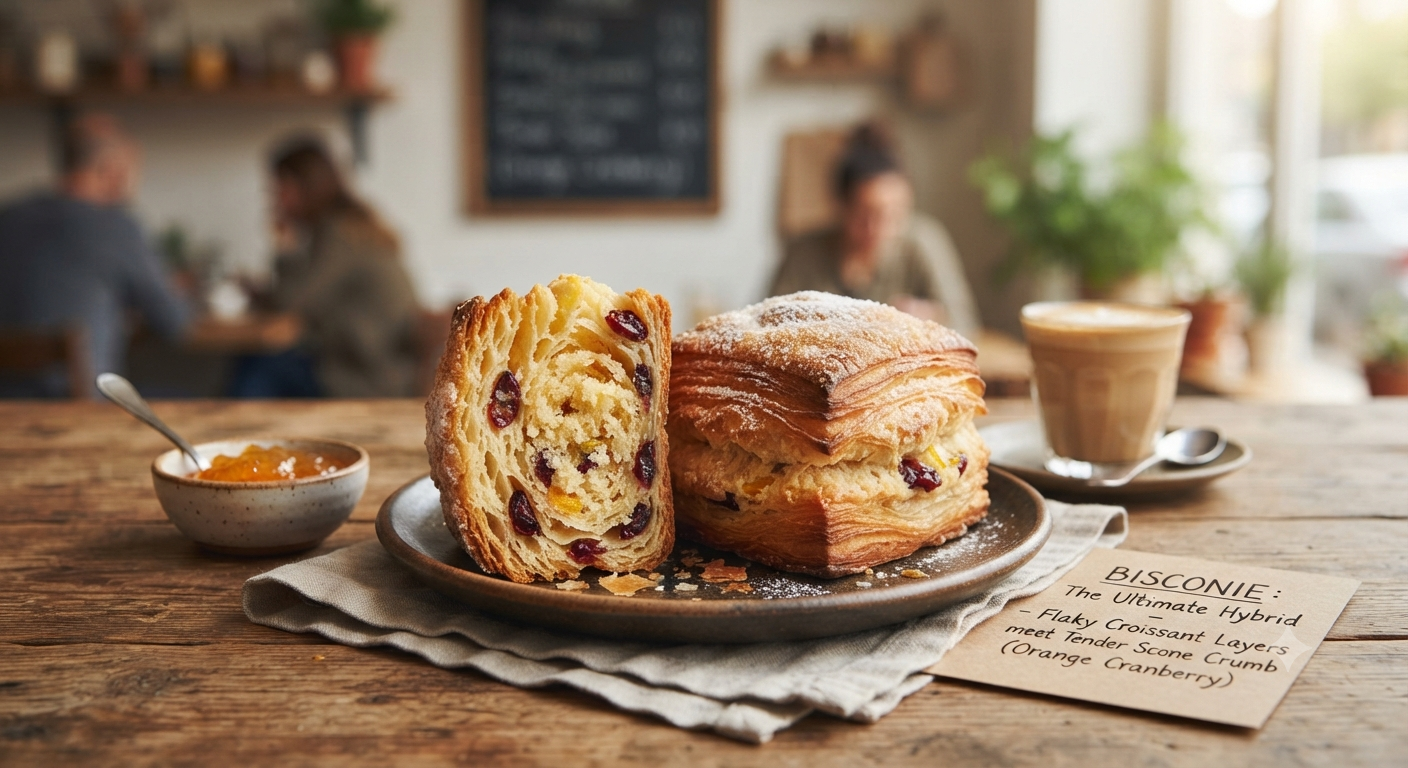
If you have walked through a Costco bakery and wondered what is a bisconie, you are not alone. The unusual name refers to a sweet baked treat that sits somewhere between a scone, biscotti, biscuit, and soft cookie, depending on the recipe and flavor.
Costco made the term widely recognizable through products such as its Kirkland Signature Mini Cranberry Orange Bisconie, but the story behind the pastry is more interesting than a simple mashup name. A bisconie is best understood as a hybrid bakery item: richer and more tender than traditional biscotti, yet often firmer and more dunkable than a classic scone.
The most familiar Costco version has a browned exterior, a softer center, coarse sugar on top, and fruit-forward flavors that pair naturally with coffee or tea. Costco’s Same-Day listing identifies the Mini Cranberry Orange Bisconie as a 12-count Kirkland Signature bakery product and lists 190 calories per serving.
That quick definition answers the basic question. But what is a bisconie in culinary terms, where did the name come from, and why does one version feel like a scone while another tastes almost like a cookie?
A fuller answer to what is a bisconie has to cover texture, baking method, naming history, and the way Costco has shaped public recognition of the pastry.
What Is a Bisconie, Exactly?
The simplest answer to what is a bisconie is that it is a hybrid pastry associated most strongly with the flavors and texture of biscotti and scones. Unlike hard, twice-baked Italian biscotti, a typical Costco-style bisconie is tender enough to bite easily without dipping it first.
It is also different from a standard American scone. Scones are usually crumbly, buttery quick breads with a relatively soft interior, while bisconies tend to have a slightly sturdier crust and denser bite.
Allrecipes describes Costco’s version as softer than biscotti but substantial enough to hold up well when dunked into coffee or tea.
That middle-ground texture explains much of the appeal. You get some of the comforting richness of a scone without the dry hardness often associated with traditional biscotti.
Why Is It Called a Bisconie?
When people ask what is a bisconie, the name itself usually causes the confusion. It sounds invented because it essentially is: “bisconie” is a portmanteau-style bakery name linking familiar baked goods.
Many modern descriptions interpret the word as a combination of biscotti + scone. That explanation fits Costco’s cranberry-orange version particularly well because its crisp exterior and tender interior borrow qualities from both categories.
The exact naming history, however, is less tidy than many articles suggest.
Some publications describe the bisconie as a Costco invention, but independent evidence shows that Seven Sisters Scones, a bakery in Georgia, was already selling products called “bisconie,” “bisconnie,” or “bissconies” around 2015–2017.
A 2015 food blog described Seven Sisters’ “bisconnies” as a combination of a scone and biscotti. A 2017 profile of the bakery similarly referred to “Bissconies” as its response to biscotti.
The more accurate interpretation is therefore that Costco helped popularize the name for a mass-market audience, rather than assuming the company unquestionably created the first pastry ever given that name.
What Is a Bisconie at Costco?
For many shoppers, what is a bisconie really means, “What is that unusual pastry I saw in the Costco bakery?”
Costco has sold several versions under its Kirkland Signature label, with the Mini Cranberry Orange Bisconie becoming perhaps the most recognizable example.
Costco’s Same-Day product page lists the cranberry-orange version as item 1389984 in a 12-count package. Availability can vary by warehouse, location, and season, so finding a product page does not necessarily mean every Costco location will have it available at the same time.
Costco has also sold Cinnamon Chip Bisconie Bites, a smaller format that reviewers have described as more cookie-like than the cranberry-orange pastry.
That variation is important. “Bisconie” appears to work more like a bakery product concept or family than a rigid culinary formula with one legally or traditionally defined texture.
What Does a Costco Bisconie Taste Like?
The cranberry-orange variety combines sweetness, bright citrus, slightly tart dried fruit, buttery pastry notes, and a sugary outer coating.
Imagine a compact cranberry-orange scone with a slightly firmer exterior and enough structure to survive being dipped into a hot cup of coffee. That gets fairly close.
Reviewers have described the inside as soft or airy while the outside is more golden and crisp. Coarse sugar adds another layer of crunch and sweetness.
The cinnamon-chip version creates a different experience. It leans closer to a thick, soft cinnamon cookie containing flavored baking chips and sugar crystals.
That is why the question what is a bisconie cannot be answered by texture alone. The name describes a hybrid concept, while the exact eating experience can change considerably between recipes.
Bisconie vs. Biscotti: What Is the Difference?
Understanding what is a bisconie becomes much easier when you compare it directly with biscotti.
Traditional biscotti are Italian twice-baked cookies. The dough is typically baked as a loaf, sliced, and then baked again, removing more moisture and creating the characteristic dry, crisp structure.
A Costco-style bisconie is considerably softer. It may have a crisp or sugar-coated exterior, but its center remains tender enough to eat like a pastry.
Key differences include:
- Texture: Biscotti are intentionally dry and crunchy; bisconies are generally softer and more tender.
- Moisture: A typical bisconie retains considerably more moisture.
- Shape: Biscotti usually appear as elongated slices, while Costco bisconies commonly appear as small rounds or thick bite-sized pieces.
- Eating style: Both pair well with coffee and tea, but a bisconie does not need to be dunked before it becomes easy to chew.
- Flavor profile: Biscotti frequently contain almonds, chocolate, nuts, or anise, while Costco has emphasized flavors such as cranberry-orange and cinnamon.
- Crumb: A bisconie often has a richer, softer crumb resembling a scone or thick cookie.
There is an interesting complication.
Some non-Costco recipes use “bisconie” for a scone that is sliced and dried or baked again, producing something considerably closer to traditional biscotti. Plum Deluxe, for example, describes an approach that starts with scones and uses a drying process to create a crisp, long-lasting snack.
The word therefore does not appear to follow one universally accepted baking standard.
Bisconie vs. Scone: Are They the Same Thing?
No. If somebody asks what is a bisconie and receives the answer “a small scone,” the explanation is incomplete.
A classic scone is a quick bread typically made from flour, fat, leavening, and liquid. Depending on the regional style and recipe, it may be crumbly and relatively plain or rich, sweet, glazed, and filled with fruit, chocolate, nuts, or spices.
A bisconie usually pushes that texture toward a firmer, more cookie-like edge.
Costco’s cranberry-orange version still delivers much of the tenderness associated with scones, but its compact shape and exterior crust provide additional structure.
That helps explain why consumers have variously compared the pastry with a scone, cookie, biscuit, and biscotti.
Is a Bisconie the Same as a Sconie?
No—and the single-letter difference matters more than you might expect.
A sconie can simply refer to a miniature scone. Seven Sisters Scones, for example, uses SCONIE for its smaller scones, which maintain the general characteristics of its full-sized versions.
A bisconie, by contrast, usually implies a biscotti-scone crossover or a scone-inspired pastry with additional firmness.
If you are searching for Costco availability, nutrition information, recipes, or reviews, using the correct spelling can make the search results dramatically more relevant.
What Is a Bisconie Made From?
There is no single official recipe that defines what is a bisconie across every bakery. Most versions, however, draw from the same basic pantry ingredients found in scones, biscuits, and cookies.
Typical ingredients may include:
- All-purpose flour for structure
- Butter or another fat for richness and tenderness
- Sugar inside the dough
- Coarse sugar for a crunchy surface
- Eggs for binding and richness
- Milk or cream for moisture
- Baking powder or another leavening agent
- Salt to balance sweetness
- Dried fruit such as cranberries
- Orange zest or citrus flavoring
- Cinnamon chips
- Chocolate
- Nuts
- Vanilla or other extracts
For anyone trying to understand what is a bisconie, the important factor is not one mysterious ingredient. It is the balance of moisture, fat, sugar, shape, and baking method that gives the finished pastry its hybrid personality.
People with food allergies should always check the label on the actual product being purchased. Ingredients and manufacturing processes can change, and different flavors may contain or come into contact with wheat, dairy, eggs, soy, or nuts.
Why Did Bisconies Become So Popular?
Part of the answer to what is a bisconie is cultural rather than culinary.
The name generates curiosity. The product looks familiar enough that shoppers are willing to try it, but unfamiliar enough to create conversation.
Costco’s enormous customer base gave the word far greater visibility, while food publications and social-media communities amplified interest.
Reddit discussions stretching back several years show shoppers debating whether the pastry should be classified as a scone, biscuit, cookie, or biscotti. More recent Costco discussions still mention cranberry-orange bisconies as a sought-after bakery product.
When shoppers search what is a bisconie, they often discover a pastry that also fits several eating occasions.
It can work as:
- A quick breakfast
- A coffee-break treat
- An afternoon tea snack
- A lunchbox dessert
- A brunch addition
- A sweet snack after dinner
No elaborate preparation is required. That simplicity helps.
How Should You Eat a Bisconie?
Once you understand what is a bisconie, eating one is refreshingly uncomplicated.
Room temperature is an obvious choice, particularly when the pastry is fresh. However, pairing it thoughtfully can make its fruit, citrus, butter, cinnamon, and sugar notes more noticeable.
Try serving a bisconie with:
- Black coffee, which offsets the sweetness
- Cappuccino or latte for a richer pairing
- Earl Grey tea, particularly with cranberry-orange
- English breakfast tea
- Unsweetened chai with cinnamon varieties
- Cold milk
- Plain Greek yogurt and fresh fruit for breakfast
- Vanilla ice cream when turning it into dessert
Cranberry-orange flavors pair particularly well with drinks containing roasted, citrus, or floral notes. Cinnamon-chip varieties naturally complement coffee, milk, or spiced tea.
You can also warm the pastry briefly before serving. Avoid excessive heating, though, because too much warmth can soften the sugary exterior and turn pleasantly rich butteriness into greasiness.
How to Store Bisconies Without Ruining Their Texture
Storage matters when answering what is a bisconie in practical terms because one of the pastry’s best characteristics is the contrast between its exterior and soft center.
Leave baked goods exposed for too long and they can become stale. Trap excessive moisture, on the other hand, and a once-crisp exterior can turn soft.
For short-term storage, use a tightly sealed container, provided the original package instructions allow room-temperature storage.
For longer periods, freezing can be useful. Consumer reviews of Costco’s cranberry-orange version report good results after freezing.
A practical method is to:
- Allow the pastries to cool completely if they have been warmed.
- Separate individual pieces with parchment or wax paper.
- Place them inside an airtight freezer-safe container or bag.
- Remove excess air before sealing.
- Freeze only as many as you will not eat while fresh.
- Thaw individual portions as needed.
A brief warming in a low oven or toaster oven can help restore some exterior texture after thawing.
Can You Make a Bisconie at Home?
Yes. Home bakers asking what is a bisconie are often actually searching for a Costco bisconie copycat recipe.
There are two logical approaches.
Costco-Style Bisconie Method
Start with a rich cranberry-orange scone or drop-biscuit-style dough. Shape smaller rounds, add coarse sugar to the surface, and bake until the edges become more deeply golden than they would on a very soft breakfast scone.
The target is a tender center with enough exterior structure to feel slightly cookie-like.
For the familiar cranberry-orange flavor profile, useful ingredients include:
- Dried cranberries
- Fresh orange zest
- Butter
- Vanilla
- Coarse sugar
- A small amount of orange extract if desired
Avoid adding excessive liquid flavoring. Too much moisture can push the finished product toward muffin or cake territory rather than the compact crumb associated with a bisconie.
Twice-Baked Scone Method
The second option moves closer to biscotti.
Bake a scone-style dough first, allow it to cool, slice it, and then return the pieces to a low oven so additional moisture evaporates.
This approach produces a crisper, more dunkable result and is consistent with recipes that interpret the bisconie as a literal bridge between scone and biscotti.
Neither version is inherently more “correct.” The term has never developed the rigid culinary definition attached to older European pastries.
What Is a Bisconie Nutritionally?
There is no universal nutritional profile because recipes and serving sizes vary.
For the Kirkland Signature Mini Cranberry Orange Bisconie, Costco’s Same-Day listing states 190 calories per serving.
That number should not automatically be applied to cinnamon-chip bites, homemade recipes, older Costco package sizes, or pastries sold by independent bakeries.
Several factors can substantially change the nutrition profile:
- Serving size
- Butter or oil content
- Added sugar
- Coarse sugar toppings
- Dried fruit
- Chocolate
- Cinnamon chips
- Nuts
- Glazes or icing
If nutritional information matters to you, read the label attached to the exact package you are buying. That is more dependable than relying on an old product photograph, social-media post, or crowd-sourced nutrition database.
Common Misunderstandings About the Word “Bisconie”
The query what is a bisconie can produce several confusing results because the spelling resembles unrelated words and brand names.
The biggest source of confusion is Bisconni.
Bisconni—with two n’s—is a Pakistani snack and confectionery brand associated with products such as Cocomo, Chocolatto, Rite, Novita, Chai Wala Biskut, Crux, and Rollies.
It is a company and brand name. It is not the same thing as the Costco bakery pastry.
A second potential mix-up is sconie, which typically refers simply to a miniature scone and does not necessarily imply anything biscotti-like.
The third misunderstanding is assuming that “bisconie” represents a centuries-old pastry category with strict preparation rules. It does not appear to have that level of standardization.
That explains the conflicting descriptions found online. One bakery may make a soft round pastry, while another may take a scone, slice it, and dry it until it resembles biscotti.
Why the Origin of the Bisconie Is More Complicated Than It Looks
Most quick explanations of what is a bisconie repeat a straightforward story: Costco created a cross between a scone and biscotti.
That description is convenient, but the historical evidence suggests a more nuanced story.
Seven Sisters Scones was referenced in December 2015 coverage offering a “bisconie” product that reviewers described as softer than traditional biscotti.
Another 2015 source called the bakery’s product “bisconnies” and explicitly described them as a clever combination of scone and biscotti.
By 2017, a published profile of Seven Sisters Scones referred to “Bissconies” as the company’s response to biscotti.
None of that proves beyond doubt who first conceived the concept or coined every spelling variation. It does demonstrate, however, that treating the history as unquestionably beginning with Costco risks oversimplifying the evidence.
For E-E-A-T-focused content, that distinction matters.
A more defensible statement is:
Costco popularized the modern bisconie among mainstream shoppers, particularly through its cranberry-orange bakery version, while similar terminology and scone-biscotti hybrids existed outside Costco earlier.
That explanation accommodates the documented evidence without making an origin claim that cannot be firmly proven.
FAQ: What Is a Bisconie?
1. What Is a Bisconie From Costco?
A Costco bisconie is a Kirkland Signature bakery pastry combining characteristics associated with a scone and biscotti.
The best-known version is the Mini Cranberry Orange Bisconie, a small round pastry with a tender center, firmer sugary exterior, cranberry pieces, and orange flavor. Costco lists the product as a 12-count bakery item, although availability may vary by warehouse.
2. Is a Bisconie a Cookie or a Scone?
It is more useful to describe it as a hybrid pastry rather than forcing it into either category.
The cranberry-orange version behaves more like a compact scone with a slightly crisp exterior, while Costco’s cinnamon-chip bisconie bites have been described as more cookie-like. The specific recipe determines where a particular version sits on that spectrum.
3. Is a Bisconie the Same as Biscotti?
No.
Traditional biscotti are twice baked and deliberately dry and crunchy. Bisconies are typically softer, richer, and more tender, although some homemade interpretations use a second drying or baking stage to create something closer to genuine biscotti.
4. Who Invented the Bisconie?
The origin is not completely settled.
Costco is frequently credited with popularizing the pastry, but documented food coverage shows Seven Sisters Scones offering similarly named bisconie/bissconie products by approximately 2015–2017. It is therefore safer to say that Costco made the term widely familiar rather than claiming with certainty that Costco created the first-ever version.
5. Can You Freeze Costco Bisconies?
Yes. Consumers have reported that the cranberry-orange variety freezes successfully.
For better texture, package individual pastries tightly, limit exposure to air, thaw only the quantity you intend to eat, and warm them gently if you prefer a fresh-baked texture. Follow the storage instructions on the current Costco package whenever those instructions differ.
Final Takeaway
So, what is a bisconie? It is a modern hybrid pastry most widely associated with Costco—softer and richer than traditional biscotti, sturdier than many scones, easy to pair with coffee or tea, and adaptable to cranberry, citrus, cinnamon, chocolate, nuts, and numerous other flavors.
The more interesting answer is that “bisconie” is not one rigid recipe. Earlier bakery references show that similar concepts and names existed outside Costco, while different bakers interpret the scone-biscotti crossover in noticeably different ways.
That is why the answer to what is a bisconie depends partly on which version is sitting in front of you. One may be flaky, buttery, and scone-like; another can resemble a thick soft cookie; a third may be dried until it approaches the crunch of biscotti.
If you spot the cranberry-orange version at Costco, check the current package for ingredients, allergens, nutrition, and storage guidance, then try it alongside coffee or tea. If you would rather bake your own, start with a rich scone dough and decide which direction you want to take it: soft and Costco-inspired, or drier and closer to biscotti.
Either approach captures the feature that makes the pastry interesting in the first place—the space between two familiar baked goods where the bisconie has built an identity of its own.