



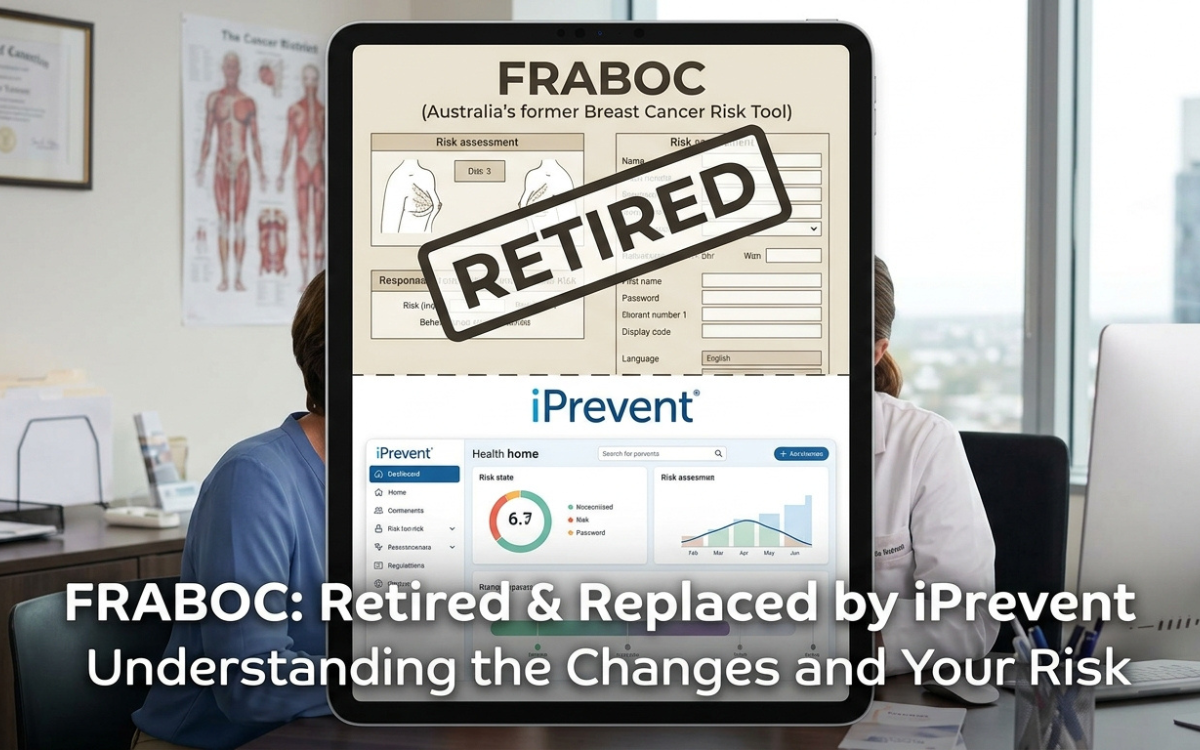
If you searched for Fraboc, you may have found several very different explanations. Some pages describe it as a business framework, a digital system, or a flexible productivity method. The documented meaning is far more specific: FRA-BOC stood for Familial Risk Assessment – Breast and Ovarian Cancer, an Australian online tool created for health professionals to assess familial cancer risk from a patient’s family history.
That distinction matters. The former tool was not a disease, genetic test, diagnosis, software trend, or general-purpose management philosophy. Cancer Australia states that FRA-BOC was designed for professionals such as GPs and nurses, and that the tool is no longer available on its website because newer breast-cancer risk assessment tools are now available.
What Is Fraboc?
In its medically documented context, Fraboc refers to FRA-BOC, short for Familial Risk Assessment – Breast and Ovarian Cancer. The tool helped clinicians interpret patterns of breast and ovarian cancer within a family and place a woman into a broad familial-risk category.
It was essentially a structured decision-support aid. A clinician could use family-history information to judge whether someone appeared to be near population risk, moderately above it, or in a group that might warrant more specialized assessment.
The important word here is familial. FRA-BOC focused heavily on cancer patterns in relatives rather than attempting to predict risk from every possible medical, reproductive, lifestyle, hormonal, and genetic factor.
Why Is There So Much Confusion Around the Term?
Search results for the term currently contain a mix of medical explanations and newly invented interpretations. Some articles call it a “modern framework” for workflow optimization, digital transformation, decision-making, or personal productivity, yet authoritative health sources document a concrete historical use of the name.
There is no strong primary-source evidence that the former Australian clinical acronym later evolved into a recognized business or technology methodology. That does not stop writers or brands from reusing a term, but it means readers should distinguish documented origin from later speculative meanings.
A useful credibility check is simple:
- Does the page identify what the letters in FRA-BOC stand for?
- Does it reference Cancer Australia or another authoritative clinical source?
- Does it explain that the original tool is no longer active?
- Does it distinguish historical information from current risk-assessment practice?
- Does it avoid presenting an old risk category as a personal diagnosis?
When those basics are missing, the explanation deserves extra scrutiny.
What Did the Fraboc Tool Actually Do?
The original FRA-BOC tool was built to support healthcare professionals assessing familial breast and ovarian cancer risk. Cancer Australia describes it as an online tool for professionals including general practitioners and nurses, using family history as the basis for assessment.
Historically, Australian medical literature described FRA-BOC as grouping women into three broad levels: normal or population-level risk, moderately elevated risk, and significantly elevated or potentially high risk. Those groupings helped clinicians decide whether reassurance, standard screening, closer surveillance, or specialist referral should be discussed.
This was decision support, not diagnosis. A risk category could indicate that further assessment was appropriate, but it could not tell an individual whether she would or would not develop cancer.
Why Family History Was So Important
Cancer can appear repeatedly in a family for several reasons. Shared genes may contribute, but relatives can also share environments, behaviors, reproductive patterns, or chance clustering.
A clinician therefore looks for patterns, not merely the existence of one relative with cancer. Factors such as the number of affected relatives, which side of the family they are on, cancer types, age at diagnosis, bilateral disease, male breast cancer, and known pathogenic variants can all change how a family history is interpreted.
Modern genetics guidance reinforces this point. eviQ’s current referral guidance considers features such as early age at diagnosis, multiple primary cancers, strong family history on the same side, specific tumour characteristics, and known pathogenic variants when deciding whether specialist cancer-genetics assessment may be appropriate.
Fraboc Was a Risk Assessment Tool, Not a Genetic Test
One of the easiest mistakes to make is treating the former tool as if it performed genetic testing. It did not. A family-history assessment and a laboratory genetic test answer different questions.
A familial risk tool asks, in effect, “Does this family pattern suggest that risk may be meaningfully increased?” Genetic testing asks whether a specific pathogenic variant can be identified in the person being tested.
Genes associated with hereditary breast and ovarian cancer risk include BRCA1 and BRCA2, but contemporary hereditary-cancer assessment may involve additional genes depending on the personal and family history. Genetic testing is therefore a separate clinical process, often accompanied by specialist interpretation and genetic counselling.
A person can have a concerning family history without a known pathogenic variant. The reverse can also happen: a variant may be identified in a family and change risk management even before cancer develops.
What Were the Historical Fraboc Risk Categories?
Older descriptions of FRA-BOC commonly refer to three levels of familial breast-cancer risk. Medical Journal of Australia material described the categories as level 1 normal, level 2 moderately elevated, and level 3 significantly elevated, based largely on family history.
In practical terms, they represented a triage structure rather than a destiny forecast:
- At or slightly above population risk: family history did not suggest a strong inherited pattern.
- Moderately increased risk: family history was more notable and could justify additional discussion about surveillance.
- Potentially high risk: the pattern could warrant specialist familial-cancer or genetics assessment.
These categories are useful for understanding old letters or records that mention FRA-BOC. They should not be used as a do-it-yourself 2026 calculator, because current tools and genetics pathways have moved on.
Is Fraboc Still Used in 2026?
No. The original FRA-BOC tool is no longer available through Cancer Australia. Cancer Australia’s current breast-cancer awareness guidance explicitly says FRA-BOC has been removed and that more up-to-date breast-cancer risk tools are now available.
BreastScreen Queensland is even more direct: its current professional guidance says FRA-BOC is no longer available and has been replaced by iPrevent for breast-cancer risk assessment.
That makes any article instructing readers to “use the old calculator today” outdated. The historical tool can still matter when interpreting old medical documents, but it is not the current Australian pathway for online risk estimation.
What Replaced Fraboc? Meet iPrevent
The most important update for anyone researching FRA-BOC today is iPrevent. Cancer Australia describes iPrevent as a validated breast-cancer risk assessment and risk-management decision-support tool intended to support prevention and screening conversations between women and their doctors.
Peter MacCallum Cancer Centre provides the current tool and explains that it considers more than family history. iPrevent asks about personal medical history, prior breast biopsy information, and a detailed family history that can include breast, ovarian, pancreatic, and prostate cancers.
For health practitioners, Peter Mac explains that iPrevent also collects reproductive and lifestyle risk factors and can use one of two established mathematical models, IBIS or BOADICEA via CanRisk, depending on the information entered.
Why iPrevent Is More Comprehensive
This is the biggest practical difference between the older tool and its modern successor. FRA-BOC was primarily a family-history classification tool. iPrevent aims to produce a more individualized breast-cancer risk estimate using a broader set of risk factors.
The current tool can present estimated risk over the next 10 years and residual lifetime risk, compare that estimate with an age-matched population risk, and provide risk-management information for discussion with a doctor.
Peter Mac also notes an important limitation: iPrevent should not be used by people who have already had invasive breast cancer or ductal carcinoma in situ (DCIS). That is one example of why an online risk tool must be used within its intended population rather than treated as a universal cancer calculator.
Fraboc vs iPrevent: The Difference at a Glance
The easiest way to understand the transition is to compare purpose and scope.
| Area | Historical FRA-BOC | Current iPrevent |
|---|---|---|
| Main purpose | Familial breast/ovarian cancer risk categorization | Personalized breast-cancer risk assessment and management support |
| Primary users | Health professionals | Women and healthcare professionals |
| Main inputs | Family history | Family history plus medical, reproductive and lifestyle factors |
| Output style | Broad familial-risk categories | 10-year and residual lifetime risk estimates plus management information |
| Current status | Retired | Currently available |
| Role in care | Historical decision-support tool | Current discussion aid for risk, screening and prevention |
The evolution reflects a broader shift in preventive medicine: from broad family-history categories toward more individualized risk estimation using multiple validated inputs.
What Information Should You Gather Before a Modern Risk Assessment?
If your interest in Fraboc comes from concern about your own family history, the most useful next step is not memorizing the old categories. It is gathering accurate information that can improve a modern assessment.
Where possible, note:
- Which blood relatives had breast, ovarian, pancreatic, or prostate cancer
- Whether relatives are on your mother’s or father’s side
- Their approximate age when cancer was diagnosed
- Whether anyone had more than one primary cancer
- Any known BRCA1, BRCA2, or other hereditary-cancer genetic result in the family
- Your own history of breast biopsies or relevant breast conditions
- Relevant reproductive and medical history requested by the current tool
Peter Mac notes that iPrevent can still be used when some family details are unknown, but more complete information can improve the assessment.
A Paternal Family History Counts Too
A common misconception is that hereditary breast and ovarian cancer risk only travels through the mother’s side. That is false. People inherit genetic material from both parents, so a cancer pattern on the paternal side can be clinically relevant.
This is one reason a proper family history extends beyond a mother, sister, or daughter. A clinician or risk tool may ask about grandparents, aunts, uncles, nieces, nephews, and other relatives to understand the pattern across generations.
Ignoring the father’s side can hide important information, especially when family size is small or when the relevant gene is being carried through relatives who have not developed breast or ovarian cancer.
What Fraboc Could Not Tell You
Even when it was active, Fraboc could not answer the question most people naturally want answered: “Will I get cancer?” No risk tool can provide that certainty.
Risk models estimate probability using known variables. They do not see the future, and their output depends on the quality of the data entered, the population used to build or validate the model, and the factors the model includes.
A “higher risk” result does not mean cancer is inevitable. Likewise, a population-level result does not mean risk is zero. Cancer Australia emphasizes that all women have some breast-cancer risk and that individual risk is influenced by multiple factors.
When Should You Speak With a GP or Genetics Service?
If Fraboc appeared in an old medical letter, ask your GP what the historical category meant and whether your family history should be reassessed using current guidance. This is especially sensible if new cancers have appeared in the family, a relative was diagnosed unusually young, or genetic testing has identified a pathogenic variant since the original assessment.
Current eviQ guidance provides referral criteria for clinical genetics services and familial cancer centres. It also makes clear that specialist referral can be relevant even after a negative genetic test when the personal or family history still suggests a familial cancer syndrome.
For people without symptoms who simply want to understand breast-cancer risk, Cancer Australia currently points to iPrevent as a tool that can support discussion with a doctor. If you notice a new breast change, however, a risk calculator is not the right response; Cancer Australia advises seeking medical assessment rather than relying on risk estimation.
What Searchers Should Remember About Fraboc
The most useful takeaway is surprisingly simple: context decides the meaning. If the term appears in an Australian medical record, older cancer resource, GP letter, or family-history discussion, it almost certainly refers to the former Familial Risk Assessment – Breast and Ovarian Cancer tool.
If a website presents Fraboc as a universal business, AI, technology, productivity, or lifestyle framework, look for an original source establishing that usage. At present, the strongest authoritative documentation supports the medical meaning of FRA-BOC, not a standardized digital methodology.
For readers, that distinction prevents two problems at once: believing invented definitions and relying on obsolete clinical guidance.
Frequently Asked Questions About Fraboc
1. What does Fraboc stand for?
Fraboc is commonly written more formally as FRA-BOC, meaning Familial Risk Assessment – Breast and Ovarian Cancer. It was an Australian online tool developed for healthcare professionals to assess familial breast and ovarian cancer risk using family history.
The tool is now retired. Current Australian resources direct users toward newer breast-cancer risk tools such as iPrevent.
2. Is Fraboc a cancer test?
No. Fraboc was a risk-assessment and decision-support tool, not a diagnostic test and not a genetic test. It could help identify family-history patterns that suggested different levels of familial risk.
Diagnosis requires appropriate medical assessment, while genetic testing involves laboratory analysis for specific pathogenic variants. Those are separate processes.
3. Can I still use the Fraboc calculator online?
The official Cancer Australia FRA-BOC tool is no longer available. Cancer Australia says newer tools are now available, and BreastScreen Queensland states that FRA-BOC has been replaced by iPrevent.
If an old webpage claims to host the original calculator, do not assume its criteria or recommendations are current. Use current authoritative resources and discuss individual results with a healthcare professional.
4. What is the difference between Fraboc and iPrevent?
Fraboc primarily categorized familial risk from family history. iPrevent uses a broader set of information and produces personalized breast-cancer risk estimates using validated models selected according to the user’s data.
It can incorporate family history alongside medical, reproductive, and lifestyle information and provide risk-management options to support a discussion with a doctor.
5. Does having breast cancer in my family mean I am high risk?
Not automatically. The clinical significance depends on the pattern: which relatives were affected, how closely related they are, ages at diagnosis, cancers on the same side of the family, tumour characteristics, and whether a pathogenic variant has been identified.
A modern risk assessment can put those details into context. If the pattern is concerning, a GP may recommend assessment by a familial cancer or clinical genetics service.
Conclusion
Fraboc has a real, traceable medical history. It was Cancer Australia’s Familial Risk Assessment – Breast and Ovarian Cancer tool, designed to help health professionals classify familial risk from family-history patterns. It is now retired, and current Australian guidance points toward more up-to-date tools, particularly iPrevent.
If you found the term in an old record, do not try to recreate the old score from random websites. Gather your current family history, check whether anything has changed since the original assessment, and discuss it with a GP or appropriate genetics service. The useful question is no longer “What was my old Fraboc category?” but “What does my risk look like using current evidence and current tools?”