


Innøve is a Norwegian verb that refers to practicing or rehearsing something until it has been learned. Although the spelling may look unfamiliar to English-speaking readers, the word has a documented meaning in Norwegian dictionaries. It can describe preparing a speech, rehearsing a theatrical role, or learning a particular skill through repeated exercises. Understanding Innøve is useful for language learners, students, performers, and anyone interested in how people develop practical abilities. The word can also provide a starting point for discussing the wider value of practice in education and professional training. However, it is important to distinguish its actual linguistic meaning from newer interpretations found online. This guide explains the word, its background, practical applications, potential benefits, and common misunderstandings without treating unsupported claims as established facts.
Quick Information Table
| Information Point | Details |
|---|---|
| Word | Innøve |
| Language | Norwegian |
| Part of speech | Verb |
| Main meaning | To practice or rehearse |
| Learning method | Repeated exercises |
| Common translation | Practice |
| Alternative translation | Rehearse |
| Related Norwegian verb | Øve |
| Written character | Ø |
| Example activity | Rehearsing a speech |
| Educational connection | Skill development |
| Creative connection | Music and theatre |
| Workplace connection | Practicing procedures |
| Main practical purpose | Learning through practice |
| Important distinction | Not synonymous with innovate |
2. What Does Innøve Mean?
Innøve means to practice or rehearse something through repeated exercises so that it becomes learned or familiar. The Norwegian Academy Dictionary, known as NAOB, records this meaning and provides examples involving a role and a speech. The exact English translation depends on the surrounding sentence. For instance, rehearsing a theatrical role may be the most natural translation in an acting context, while practicing may work better when describing a general skill. This flexibility matters because foreign-language words do not always have a single English equivalent. Readers should therefore consider what is being practiced before choosing a translation. Understanding this basic definition provides a reliable foundation for exploring the term without confusing it with unrelated business or technology terminology.
3. The Origin and Spelling of Innøve
The Norwegian verb Innøve is associated with practicing or rehearsing something through repeated exercises. It can be used when discussing activities such as preparing a speech, rehearsing a theatrical role, or learning a particular skill. The related verb øve also means to practice or exercise, but the two words should not automatically be treated as interchangeable in every sentence. Their appropriate use depends on context and Norwegian grammar. When explaining Innøve in an informational article, it is best to focus on its documented meaning and use practical examples to help readers understand it. Broader discussions of education, sports, workplace training, and continuous improvement can illustrate the value of practice, but they should not be presented as official features of Innøve or as evidence of a separate, established Innøve method.
4. Innøve and the Importance of Practice
Practice is an important part of learning because understanding instructions does not always mean being able to perform a task successfully. Someone may understand the rules of a language but still need speaking exercises to communicate comfortably. Similarly, knowing how a musical instrument works does not automatically produce accurate performance. Repeated practice gives learners opportunities to identify mistakes, develop familiarity, and apply what they have learned. Innøve relates directly to this process through its meaning of practicing or rehearsing something. The word itself does not describe a complete learning system, but its meaning illustrates a familiar educational activity. Combining repetition with feedback and reflection can make practice more purposeful and help learners recognize where further effort is needed.
5. How Innøve Relates to Education
Education offers several practical examples of learning through repeated exercises. Students may solve mathematics problems, practice grammar, review vocabulary, or repeat scientific procedures to improve their understanding. Teachers can support this process by dividing difficult subjects into manageable tasks and providing feedback on mistakes. For example, a student learning Norwegian might practice a sentence several times before using the same grammatical structure in a conversation. This approach helps connect theoretical knowledge with practical use. Nevertheless, repetition alone is not enough to guarantee understanding. Learners also need explanations, opportunities to ask questions, and activities that test whether they can apply their knowledge independently. Innøve is relevant to these situations because it describes the practice involved in learning a particular skill.
6. Practical Uses in Music and Theatre
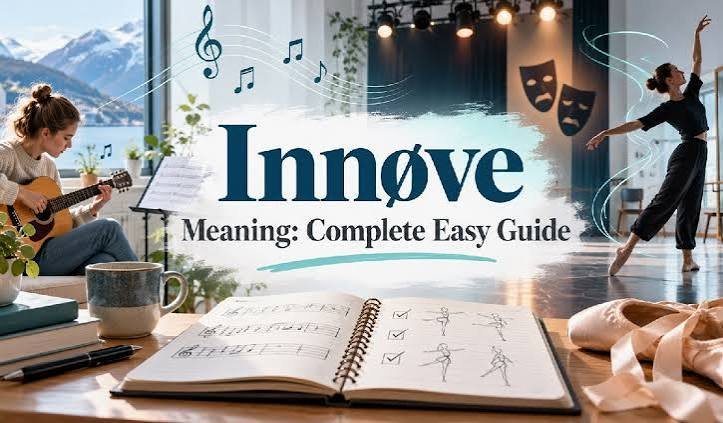
Music and theatre are natural examples of activities involving rehearsal. Actors practice their dialogue, musicians repeat difficult passages, and performers work on timing before presenting their work to an audience. These activities require attention, patience, and regular feedback. A performer might initially struggle with a line or musical sequence but become more comfortable after working through it several times. The Norwegian verb Innøve can describe the process of rehearsing a role or speech. However, effective rehearsal involves more than repeating the same actions without reflection. Performers may need to correct pronunciation, adjust timing, or change their interpretation. These examples demonstrate how the established meaning of Innøve applies to creative preparation and why careful practice can support a more consistent performance.
7. Innøve in Sports and Physical Training
Sports and physical training also involve repeated practice. Athletes work on movements, coordination, technique, and decision-making to prepare for competition or recreational activity. A basketball player may practice passing, while a swimmer may repeat a particular movement to improve technique. Coaches can help athletes recognize mistakes and develop suitable training routines. These activities illustrate the broader relevance of learning through repetition, although Innøve should not be presented as the name of a special sports-training method without supporting evidence. Physical training must also be appropriate to the person’s ability and circumstances. Rest, safe technique, and gradual progression are important considerations. The connection is straightforward: practicing a specific movement or routine can help someone become more familiar with it and work toward better execution.
8. Workplace Training and Professional Skills
In professional environments, employees often need to learn procedures before carrying them out independently. New workers may practice operating equipment, using workplace software, answering customer questions, or following established safety instructions. Rehearsing these tasks can reveal areas of confusion before an employee encounters a real situation. For example, a customer-service team might practice responses to common questions to improve clarity and consistency. Managers can support learning by providing clear guidance and constructive feedback. These examples are practical applications of rehearsal rather than evidence that Innøve is a recognized corporate framework. The word is useful when discussing how people learn workplace tasks, but any claim that a specific company uses an official Innøve system should be supported by reliable documentation.
9. Potential Benefits of Repeated Practice
Repeated practice can offer several potential benefits when it is purposeful and suited to the task. It may help people become more familiar with a process, identify recurring mistakes, and perform certain activities with greater confidence. For example, rehearsing a presentation can help a speaker notice unclear explanations or awkward transitions before presenting to an audience. Practicing a language can help learners recognize familiar sentence patterns more quickly. However, progress differs between individuals and depends on the difficulty of the activity, the quality of feedback, and the amount of useful practice. Repetition does not automatically produce mastery. A more effective approach involves setting clear goals, reviewing performance, correcting mistakes, and adjusting the next practice session according to what has been learned.
10. Innøve and Continuous Improvement
Continuous improvement is the process of reviewing performance and making changes that may produce better results. It can be applied to writing, education, workplace routines, and many other activities. A person might complete a task, examine the result, identify a weakness, and then practice the relevant part again. This approach connects naturally with the idea behind Innøve because both discussions can involve learning through repeated effort. However, the terms are not interchangeable. Innøve is a Norwegian verb, whereas continuous improvement is a broader concept used to describe ongoing efforts to improve processes or outcomes. Keeping the definitions separate makes an article more accurate. It also helps readers understand that practical examples can illustrate a word’s meaning without turning that word into an invented formal methodology.
11. Is Innøve a Software Platform or Business Method?
Some online pages may describe Innøve as a business concept, innovation philosophy, or technology platform. Such descriptions should be evaluated individually rather than accepted as the established meaning of the Norwegian word. The dictionary evidence supports a meaning related to practicing and rehearsing; it does not, by itself, verify a particular product, company, or software service. If you encounter a website presenting Innøve as a commercial offering, look for official company information, product documentation, clearly described features, and credible independent evidence. Do not assume that claims about artificial intelligence, pricing, ownership, or business results are accurate simply because they appear in an article. A careful distinction between a language definition and a possible brand name helps readers avoid confusion and make informed decisions.
12. How to Research Innøve Accurately
The best way to research an unfamiliar word is to begin with a reliable dictionary and then consider the context in which it appears. For Innøve, NAOB provides a documented definition and examples of usage. Other language resources can help clarify which English translation best fits a particular sentence. When researching broader claims, examine the original source, check publication details, and seek independent confirmation where appropriate. Search results can contain different interpretations, but repeated statements across websites do not necessarily establish that a claim is true. Writers should avoid inventing definitions, statistics, expert opinions, or product features to make an article appear more comprehensive. Accurate explanations, relevant examples, and transparent distinctions between facts and interpretations provide more lasting value to readers than unsupported promises.
13. Final Thoughts on Innøve
Innøve is a documented Norwegian verb meaning to practice or rehearse something through repeated exercises. Its meaning connects naturally with activities such as learning a language, preparing a speech, rehearsing music, and practicing workplace procedures. These examples show how repetition can contribute to learning when it is combined with attention, feedback, and appropriate adjustments. At the same time, Innøve should not be confused with the English word innovate or automatically treated as the name of a technology platform or business framework. Anyone researching the term should consider its linguistic context and verify claims about any separately named product or organization. A clear understanding of the word provides a useful starting point for exploring practice, learning, and skill development without relying on unsupported interpretations.
Frequently Asked Questions (FAQs)
1. What does Innøve mean?
Innøve is a Norwegian verb meaning to practice or rehearse something through repeated exercises. Depending on the context, it can describe preparing a speech, learning a role, or developing familiarity with a particular skill. The most appropriate English translation depends on the activity being discussed.
2. Is Innøve the same as innovate?
No. Innøve concerns practicing or rehearsing something, while innovate means introducing something new or making a meaningful improvement. The words may look similar to some English-speaking readers, but their meanings are different. They should not be treated as synonyms in informational content.
3. How is Innøve used in everyday learning?
The word can describe practicing a specific activity until it becomes familiar. Examples include rehearsing a presentation, learning a musical passage, or practicing a language exercise. These situations demonstrate the meaning of the Norwegian verb rather than a separate, formally established learning framework.
4. Is Innøve a verified software platform?
The Norwegian dictionary definition does not establish Innøve as a software platform. If a website uses the name for a product or service, check its official documentation and reliable supporting sources before accepting claims about its features, ownership, or performance.
5. Why is Innøve worth understanding?
Understanding Innøve helps readers interpret Norwegian text more accurately and recognize the difference between a documented word and newer online interpretations. It also offers a useful way to discuss rehearsal and repeated practice in education, creative work, and professional training. Correct interpretation makes writing clearer and more trustworthy.