


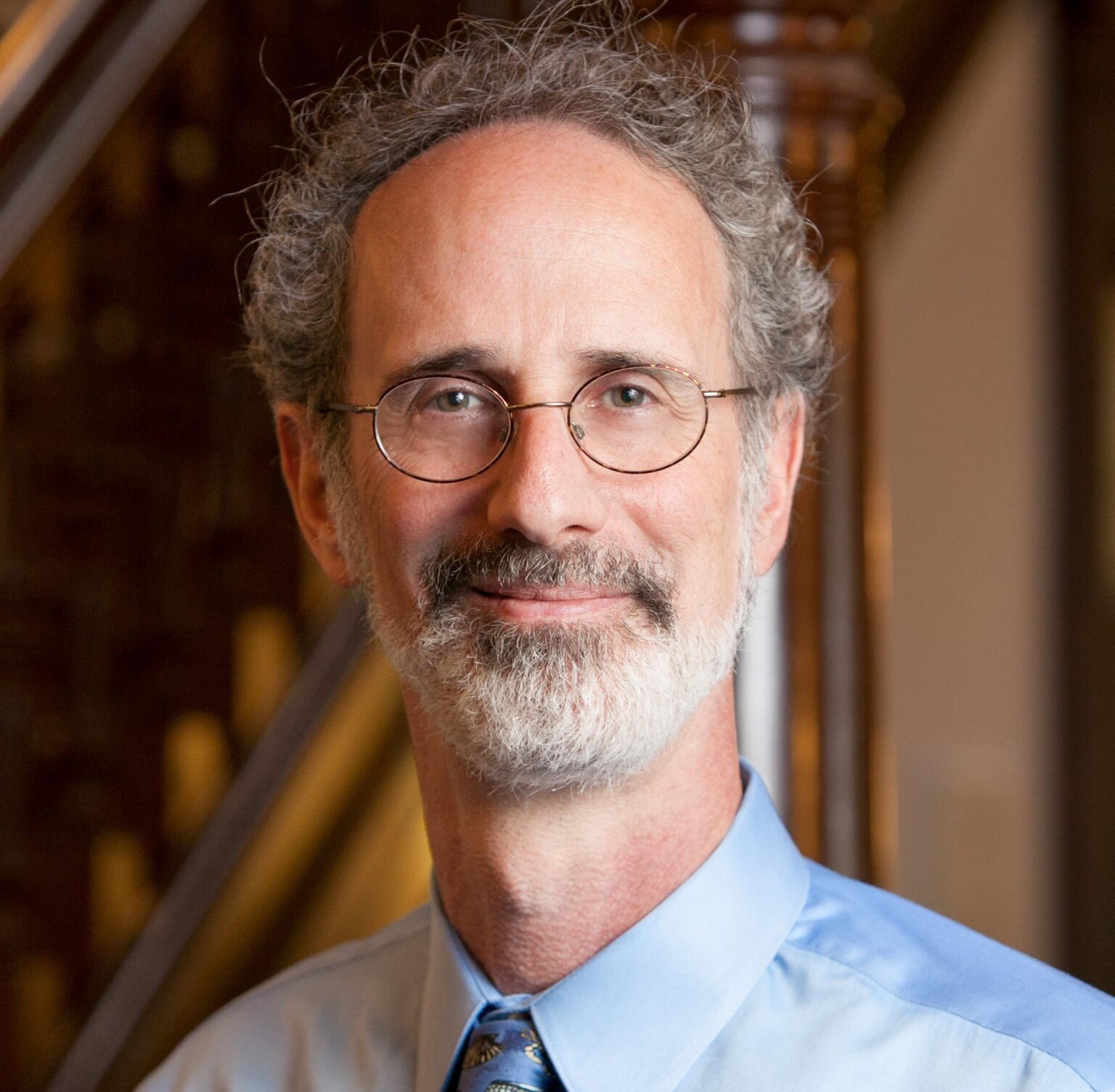
Peter Gleick is an American hydroclimatologist, author, and public communicator best known for connecting freshwater science with climate change, human rights, security, and public policy. Rather than treating water as a narrow engineering problem, his career has focused on a broader question: how can societies meet human and ecological needs without exhausting rivers, aquifers, institutions, or communities?
That perspective has made his work relevant far beyond hydrology. Researchers cite him in discussions of water scarcity, climate adaptation, environmental security, sanitation, public health, resource conflict, and sustainable development. His influence comes not from a single discovery but from a body of work that has given policymakers and the public clearer language for understanding why water crises happen and how they can be reduced.
Who Is Peter Gleick?
Peter Gleick is the co-founder and a Senior Fellow of the Pacific Institute, an independent research organization based in Oakland, California. He helped establish the institute in 1987 and previously served as its president before moving into president-emeritus and senior research roles.
His academic training combines science and policy. He earned a bachelor’s degree from Yale University, followed by master’s and doctoral degrees from the University of California, Berkeley. That interdisciplinary background shaped a career that moves between physical hydrology, climate science, economics, governance, ethics, and science communication.
He is also an elected member of the U.S. National Academy of Sciences and the American Academy of Arts and Sciences, a MacArthur Fellow, and a Fellow of the American Association for the Advancement of Science. These honors reflect both his research record and his ability to translate complex environmental problems into public debate.
Why Peter Gleick Became an Influential Water Thinker
The central strength of Peter Gleick’s work is integration. Traditional water planning often begins with supply: build a dam, drill a well, transfer water, expand a treatment plant, or find another source. His research asks a different set of questions first:
- What service is the water supposed to provide?
- Can that service be delivered with less water?
- Who receives reliable access, and who is excluded?
- What ecological damage is created by additional withdrawals?
- How will climate change alter the reliability of the system?
- Could cooperation, pricing reform, reuse, conservation, or better governance solve the problem more effectively?
This shift sounds simple, but it changes the policy conversation. Water is no longer measured only in gallons, cubic meters, reservoirs, and pipelines. It is evaluated through health, dignity, productivity, ecosystem survival, resilience, affordability, and political stability.
Peter Gleick and the “Soft Path for Water”
One of his most prolific contributions is advancing the soft path for water. His idea implies that infrastructure is not denied but rather combined with efficiency, decentralization, conservation, pricing, recycling, institutional reforms, and technology to meet specific needs.
The hard path typically addresses meeting demands by focusing on expanding supply, whereas the soft path emphasizes the specific benefits that water use provides and the least damaging and costly way of supplying it. A household does not need water in itself, but it needs the services associated with its use, including clean clothes, wholesome food, sanitation, access to clean water, laundry and dishes, and cooling and heating.
The latter considerations are usually referred to as load control. This approach is highly efficient and cost-effective because it allows for meeting the same demand with significantly reduced water use. For instance, efficient appliances may reduce water use in the household by half, and drip irrigation combined with improved scheduling may allow for producing more food per unit of water than conventional methods. Similarly, industrial processes may be designed to recycle and reuse water with minimal withdrawal and wastewater, and detecting leaks may reduce the demand for water at large by eliminating losses from distribution networks.
Water conservation and efficiency are therefore not mere options but rather fundamental elements of the soft water path. Peter Gleick therefore maintains that in numerous cases and across applications, conserved water can provide the same benefits as the ones from new sources but with lesser costs and negative consequences.
The Meaning of “Peak Water”
Peter Gleick also helped define and popularize peak water, a framework developed with researcher Meena Palaniappan for explaining the different limits societies face when using freshwater. The framework separates three problems that are often mistakenly treated as one.
Peak renewable water
Renewable sources such as rivers may replenish through the hydrological cycle, but their flow is limited. A society reaches peak renewable water when withdrawals approach the maximum available flow and additional demand cannot be met without taking water from another user or ecosystem.
Peak nonrenewable water
Some groundwater is withdrawn much faster than nature replenishes it. In such cases, aquifers function like finite stocks. Pumping can rise for a time, but eventually falling water tables, declining quality, land subsidence, rising energy costs, or physical depletion force production downward.
Peak ecological water
Even when more water can technically be captured, the ecological and social costs may exceed the benefits. Rivers need flows to sustain fisheries, wetlands, sediment transport, water quality, recreation, and downstream communities. Peak ecological water describes the point at which additional extraction produces more harm than value.
The importance of this framework is diagnostic. It helps planners distinguish between a flow limit, a stock-depletion problem, and an ecological trade-off. Each requires a different response.
Human Rights and Basic Water Needs
Another major strand of Peter Gleick’s scholarship concerns the human right to water. His 1996 work on basic water requirements quantified the water needed for drinking, sanitation, bathing, and food preparation and proposed 50 liters per person per day as a planning standard for meeting fundamental domestic needs.
The number was not intended to describe all household consumption or impose a universal lifestyle. It was a benchmark for minimum human dignity and health. That approach gave development agencies, governments, courts, and advocates a concrete way to discuss what “access” should mean beyond the presence of a pipe somewhere in a community.
His later work argued that access to a basic quantity of safe water is a fundamental human right. This helped move water policy toward questions of affordability, reliability, quality, distance, discrimination, and public accountability—not merely infrastructure coverage.
Water, Climate Change, and Risk
Peter Gleick was among the early researchers examining how climate change could affect water resources. That connection is now central to climate adaptation because warming can alter evaporation, snowpack, runoff timing, drought conditions, rainfall extremes, wildfire risk, and water quality.
The policy lesson is critical: historical averages are becoming less reliable guides for future infrastructure. A reservoir, drainage system, irrigation network, or flood-control plan designed around past conditions may perform poorly as temperature and precipitation patterns shift.
His work encourages planners to build resilience rather than assume that historical hydrological patterns will remain stable. That means diversifying supplies, reducing demand, protecting watersheds, updating drought rules, improving groundwater management, preparing for extremes, and avoiding investments that lock communities into fragile systems.
Water Conflict, Security, and the Water Conflict Chronology
Peter Gleick’s research has also shaped the study of water and conflict. The Pacific Institute’s Water Conflict Chronology catalogs cases in which water has acted as a trigger, weapon, or casualty of violence.
Those categories matter. Water rarely causes war by itself. Conflict usually emerges from a combination of scarcity, inequality, weak institutions, political exclusion, territorial disputes, infrastructure failure, corruption, climate shocks, or deliberate attacks. Calling every dispute a “water war” can therefore oversimplify the evidence.
The chronology offers a more precise approach. A drought may intensify existing grievances. A military force may attack a dam or treatment plant. A community may protest unequal allocation. Armed groups may seize wells or cut supplies. In each case, water plays a different role and demands a different prevention strategy.
The database now contains thousands of documented incidents extending across centuries, while recent Pacific Institute analyses have identified a steep increase in reported water-related violence. The trend strengthens the case for protecting civilian infrastructure, improving local governance, negotiating shared-basin agreements, and treating secure water access as a peacebuilding tool.
Major Books by Peter Gleick
Peter Gleick has written or edited a substantial body of work for both technical and general audiences. Several titles stand out.
The World’s Water series
The multi-volume The World’s Water series assembled data, analysis, timelines, and policy research on global freshwater issues. It became a reference point for readers seeking accessible evidence on scarcity, privatization, bottled water, conflict, sanitation, and international water trends.
Bottled and Sold
In Bottled and Sold: The Story Behind Our Obsession with Bottled Water, he examines the environmental, economic, marketing, and public-policy questions surrounding packaged water. The book challenges the assumption that bottled water is automatically safer or more responsible than well-managed public tap systems.
The Three Ages of Water
Published in 2023, The Three Ages of Water: Prehistoric Past, Imperiled Present, and a Hope for the Future presents a broad history of humanity’s relationship with water. It describes a first age shaped by natural water systems, a second age dominated by large-scale engineering and rising environmental damage, and the possibility of a third age built on sustainability, equity, efficiency, and resilience.
When the Well Is Dry
His forthcoming book, When the Well Is Dry: How Water Fuels Violence and Shapes Peace, is scheduled for publication on November 10, 2026. The publisher describes it as a history of the relationship between freshwater and violence, paired with recommendations for moving from conflict toward cooperation.
Awards and Professional Recognition
Peter Gleick received a MacArthur Fellowship in 2003 and was elected to the National Academy of Sciences in 2006. The MacArthur Foundation recognized his integrated approach to freshwater, including its connections with economics, politics, health, environmental protection, and international security.
He later received the 2018 Carl Sagan Prize for Science Popularization, recognizing his contribution to public understanding of science. He was elected to the American Academy of Arts and Sciences in 2023.
These distinctions are notable because they span scientific research, institutional leadership, and public communication—three areas that rarely receive equal attention in one career.
The Heartland Institute Controversy
A complete profile must address the 2012 Heartland Institute incident. Peter Gleick acknowledged that he used another person’s name to obtain internal documents from the climate-policy organization after receiving an anonymous memo that he said he was attempting to verify.
He publicly described his conduct as a serious lapse in professional judgment and ethics, apologized, and took a temporary leave from the Pacific Institute. The organization’s board said neither its staff nor board knew of or participated in his actions.
The Pacific Institute later reinstated him after an outside review supported his account of the interaction and found no evidence that institute staff were involved. The episode remains an important cautionary case about scientific integrity: even when a researcher believes the public interest is at stake, deceptive methods can damage credibility and distract from the underlying evidence.
How to Evaluate Peter Gleick’s Work Critically
Readers do not need to accept every policy recommendation to benefit from his research. A strong evaluation should separate four layers:
- Empirical findings: What do measurements, historical records, and case data show?
- Definitions: Are terms such as scarcity, conflict, efficiency, and basic need used consistently?
- Value judgments: How are equity, ecosystem protection, affordability, and human rights weighted?
- Policy choices: Which interventions are technically feasible, politically realistic, and locally appropriate?
This method prevents two common errors. One is dismissing scientific evidence because a researcher advocates policy. The other is treating policy recommendations as if they were purely objective facts. Good water governance requires both evidence and an explicit discussion of priorities and values.
Why His Ideas Matter Now
Peter Gleick’s work is especially relevant because modern water crises are rarely caused by absolute physical scarcity alone. Cities can lose large volumes through leakage. Farms may depend on incentives that reward overuse. Poor communities may live beside reliable infrastructure yet lack affordable service. Aquifers may be pumped without transparent accounting.
Climate change adds pressure, but governance often determines whether pressure becomes disaster. The most useful lesson from his career is that water problems become more manageable when institutions address services, efficiency, equity, ecological limits, and long-term risk at the same time.
For businesses, this means measuring supply-chain water exposure rather than only facility consumption. For cities, it means treating conservation, reuse, stormwater capture, and leak reduction as infrastructure. For households, it means supporting reliable public systems and using water efficiently without confusing individual action with the need for institutional reform.
Frequently Asked Questions
What is Peter Gleick best known for?
Peter Gleick is best known for his research on freshwater sustainability, climate change and water, basic human water needs, the human right to water, water conflict, peak water, and the soft path for water. He is also widely recognized as a science communicator and co-founder of the Pacific Institute.
What is the soft path for water?
The soft path is a planning approach that starts with the service water provides rather than assuming demand must be met through new supply. It emphasizes efficiency, conservation, fit-for-purpose water quality, decentralized options, reuse, appropriate economic tools, and ecosystem protection.
What does peak water mean?
Peak water describes different limits on freshwater use. Peak renewable water concerns maximum renewable flows, peak nonrenewable water concerns depletion of stored groundwater, and peak ecological water concerns the point at which further withdrawals create greater environmental and social harm than benefit.
Is Peter Gleick a climate scientist?
He is commonly described as a hydroclimatologist because his work sits at the intersection of hydrology and climate science. His research has examined how climate change affects freshwater availability, drought, runoff, infrastructure planning, ecosystems, and human security.
What happened in the Heartland Institute incident?
In 2012, he admitted using a false identity to obtain internal Heartland Institute documents while attempting to verify an anonymously received memo. He apologized, called the action an ethical lapse, took leave, and was later reinstated by the Pacific Institute after an outside review.
Conclusion
Peter Gleick’s lasting contribution is a way of thinking. Water policy should not begin and end with bigger dams, deeper wells, or longer pipelines. It should ask what people and ecosystems need, how those needs can be met fairly, and which solutions remain reliable under climate stress.
The practical next step is to use his frameworks as diagnostic tools. Identify whether a water problem is driven by physical limits, waste, inequity, pollution, weak governance, ecological overreach, or conflict risk. Then compare supply expansion with efficiency, reuse, conservation, institutional reform, and protection of basic human needs.
That is where his work delivers its greatest value: not as a final answer, but as a disciplined method for asking better questions.