


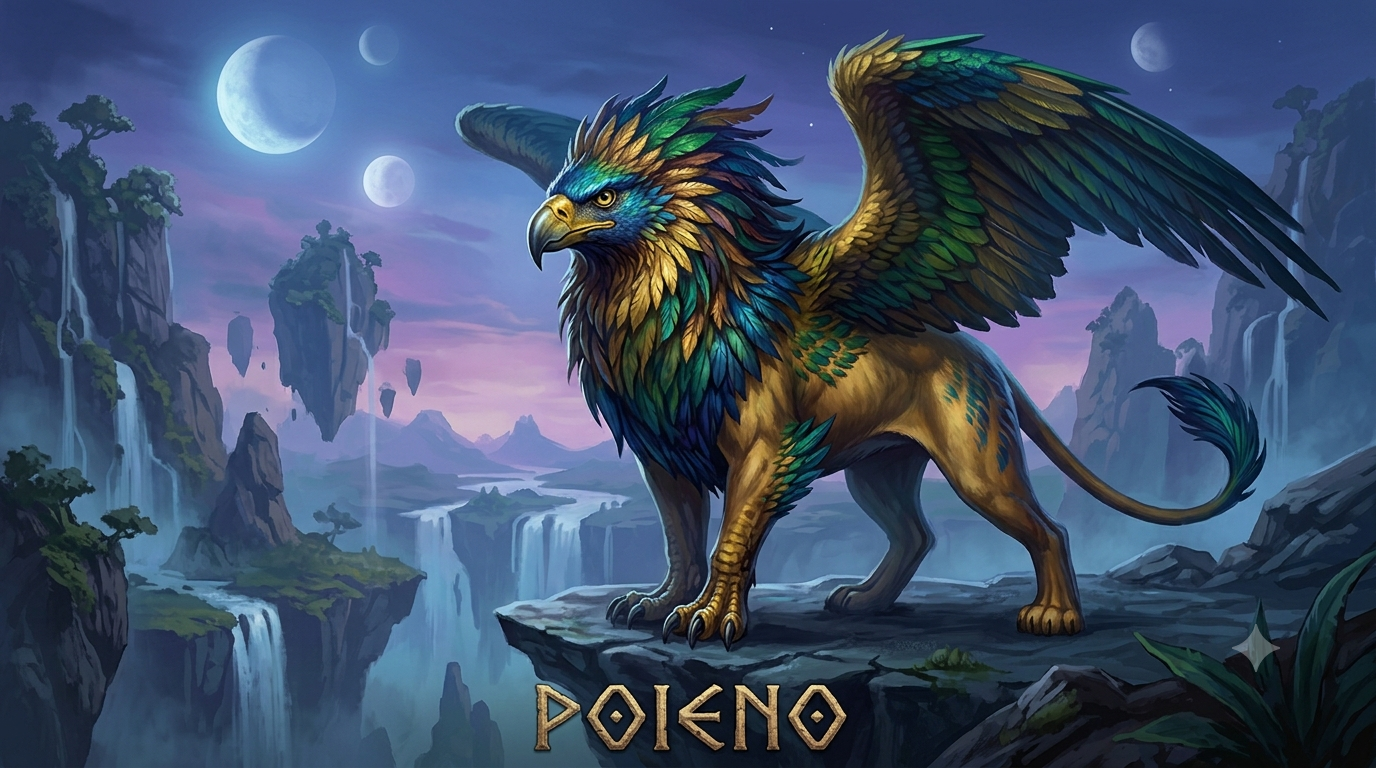
Poieno is increasingly used online as a word for purposeful creation: the process of turning an idea, feeling, need, or possibility into something real. You may see it described as a philosophy of creativity, a mindset for personal growth, or a framework for innovation.
There is one crucial detail, though. The term does not have a single, well-established dictionary definition or a confirmed historical etymology. The most responsible interpretation is to treat it as a modern coined expression inspired by older words connected with making, creativity, openness, and completion—not as an ancient word with a proven continuous history.
This guide separates verified linguistic facts from attractive but unsupported claims. It also shows how the concept can be applied to creative work, business, learning, and daily decision-making without pretending the word has more authority than the evidence supports.
What Does Poieno Mean?
In current online usage, the simplest definition is meaningful creation through intentional action. It describes the movement from imagination to execution: noticing a possibility, shaping it with care, producing something useful, and improving it through reflection.
That “something” does not need to be a painting, novel, or musical composition. It may be a product, lesson plan, business process, community project, personal habit, design system, or solution to a recurring problem.
A practical definition can be stated this way:
Poieno is the disciplined act of bringing a worthwhile idea into reality while remaining open to learning and refinement.
This definition is useful because it avoids vague motivational language. It combines creativity, purpose, craft, and follow-through—four elements that must work together before an idea creates real value.
Is Poieno a Real Word?
It is better described as an internet-era neologism or emerging conceptual label than a standard English word. Recent explainers generally agree that it is not widely recognized in major dictionaries, even though they differ sharply in how confidently they describe its origin.
That distinction matters. A newly coined term can still be meaningful, memorable, and useful, but its meaning comes from current usage and shared interpretation, not from an established lexicographical record.
Writers should therefore avoid statements such as “this ancient word has always meant…” unless they can provide a primary linguistic source. More accurate phrasing includes:
- “The term is commonly interpreted as…”
- “It appears to be inspired by…”
- “Modern writers use it to describe…”
- “A useful contemporary definition is…”
This evidence-first wording improves credibility. It also prevents a creative idea from being weakened by an exaggerated origin story.
The Most Credible Linguistic Connection
The Greek Verb Poieō
The strongest defensible connection is the Ancient Greek verb ποιέω, transliterated poieō or poiein in different grammatical forms. Greek lexicons define it broadly as to do, make, practice, or produce.
That root fits the modern interpretation well. It emphasizes making as an active process rather than creativity as a passive personality trait.
The connection also helps explain why people associate the term with art, craft, poetry, invention, and transformation. Still, resemblance is not proof of direct descent. There is no reliable evidence that the modern spelling Poieno is itself an established Ancient Greek word.
The Romanian Poiană Theory
Some articles connect the term with Romanian poiană, meaning a clearing or glade. That Romanian word is real, and its plural is poiene.
The image is appealing: a sunlit opening in a crowded forest becomes a metaphor for mental space, discovery, and creative possibility. Yet this should be presented as a symbolic association, not a confirmed etymological pathway.
The difference is simple. Romanian poiană is verifiable; a direct linguistic line from poiană to the modern coined term is not.
The Italian Pieno Association
Another popular interpretation links the spelling to Italian pieno, meaning “full,” “complete,” or “filled.” That word is also genuine, but the relationship remains speculative rather than historically demonstrated.
As symbolism, the idea works nicely. The Greek association suggests making, the Romanian image suggests space, and the Italian word suggests fullness or completion.
As etymology, however, combining three visually similar words from unrelated linguistic contexts is not enough. Responsible content should label this as creative interpretation.
What Poieno Is Not
Because the topic is loosely defined, some pages attach nearly every positive idea to it: mindfulness, technology, branding, emotional health, education, innovation, spirituality, and productivity. That breadth may sound impressive, but it can leave the term empty.
A clearer explanation starts by defining its limits.
It is not:
- A scientifically validated productivity method
- A formally recognized school of philosophy
- A proven ancient tradition
- A substitute for professional business, medical, or psychological advice
- A guarantee that every creative project will succeed
- A mystical force that removes the need for skill, testing, or discipline
The concept becomes valuable only when it guides observable behavior. If it merely means “anything creative and positive,” it loses precision.
The Four-Part Poieno Framework
A useful way to apply the idea is through four stages: Clear, Choose, Create, Complete. This framework transforms an abstract word into a repeatable practice.
1. Clear: Make Space for the Right Problem
Creation often begins with subtraction. Remove noise, unnecessary tasks, copied assumptions, and goals chosen mainly to impress other people.
Ask three questions:
- What problem or possibility keeps returning?
- Who would benefit if it were addressed?
- What distraction is preventing focused work?
This stage resembles the metaphorical “clearing” used in several modern interpretations. The purpose is not to wait for perfect inspiration; it is to create enough mental and practical space to notice what deserves attention.
2. Choose: Define Purpose and Boundaries
Ideas become manageable when they have a clear audience, outcome, and constraint. “Build a useful study tool for first-year students” is stronger than “make an educational app.”
Define:
- Audience: Who is this for?
- Outcome: What should change after they use it?
- Constraint: What time, budget, format, or skill limit must be respected?
- Evidence: How will you know it works?
This step gives intention to creativity. It prevents endless brainstorming from being mistaken for progress.
3. Create: Produce a Small, Testable Version
The heart of Poieno is making—not merely imagining. Produce the smallest version that can be seen, used, read, tested, or discussed.
A writer can draft one section. A founder can build a simple prototype. A teacher can test one activity with a small class. A designer can create a low-fidelity wireframe before polishing visual details.
The first version should answer a question, not prove perfection. Good creative work usually develops through feedback, revision, and repeated contact with reality.
4. Complete: Refine, Deliver, and Learn
Completion does not mean the work can never change. It means the current version meets a defined standard and is released, submitted, published, delivered, or put into use.
After delivery, review:
- What created the most value?
- What confused or slowed people down?
- Which assumption proved wrong?
- What should be retained, removed, or improved?
- Is another iteration justified?
This stage separates purposeful creativity from permanent experimentation. A finished imperfect project often teaches more than an ambitious idea that never leaves the planning document.
How Poieno Applies to Creative Work
For artists and writers, the concept offers a healthier alternative to waiting for inspiration. It treats creativity as a relationship between imagination and practice.
A simple weekly rhythm might include one session for exploration, three for production, one for critique, and one for finishing or publishing. The exact schedule matters less than maintaining a visible path from idea to completed work.
Creators can also use a “meaning test” before committing to a project:
- Does this subject genuinely interest me?
- Does the work offer value, beauty, clarity, or insight to someone else?
- Can I complete a meaningful version with the resources available?
- What new skill or understanding could emerge from making it?
This keeps creative freedom connected to judgment. Not every idea deserves equal time.
Poieno in Business and Product Development
In business, purposeful creation begins with a verified customer problem. A clever concept without demand is still only a concept.
Teams can use the framework to move through a practical sequence:
- Observe recurring customer friction
- Define the smallest valuable outcome
- Build a prototype or limited service
- Test it with real users
- Measure behavior rather than compliments
- Improve the offer or stop the experiment
This approach aligns naturally with product discovery and iterative design, but the term should not be presented as a replacement for those established disciplines. Its value is as a memorable umbrella for human-centered, evidence-led creation.
It can also strengthen brand strategy. Instead of choosing a brand identity based only on aesthetics, a company can connect its story to what it consistently makes possible for customers.
Poieno in Learning and Personal Growth
Students often consume far more information than they retrieve, explain, or apply. A creation-focused mindset reverses that pattern.
After studying a topic, produce something:
- A one-page explanation in your own words
- A diagram showing relationships
- Five original practice questions
- A short teaching video
- A comparison table
- A real-world application or mini-project
These outputs reveal gaps that passive rereading can hide. They also turn knowledge into a usable structure.
Personal growth works in a similar way. Instead of adopting a broad identity goal such as “be more organized,” create a small system: a weekly review, a fixed place for essential items, or a three-task daily priority list.
Why the Term Is Attracting Attention
While the recent rise in popularity could be due to the word’s flexibility, as it sounds nice and can be easily adapted to branding, self-help, art, education, or business, there is a different, more substantial explanation. There is a cultural thirst for meaningful words and phrases that have a certain je ne sais quoi about them. The overuse of the language of productivity and constant hustle has made people yearn for a more humane perspective, in which making things right, slow down, and complete rather than rush and produce something half-hearted and disposable is prioritized.
However, the phrase’s popularity is far removed from its credibility in the annals of history. In fact, the word’s credibility is best demonstrated when contemporary thinkers and writers use it to describe their modern reinterpretation of the word.
How to Use the Word Accurately
Use it as a conceptual noun, a brand idea, or shorthand for purposeful creation. Avoid presenting it as universally defined.
Examples of responsible usage include:
- “Our studio uses Poieno as a name for its idea-to-execution process.”
- “The workshop explores a Poieno-inspired approach to creative practice.”
- “For this team, the term describes intentional making followed by reflection.”
- “The brand defines it as creating useful things with patience and purpose.”
Notice the qualifier in each example. The writer explains how the word is being used rather than claiming exclusive authority over its meaning.
Common Misconceptions
One misconception is that the term has a single ancient origin combining Greek, Romanian, and Italian meanings. The component words may be real, but the combined story is not supported by a documented linguistic chain.
Another misconception is that mindful creation must be slow. The real goal is appropriate pace. A sketch may take minutes, while a reliable product may require months of research and testing.
A third mistake is treating completion as compromise. Finishing a bounded version creates evidence; endless expansion often protects an idea from being evaluated.
Frequently Asked Questions About Poieno
1. What does Poieno mean in simple words?
It generally means turning an idea into something real with purpose and care. The term is used online to connect creativity with action, refinement, and meaningful completion.
Because it lacks a standard dictionary definition, its exact meaning depends on context. A writer or brand using it should briefly explain what the word represents.
2. Is Poieno an official dictionary word?
It does not appear to be an established English dictionary word with a universally accepted definition. Current sources typically describe it as a modern conceptual term or neologism rather than a historically documented lexical item.
That does not make it unusable. Many coined terms gain value through consistent use, but honest labeling is essential.
3. Does Poieno come from Greek?
It resembles the Greek verb poieō, meaning to make, do, or produce, which is the most credible linguistic association.
A direct historical derivation has not been established. It is safer to say the modern term is “inspired by” or “associated with” the Greek root.
4. How can I practice Poieno in daily life?
Choose one worthwhile idea, define who it helps, create a small version, complete it, and review what happened. The project may be as simple as reorganizing a study routine or as complex as launching a product.
The essential shift is from passive intention to visible output. Reflection then turns the result into learning.
5. Can Poieno be used as a business or brand name?
Yes, its unusual spelling and creative associations may make it attractive for a studio, platform, agency, program, or product. Before using it commercially, check relevant trademark databases, domain availability, social handles, pronunciation issues, and existing organizations with similar spellings.
A brand should also publish a clear definition. That explanation can turn an unfamiliar name into a distinctive positioning asset.
Final Takeaway
Poieno is most useful when treated honestly: not as a magically rediscovered ancient philosophy, but as a modern label for purposeful creation. Its strongest foundation is the real Greek idea of making and doing, while associations with a clearing or fullness work better as metaphors than proven etymology.
Start with one idea that matters. Clear away noise, define the intended value, create a testable version, and bring it to a meaningful finish. The word gains substance only when it leads to something real.