



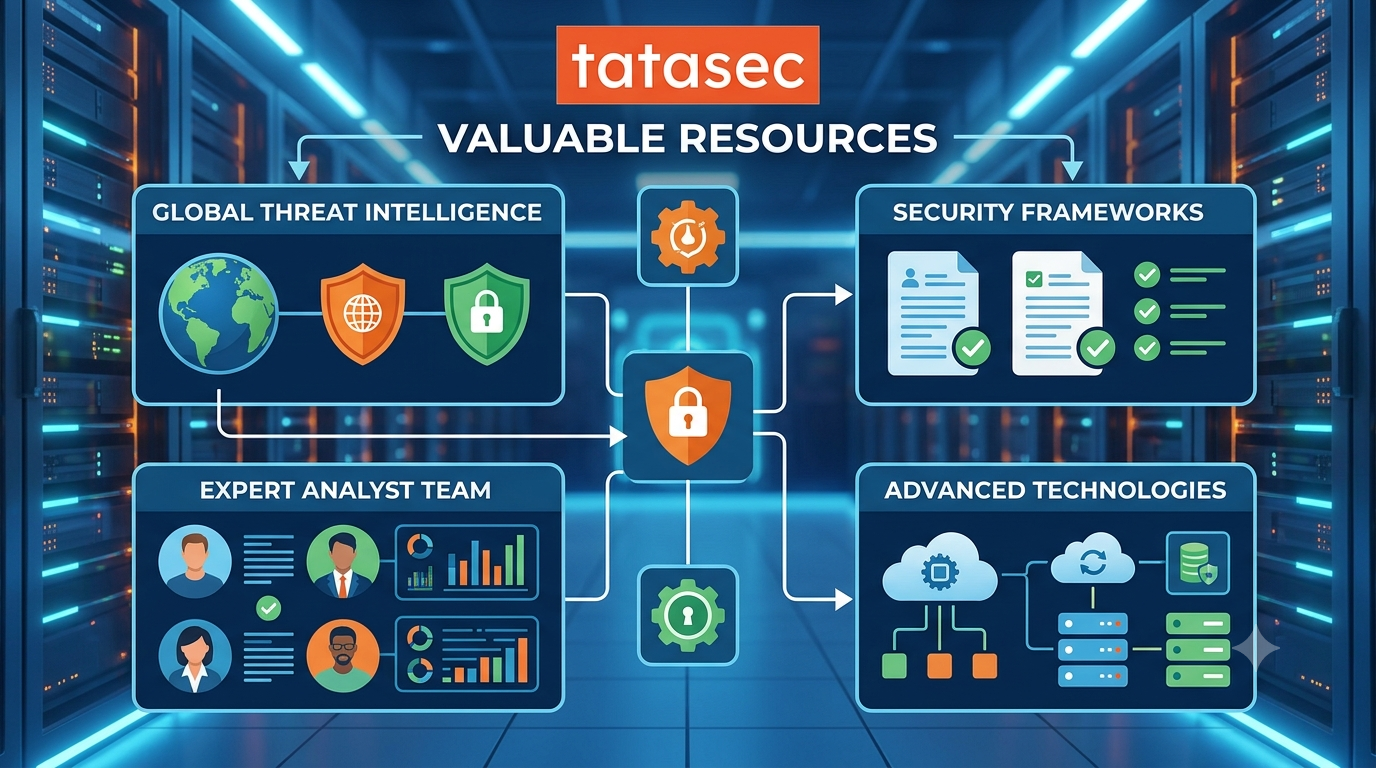
Tatasec valuable resources can be useful for founders, freelancers, students, and small-business owners who want accessible explanations of entrepreneurship, startup planning, marketing, operations, and business growth. The real value, however, does not come from reading article after article. It comes from knowing what the platform covers, choosing material that matches a real decision, checking important claims, and converting useful ideas into measurable action.
Tatasec describes itself as an entrepreneurship-focused publication created to provide practical guidance, relevant insights, and support for aspiring and established business owners. Its main navigation organizes content into Business Insights, Entrepreneurship, and Start-up Tips, giving readers three broad entry points rather than a rigid course or certification path.
That distinction matters. “Tatasec valuable resources” appears best understood as a search phrase describing the site’s collective library, not as the formal name of one tool, product, or downloadable resource center.
Readers should therefore approach Tatasec as a broad editorial hub: useful for discovery and idea generation, but not automatically a substitute for legal, financial, tax, or technical advice.
What Are Tatasec Valuable Resources?
At a practical level, Tatasec valuable resources are the articles, guides, examples, checklists, and explanatory posts available across the Tatasec website. The site says its mission is to empower entrepreneurs with knowledge, tools, practical advice, and inspiration, while its category pages show coverage extending from business strategy and customer communication to startup capital, branding, productivity, risk, and technology.
The Tatasec valuable resources library is not arranged like a university curriculum. You are more likely to find individual articles addressing a specific question, concept, or business challenge.
That format works well when you already know what problem you are trying to solve.
The library can be grouped into five functional resource types:
- Foundational explainers that introduce entrepreneurship, startup culture, business management, or capital.
- Decision guides that help readers think through tools, manufacturers, marketing channels, advisors, or operating choices.
- Growth content covering branding, customer service, employee engagement, advertising, and market positioning.
- Operational insights related to productivity, automation, risk management, technology, and business processes.
- Idea-generation content that exposes readers to industries, models, and strategic questions they may not have considered.
This range is one reason the phrase attracts interest. A reader can move from a basic startup question to a more specialized operational topic without leaving the site, although the quality and relevance of individual pages should still be assessed separately.
How Tatasec Valuable Resources Are Organized
Business Insights for Better Commercial Decisions
The Business Insights section covers a varied collection of commercial topics. Its category listings include subjects such as SEO mistakes, advertising creativity, white-label manufacturing, investment styles, CRM evaluation, seasonal e-commerce planning, technology-enabled risk management, and employee engagement.
Within Tatasec valuable resources, the strongest use of this section is not passive browsing. Use it to widen the list of factors you consider before making a decision.
An article about selecting manufacturers, for example, can help you develop due-diligence questions even when it cannot verify a particular supplier for you.
The same principle applies to marketing, CRM, technology, and risk-management content. Extract the criteria, test the assumptions, and apply them to your own situation rather than copying a recommendation without context.
Entrepreneurship Resources for Mindset and Management
The Entrepreneurship category focuses on entrepreneurial principles, development, risk, corporate entrepreneurship, customer communication, training, and business management. Its archive also contains content aimed at younger learners and first-time founders, suggesting a wide intended audience rather than a narrow executive readership.
These Tatasec valuable resources are most useful when a reader needs conceptual clarity. They can help distinguish an idea from an opportunity, ambition from planning, or innovation from sustainable execution.
The next step should always be to apply the concept to a real customer, budget, timetable, or process.
Reading about entrepreneurial mindset may increase motivation. Sustainable progress, however, usually depends on specific actions such as conducting customer interviews, calculating costs, testing prices, or documenting operating procedures.
Start-up Tips for Early-Stage Questions
The Start-up Tips archive includes material on startup capital, advisors, equity, remote work, early-stage growth, operating culture, and productivity tools. The category is broad enough that not every article is strictly about launching a company, so readers should select pages by problem relevance rather than relying only on the category label.
That breadth can be helpful for discovery but also creates noise. A focused founder should search for a precise issue—such as capital requirements, advisor selection, hiring, or startup costs—and ignore pages that do not support the immediate objective.
This problem-first approach saves time. It also reduces the temptation to consume interesting content that has no connection to the company’s current priorities.
Who Can Benefit Most?
Tatasec valuable resources are best suited to readers who need a practical starting point rather than a final professional opinion. That includes aspiring founders validating an idea, freelancers trying to operate more systematically, students learning business terminology, small teams formalizing processes, and content creators researching entrepreneurship topics.
The platform may also help employees who are moving into management or commercial roles. Articles on customer communication, employee engagement, technology, branding, and risk can introduce concepts that are rarely explained clearly in day-to-day work.
Tatasec valuable resources may be especially helpful when you:
- Need a plain-language introduction before reading technical material.
- Want a checklist of questions to discuss with an accountant, lawyer, mentor, or supplier.
- Are comparing business models, tools, channels, or operational approaches.
- Need topic ideas for a workshop, assignment, meeting, or internal planning session.
- Want to identify gaps in your current startup knowledge.
- Need a starting framework for customer, competitor, or market research.
They are less suitable as the sole basis for decisions involving contracts, taxation, regulatory compliance, investments, cybersecurity implementation, or major financial commitments. Tatasec’s own terms state that its information is provided for general informational purposes and should not be treated as professional advice.
How to Use Tatasec Valuable Resources Effectively
The biggest mistake is reading broadly without connecting the information to a decision. A better method is to treat each article as one input within a short research-and-action workflow.
1. Begin With a Specific Business Question
Do not start with a vague question such as, “How do I become successful?” Start with a question that can produce a decision.
Better questions include:
- Which customer segment should I interview first?
- What evidence would make a supplier credible?
- Which costs must be calculated before setting a price?
- What should I measure before purchasing new software?
- Which assumptions in my business model are still untested?
A precise question makes Tatasec valuable resources easier to filter. It also prevents you from mistaking inspirational language for operational guidance.
2. Extract a Framework, Not Just Facts
After reading an article, write down its core framework in your own words. Capture the problem, recommended approach, assumptions, risks, and next action.
For example, a marketing article may be reduced to three useful prompts:
- Who is the intended audience?
- What problem is that audience actively trying to solve?
- What evidence will make the offer believable?
That compact framework is more reusable than a long set of notes. It can be applied to a landing page, sales call, advertisement, product description, or customer interview.
3. Verify High-Stakes Claims
Use Tatasec as a discovery layer, then confirm important claims through primary or authoritative sources. The U.S. Small Business Administration, for example, treats market research, business planning, startup-cost calculation, funding, legal structure, and registration as distinct parts of starting a business.
This matters because a general article may simplify a subject that changes by country, industry, company structure, or customer type.
Verification is particularly important when an article discusses:
- Money or investment decisions.
- Tax obligations.
- Contracts or personal liability.
- Employment requirements.
- Data protection.
- Industry regulations.
- Software security.
- Funding eligibility.
Check the publication date as well. Software features, market statistics, legal rules, prices, and financial conditions can change quickly.
4. Turn the Advice Into a Small Test
Convert one useful idea into an experiment that can be completed within a week. Interview five potential customers, compare three suppliers using identical criteria, rewrite one landing page, track one cash-flow metric, or document one repeated workflow.
A small test produces evidence. It also protects you from investing heavily in an idea that only sounded convincing while you were reading.
Your experiment should have a clear expected outcome. Instead of saying, “Improve the website,” test whether adding customer proof increases inquiries over a defined period.
5. Record the Result
Maintain a simple decision log with four fields:
- Source: The article or topic reviewed.
- Hypothesis: What you expected to happen.
- Action: What you tested.
- Result: What changed, failed, or needs another test.
Used this way, Tatasec valuable resources become part of a learning system rather than a collection of open browser tabs.
The decision log also prevents repeated mistakes. When a strategy fails, you can review whether the underlying idea was weak, the execution was poor, or the test did not run long enough to produce meaningful evidence.
How to Evaluate Quality, Trust, and E-E-A-T
Not every well-written business article deserves equal trust. Google’s people-first content guidance recommends asking who created the content, how it was produced, and why it exists. It also connects trust with transparent sourcing, relevant expertise, and content created primarily to help readers.
Apply that framework when evaluating Tatasec valuable resources and every individual page you use.
Check “Who” Created the Page
Look for a named author, relevant biography, professional experience, editorial policy, and accessible contact information. Tatasec displays author names on category listings and provides About and Contact pages, but readers should still assess whether a particular author’s demonstrated background matches the subject being discussed.
A named author is a starting signal, not proof of expertise. Strong expertise is usually demonstrated through specific experience, original examples, transparent methodology, and references that can be independently checked.
Ask several questions:
- Does the author explain relevant professional experience?
- Are claims supported by evidence?
- Are examples specific or generic?
- Can the author’s reasoning be followed?
- Does the page acknowledge limitations or uncertainty?
The more serious the decision, the stronger the evidence should be.
Check “How” the Claims Were Built
Ask whether the article cites data, explains calculations, identifies assumptions, links to primary sources, or provides real examples. Advice becomes more dependable when you can see the reasoning behind it.
When a claim is numerical or time-sensitive, verify its date and original source. Market conditions, software features, regulations, prices, and funding environments can change quickly.
Be cautious when an article uses precise numbers without explaining where they came from. Precision can make a statement sound authoritative even when the evidence is weak.
Check “Why” the Article Exists
Consider whether the page is primarily educational, promotional, commercially sponsored, or written mainly to attract search traffic. Commercial intent does not automatically make content unreliable, but undisclosed incentives can affect which options are emphasized.
Look for clear disclosures when a page recommends products, software, financial services, or external providers. Compare the recommendation against official documentation and independent evidence.
Tatasec’s privacy policy also notes that the website may contain third-party links and advises users to review the policies of external sites. That is a useful reminder to evaluate every destination independently before sharing personal information or relying on its claims.
Which Tatasec Valuable Resources Should You Explore First?
Market Research and Customer Validation
Look for material that helps you define target customers, customer pain points, competitor positioning, and demand signals. Market research reduces uncertainty by combining information about consumer behavior, economic conditions, and existing competitors.
Use Tatasec valuable resources to create interview questions or comparison criteria, then collect first-hand evidence.
Ten honest customer conversations are often more informative than ten generic articles repeating identical assumptions. Ask customers about their current behavior rather than whether they “like” your idea.
Useful questions include:
- How are you currently solving this problem?
- What is frustrating about your current solution?
- How often does the problem occur?
- What does the problem cost in time, money, or lost opportunities?
- Who approves the purchase?
- What would prevent you from changing solutions?
These questions reveal purchasing reality rather than polite interest.
Business Planning and Startup Economics
Business-plan content is valuable when it forces you to explain how the company creates, delivers, and captures value. The SBA describes a business plan as a roadmap for structuring, running, and growing a business, while recognizing both traditional and lean formats.
Do not judge a plan by page count. Judge it by whether it clarifies:
- The target customer.
- The customer’s urgent problem.
- The proposed offer.
- The sales channel.
- Startup and operating costs.
- Expected revenue.
- Cash requirements.
- Major risks.
- Upcoming milestones.
- Evidence that is still missing.
A polished plan built on weak assumptions is less useful than a one-page model supported by real customer and cost data.
Marketing, Branding, and Customer Experience
Tatasec’s archives contain SEO, advertising, branding, CRM, communication with the customer, and engagement topics. These topics should be studied as a whole, a single system: attracting the right audience, developing a value proposition, converting, delivering value, and retaining the customer. It is not necessary to collect some “growth hacks” – it is better to create a closed system with a clear funnel. To do this, you need to define:
1. One audience.
2. One offer.
3. One conversion.
4. One CRM.
5. A few metrics.
The metric can be something like a qualified lead, conversion rate, cost of acquisition, repeat rate, retention, or sales cycle – anything that directly reflects the result and not just an abstract metric.
Operations, Tools, and Risk Management
Operational content can help founders identify repeated work, bottlenecks, handoff problems, and technology decisions. The aim is not to adopt every tool mentioned; it is to decide which process deserves improvement first.
A sensible sequence is:
- Document the existing process.
- Measure the problem.
- Remove unnecessary steps.
- Assign responsibility.
- Standardize the improved workflow.
- Evaluate whether automation is justified.
Buying software before understanding the workflow often digitizes confusion rather than solving it.
Risk-management articles should be handled similarly. Identify the risk, estimate its likelihood and impact, document existing controls, and decide whether the risk should be reduced, transferred, accepted, or avoided.
Turning Articles Into an Entrepreneurial Knowledge System
A single useful article can solve a small problem. A structured knowledge system can improve decisions repeatedly.
Create folders or digital notes for the main stages of business development:
- Ideas and customer problems
- Market and competitor research
- Business model
- Finance and cash flow
- Marketing and sales
- Operations
- Team and leadership
- Risk and compliance
- Experiments and results
Do not save an article without adding a note explaining why it matters. Record the question it answers, the decision it may affect, and the evidence required before acting.
This prevents your research library from becoming a digital storage room. Every saved resource should support a decision, experiment, or skill you are actively developing.
Strengths and Limitations of Tatasec Valuable Resources
The platform’s main strength is accessibility. Its broad archives allow readers to discover concepts across entrepreneurship, marketing, management, startup finance, technology, and operations without needing specialist knowledge at the beginning.
Its breadth is also a limitation. Category boundaries are loose, article depth can vary, and a general business publication cannot account for every jurisdiction, industry, or reader circumstance.
The site itself disclaims warranties regarding completeness, accuracy, reliability, and suitability. That reinforces the need for independent verification before making consequential decisions.
A balanced approach is therefore best:
- Use Tatasec for orientation, terminology, frameworks, and question generation.
- Use government, regulatory, academic, or official product sources for verification.
- Use qualified professionals for high-stakes personalized decisions.
- Use customer interviews and controlled experiments for real-world validation.
- Use your decision log to record results and lessons.
This combination preserves the convenience of online business content without treating every article as equally authoritative.
Common Mistakes Readers Should Avoid
Reading Without a Defined Objective
Random reading creates the feeling of progress without producing a decision. Choose one question before opening an article.
Treating General Advice as a Universal Rule
A strategy that works for one customer group, country, budget, or industry may fail in another. Identify the conditions under which the advice is supposed to work.
Confusing Confidence With Evidence
Clear, confident writing can still contain weak reasoning. Look for sources, examples, calculations, and acknowledged limitations.
Skipping the Publication Date
A useful article can become inaccurate when regulations, technology, markets, or platform features change. Verify anything that is sensitive to time.
Acting on Recommendations Without Comparison
Compare at least two or three reasonable alternatives before choosing a supplier, tool, channel, or service. Use consistent evaluation criteria.
Saving Information Without Applying It
A large bookmark collection is not a business asset unless it improves decisions. Turn each meaningful insight into a task, experiment, checklist, or documented process.
A 30-Minute Weekly Learning Routine
You do not need to spend hours browsing. A structured 30-minute session can turn Tatasec valuable resources into consistent progress.
- Five minutes: Choose one current business problem.
- Ten minutes: Read one directly relevant Tatasec article.
- Five minutes: Write down the central idea and assumptions.
- Five minutes: Verify one important claim using a primary source.
- Five minutes: Schedule one concrete test or task.
Repeat the routine weekly and review your decision log monthly.
Over time, the value comes less from how much you read and more from how quickly you identify weak assumptions, make better decisions, and learn from results.
Conclusion: Turn Reading Into Business Evidence
Tatasec valuable resources offer a broad gateway into entrepreneurship, startup development, marketing, management, finance, technology, and operational thinking. Their best role is to help you understand a subject, frame better questions, and identify possible actions—not to replace primary evidence or professional advice.
Choose one business problem today. Find the most relevant Tatasec article, extract a simple framework, verify the highest-stakes claim, and run one small test within seven days.
That process turns online information into something far more valuable: evidence you can actually use.
Frequently Asked Questions
1. What does “Tatasec valuable resources” mean?
The phrase generally refers to the educational and business-focused content published across Tatasec’s website. It is better understood as a collective description of the site’s articles and guides than as the official name of a single product or resource library.
Tatasec organizes its primary editorial content around Business Insights, Entrepreneurship, and Start-up Tips.
2. Are Tatasec valuable resources free to access?
The category and article pages reviewed for this guide were openly accessible without a visible paid-subscription requirement. Access conditions can change, however, and external links may be governed by separate websites and privacy policies.
Tatasec’s privacy page specifically notes that third-party sites are outside its ownership and control.
3. Can I rely on Tatasec for financial or legal decisions?
Use the site for general education and question development, not as the only basis for a high-stakes decision. Tatasec’s terms explicitly say that its content is general information and should not be construed as professional advice.
Consult authoritative local sources or qualified professionals for decisions involving legal duties, taxes, investments, contracts, or substantial financial risk.
4. Which Tatasec category should a new founder read first?
To navigate Tatasec valuable resources, start with Start-up Tips when your question concerns early-stage capital, advisors, equity, startup culture, or initial operating choices.
Use Entrepreneurship for broader principles and management thinking. Choose Business Insights for marketing, tools, customer strategy, suppliers, risk, and growth topics.
5. How can I get the most value from Tatasec valuable resources?
Read with a decision in mind. Extract one framework, identify its assumptions, verify important claims, and convert the advice into a small, measurable test.
A weekly cycle of focused reading, verification, action, and review will produce more value than consuming many articles without implementation.